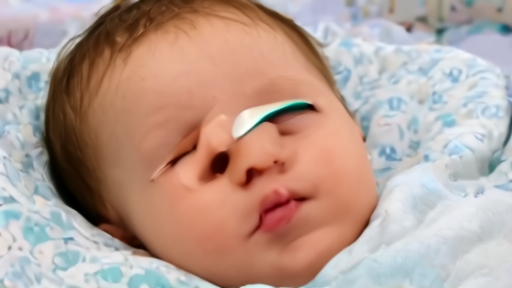
The Food and Drug Administration approved Otarmeni 61 days after Regeneron filed the Biologics License Application. The agency, by its own characterization, said the timing was "tied for the fastest BLA approval in modern agency history." [1] The paper's Friday account carried the medical fact — first gene therapy for OTOF-related genetic hearing loss, free in the United States, second new molecular entity approved under the Commissioner's National Priority Voucher pilot. Saturday lands the regulatory artifact behind the medical one. A 61-day BLA review is not a routine acceleration. It is the velocity claim the priority-voucher pilot was designed to produce.
Otarmeni — generic name lunsotogene parvec-cwha — treats severe-to-profound and profound sensorineural hearing loss tied to biallelic variants in the OTOF gene. The condition affects roughly fifty newborns in the United States each year. The CHORD pivotal trial enrolled twenty patients, ages ten months to sixteen years, who received a single intracochlear infusion of the adeno-associated-virus-vectored therapy either unilaterally or bilaterally. Eighty percent — sixteen of twenty — achieved at least some significant hearing restoration; forty-two percent achieved hearing in the normal range, including the ability to hear whispers. The hearing has held for at least two years. [2] These are restoration numbers measured against children who, before the therapy, could not transmit sound from the inner ear to the auditory nerve.
The free-in-the-U.S. economics are the part that surprised the biotech market. Regeneron CEO Leonard Schleifer told CNBC on Friday that the company has not yet decided how to price Otarmeni overseas. [3] Inside the U.S., Regeneron is offering the therapy at zero list price, alongside what the company described as a broader drug-pricing agreement with the Trump administration. The therapy will be available within weeks. The ultra-rare patient population — roughly fifty children annually — makes the free-in-US offer commercially feasible in a way it would not be at higher prevalence; Regeneron expects to recover its development costs through the priority voucher itself, which the FDA awarded as part of the approval. Pediatric rare-disease vouchers have sold in recent years for between $80 million and $350 million; the voucher economics, not the therapy economics, are what underwrite the deal.
The 61-day BLA timing is the regulatory artifact the FDA wanted to produce. The Commissioner's National Priority Voucher pilot, launched earlier this year, lets the agency run a parallel-review process for therapies aligned with U.S. national health priorities; Otarmeni is the second new molecular entity approved under it. The FDA's own framing of the velocity — "tied for the fastest BLA approval in modern agency history" — invites comparison to the COVID-vaccine accelerations of 2020-2021 and to a small handful of rare-pediatric-disease approvals that compressed review through orphan-drug designations. What is new about the priority-voucher path is that the velocity is, by design, the product. Regeneron filed; sixty-one days later the agency approved; a voucher worth hundreds of millions transferred. The pilot's defenders say this is what agency reform looks like. The pilot's critics say this is what regulatory capture looks like under a different name.
The medical reality, on Day Two, is what gives the regulatory question its weight. Children who could not hear are now hearing. The CHORD trial published video evidence of pediatric patients turning toward parental voices for the first time, dancing to music, responding to environmental sounds. The technology — gene replacement via AAV vector — is the product of two decades of basic-science investment, and the OTOF target is a specific enough genetic lesion that the therapy's mechanism is unusually clean. The 61-day BLA review compressed the regulatory layer of that work by a factor most veterans of the agency's drug-review division would have considered structurally implausible eighteen months ago. Whether the National Priority Voucher pilot survives an inevitable approval that produces a worse safety signal is the question the next BLA filing will test. The pilot's supporters, on Saturday, have a video of a deaf toddler dancing as their answer.
-- NORA WHITFIELD, Chicago