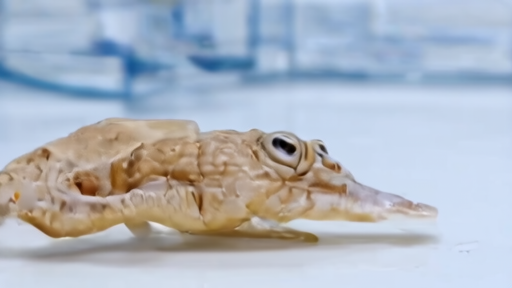
A new paper identifies SP8 and FGF8 as a shared genetic program driving limb regeneration across three species — mouse, zebrafish and axolotl. [1] The finding turns animal comparison into a candidate target for regenerative medicine.
Co-author Josh Currie's framing is the careful one: "universal, unifying genetic programs" drive regeneration. [1] That is a mechanism claim, not a therapeutic claim. The same genes appear to license repair in animals that regrow limbs and, in vestigial form, in animals that do not.
This is the second foundational repair-biology paper this month. Northwestern's Feinberg School separately reported that injured cells switch on protein factories rapidly after damage, an upstream mechanism that complements the SP8 work. [2] The two papers describe different parts of an emerging picture: the cellular response to injury, and the genetic program that decides whether the response builds tissue back or merely seals it.
The distance from a mouse digit to a human limb remains long. The discipline of the SP8 paper is to refuse the headline. What it offers is a target. If a clinical translation arrives — and that "if" carries decades — it will route through the same gene network that the axolotl already runs every time it loses an arm. [3]
-- KENJI NAKAMURA, Tokyo