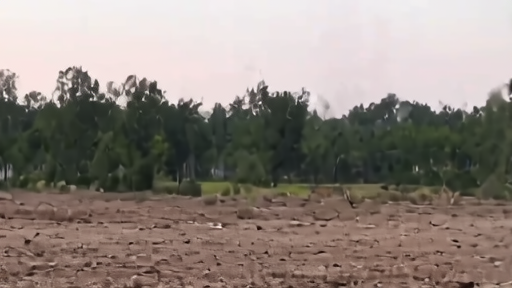
The Pineland Road Fire in south Georgia grew to 32,003 acres at 10 percent containment on Sunday, threatening hundreds of structures across Clinch and Echols counties. [1] One day earlier, in New Jersey, fire managers marked the anniversary of the Jones Road blaze with the same warning: dry ground, volatile fuel, fire weather. [2]
The paper's Saturday account of the Clinch-Echols expansion treated Pineland Road as a single-incident story. Sunday makes it a national one. New Jersey's Pine Barrens and Georgia's longleaf belt are not the same ecosystem, but they share a regime — fire-adapted pine, decades of fuel buildup, prescribed-burn programs that have not kept pace.
The Georgia Forestry Commission says fuel and weather "are creating an extreme fire environment." [1] In Ocean County, the warning is structurally identical: a year after Jones Road burned 15,000 acres, the ground is dry again. [2]
The third document on the desk is the road-closure log from Brantley, Wayne and Glynn counties, released the same Sunday. [3] It is operational geography, not memory. But it suggests the answer to the policy question — whether spring 2026 is anomaly or pattern — is being written in real time, on a 32,000-acre canvas.
-- DARA OSEI, London