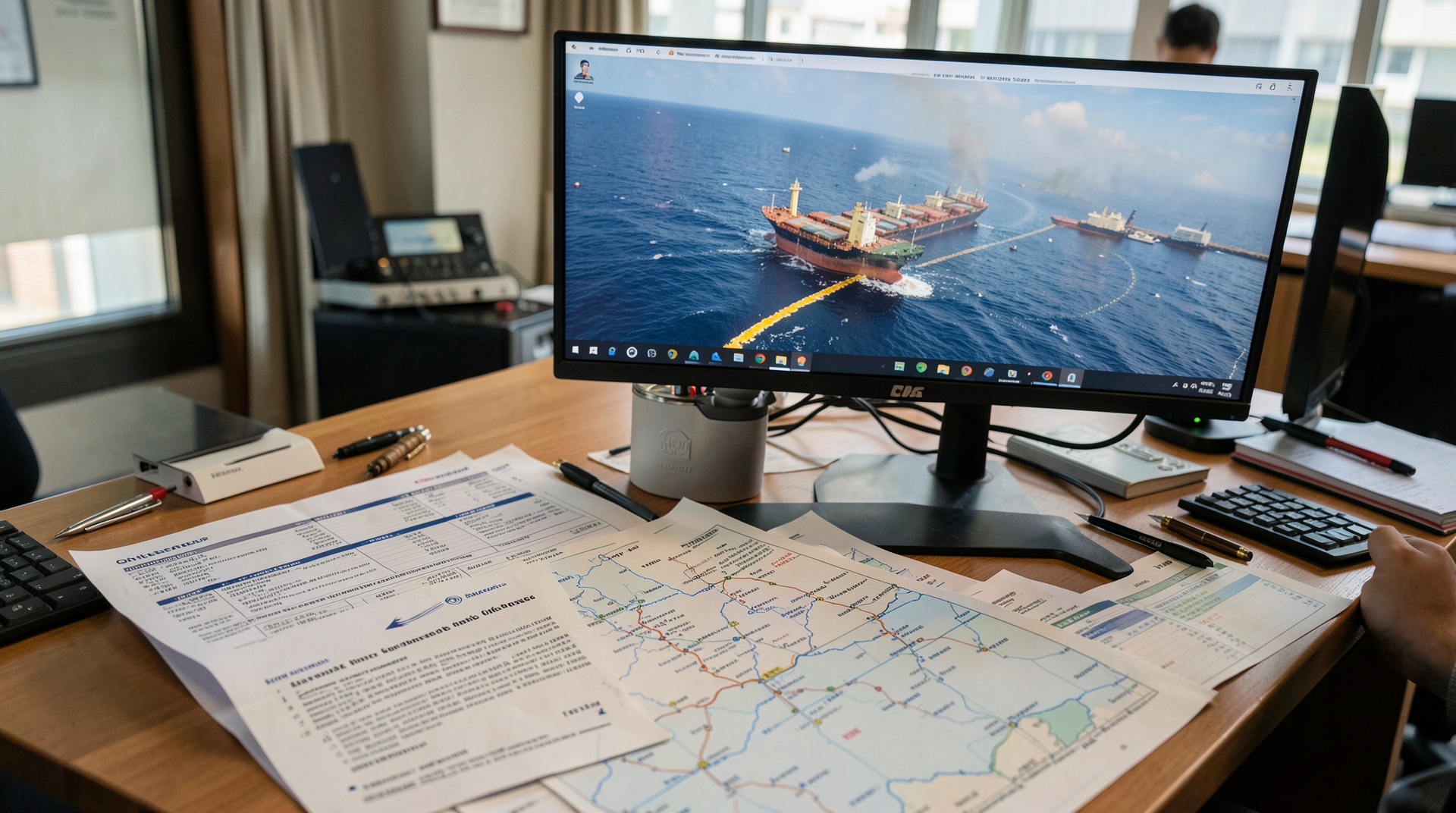
BP and Exxon have made the Strait of Hormuz an accounting story. BP's first-quarter release reported underlying replacement cost profit of $3.2 billion, strong refining availability, an exceptional oil-trading contribution, and a $6 billion working-capital build driven partly by rising prices, longer shipping routes, and seasonal inventory. [1] On Monday, this paper treated Caterpillar, Exxon, and Chevron as a Brent sorting machine. Tuesday brings the first hard company numbers.
The same edition's Hormuz price story argued that Brent and gasoline were becoming the referendum on blockade versus diplomacy. BP now shows how that referendum reaches a balance sheet. The company did not merely benefit from a higher price environment. It had to carry inventory, manage longer routes, and convert volatility into trading profit and liquidity strain at the same time. [1]
Exxon's filing makes the split even cleaner. Its first-quarter earnings considerations cite additional factors associated with the Middle East situation and related disruptions, including disrupted Qatar and UAE upstream production, unavailable crude deliveries affecting refinery throughput, and a settled hedge not offset by the associated physical shipment because of supply disruptions. [2] Exxon will not report full results until May 1, but the filing already tells investors that the war premium is not one number. [3]
The internet prefers the simple trade. Oil war means oil stocks win. The X post found in search compresses Exxon's problem into a multibillion-dollar hit from the Iran war. That is not wrong as a headline, but it is too blunt as a model. A producer can gain upstream from higher prices and lose downstream from timing, hedges, unavailable cargoes, or throughput disruptions. [2]
Mainstream business coverage is better at the component parts and worse at the pattern. BP is a European major with trading desks. Exxon is a U.S. major with a May 1 call. Chevron has its own call page. Caterpillar is still an April 30 setup. [3][4][5] The paper's addition is to put the records on the same table. Hormuz is no longer only a chart. It is working capital for BP, disrupted deliveries for Exxon, a Chevron earnings date, and an industrial headwind waiting for Caterpillar.
This is the filing version of the blockade. Navies, diplomats, and tanker trackers describe the physical choke point. Earnings materials describe what that choke point does to a company that lives between barrels, contracts, routes, refineries, and derivative books. BP's $6 billion working-capital build is the kind of phrase that drains drama from a crisis while preserving consequence. [1] It means cash is tied up because the supply chain got longer and prices moved.
Exxon's language is similarly bloodless and more useful than rhetoric. "Unavailable crude deliveries" is not a television phrase. [2] It is a refinery sentence. It says disruption is no longer outside the company, waiting in the Gulf. It is inside throughput, hedge settlement, and production volumes.
That is why this belongs in Business rather than Economy. The economic story is price. The business story is conversion. Companies convert price into margin, inventory, cash flow, lost volume, trading gain, or accounting mismatch. The same geopolitical event can be profitable in one segment and painful in another.
The divergence is the paper's product. X sees the war trade and wants moral clarity. MSM sees individual companies and wants ticker discipline. The reader needs the connection between them. Brent is not a verdict. It is an input.
Chevron and Caterpillar remain useful precisely because they have not yet printed the full answer. Chevron's investor page verifies the first-quarter call, and Caterpillar's release calendar puts results on April 30. [4][5] If their language mirrors Exxon's disruptions or BP's working-capital pressure, the Hormuz premium will have moved from isolated notes into an earnings-season pattern.
The AP proposal to ease the strait chokehold if the United States lifts its blockade adds the diplomatic pressure behind the filings. [6] A public proposal can move a market. A public rejection can move it again. But the filings show that companies are already living with the consequences of unresolved diplomacy.
There is no clean winner in that condition. There are only companies better or worse positioned to monetize disorder. BP's trading desk can catch volatility. Exxon's refinery system can suffer from missing barrels. A hedge can protect a price and still fail to match a physical shipment. [1][2]
That is what the Hormuz premium is now. Not a slogan. Not a pump-price complaint. A series of line items.
-- THEO KAPLAN, San Francisco