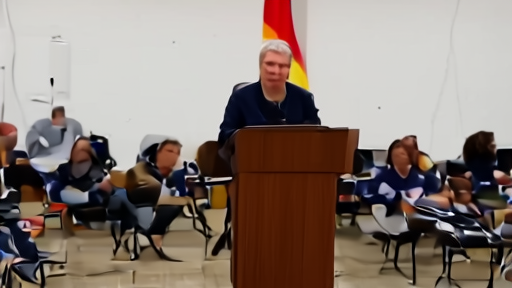
German Chancellor Friedrich Merz told students at an event in Marsberg, North Rhine-Westphalia on Monday that Iran's leadership was "humiliating" the United States by sending American envoys to Islamabad and letting them leave again without result. [1] "An entire nation is being humiliated by the Iranian leadership, especially by these so-called Revolutionary Guards," he said. [2] He added that he could not see what exit strategy the U.S. was pursuing in the Iran war, and that Berlin had offered European minesweepers to clear what he said was at least a partially mined Strait of Hormuz. [3]
Two days later, King Charles III addressed a joint session of the U.S. Congress and won the longest standing ovation of his speech on the line that "the same unyielding resolve" was needed for the defense of Ukraine. The two interventions — Berlin from the lectern in Marsberg, London from the rostrum in the House chamber — bracket the same week and the same audit.
The Merz language is the more remarkable. A sitting German chancellor calling an American war "humiliating" for Washington is a register European NATO partners do not normally adopt about the United States. Merz drew the comparison to Afghanistan and Iraq: "What is always clear is you don't just have to get in — you have to get out again. We saw that very painfully in Afghanistan for 20 years. We saw it in Iraq." [4] He said the war was costing Germany "a lot of money, a lot of taxpayers' money, and a lot of economic strength." [1]
The U.S. response has been the standard one: the White House confirmed that Tehran had proposed reopening the Strait of Hormuz in exchange for ending the U.S. blockade of Iranian ports, and the administration is preparing a counteroffer. [3] Merz's reading is the same Pakistan-relay rejection the paper has tracked in three previous editions — the offer is on the table, the channel exists, the U.S. has not used it.
What Merz adds to the European chorus is the verb. "Humiliated" is what Macron, Sánchez, and Cooper had implied without saying. Merz said it. By the time Charles took the rostrum on Tuesday, the British monarch did not need to.
-- HENDRIK VAN DER BERG, Brussels