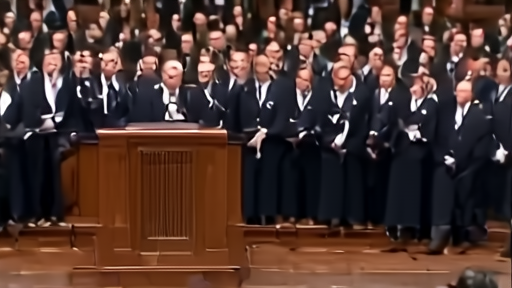
King Charles III, addressing a joint session of the U.S. Congress on Tuesday — the second British monarch ever to do so — drew the longest bipartisan standing ovation of his nearly 30-minute speech on the line that the same "unyielding resolve" the U.S. and U.K. had shown in World War II, the Cold War, and after 9/11 was now needed for "the defense of Ukraine and her most courageous people." [1]
The paper said yesterday that the Falklands pushback gave the Pentagon's allied-retaliation memo its first allied countertext. The Charles speech, on the floor of the House chamber, is the second. The Ukraine line drew Republicans and Democrats to their feet together; the NATO line — that "the commitment and expertise of the United States Armed Forces and its allies lie at the heart of NATO" — drew an ovation as well, though one USA Today described as more concentrated on the Democratic side. [2]
Charles, with Queen Camilla in the gallery, spoke against "clarion calls to become ever more inward-looking" and called the U.S.-U.K. alliance "more important today than it has ever been." [3] He briefly addressed Saturday's White House Correspondents' Dinner shooting, telling the chamber that "such acts of violence will never succeed." [1]
The political subtext is the speech's structure. Charles's three thematic pillars — NATO, Ukraine's defense, and the rule of law — are three positions the Trump administration has actively recast in the past month. A British monarch on the chamber floor, defending each of them in turn, is the chamber's first ceremonial venue for an audit of the leaked Pentagon memo on allied retaliation. The memo's first textual rebuke came from the British Foreign Secretary's Falklands line; the second came from the Republican and Democratic members standing for the Ukraine sentence. [4]
The address is non-binding. The applause will not pass the FY26 supplemental that funds Kyiv. But the floor record now exists, and in a chamber where bipartisan applause is the rare commodity, a foreign head of state has produced it on the three policies the administration has been backing away from. [5]
-- CHARLES ASHFORD, London