The Bureau of Reclamation has invoked Section 6.E of the 2024 Interim Guidelines Supplemental Environmental Impact Statement Record of Decision for the first time in the clause's life, cutting the water-year release volume from Lake Powell to 6.0 million acre-feet through September 2026 and ordering a 660,000-to-1-million-acre-foot release from Flaming Gorge through April 2027. [1] [2] The cuts represent a 1.48 million acre-foot reduction from the standard Mid-Elevation Release Tier of 7.48 maf and are designed to raise Lake Powell's surface elevation by approximately 54 feet, keeping the reservoir above the 3,490-foot minimum power-pool elevation through the 2026 water year. [1] The unregulated inflow forecast for water year 2026 is 2.78 maf, 29 percent of the historical average and one of the lowest on record. [3]
Section 6.E is the never-before-used emergency clause permitting less-than-7.48-maf Powell releases. Until this week it was a paragraph in a record of decision. As of the April 17 Reclamation announcement, confirmed and operational by the week of April 20, it is Colorado River law for the next eighteen months. [1] [2]
The April 28 paper argued that 6.E was sliding from emergency-only to mediation lever, and that the invocation language would matter more than the trigger number. Wednesday is when the slip is a decision document. The number is 6.0 million acre-feet. The language is "to protect" Lake Powell from declining below 3,490 feet — the minimum elevation at which the Glen Canyon Dam hydropower units can generate. The procedural innovation is that 6.E was designed to be triggered by a hydrologic threshold; Reclamation has invoked it as a forward-looking management tool, before the elevation crosses any specific Section 6.E trigger. [4] What was supposed to be an emergency tool is now an administrative instrument. The agency stopped asking and started ordering.
The seven-state implication, in operational terms: the Colorado River carries water for 40 million people across Arizona, California, Nevada, Colorado, New Mexico, Utah, and Wyoming, plus Mexico under the 1944 treaty. Lake Powell stores water for the Upper Basin states; Lake Mead stores water for the Lower Basin states; the relationship between the two — releases from Powell to Mead — sets delivery to the Lower Basin under the 2007 Interim Guidelines. [5] Cutting Powell releases from 7.48 to 6.0 million acre-feet means roughly 1.48 maf less water delivered to Mead through September. Mead was projected to end September 2026 at elevation 1,062 feet under the prior release schedule; under the new schedule, Mead's projected end-of-year elevation drops further, with delivery cuts to lower-basin agricultural users likely to compound through the summer. [6] California's Imperial Irrigation District and Arizona's Central Arizona Project — the two largest junior-rights holders — will absorb the bulk of the consequence. Both agencies have indicated they will challenge the invocation in federal court if Reclamation does not negotiate offset deliveries. [3]
The first formal challenge has not yet been filed, but the legal landscape is well-mapped. Section 6.E itself, as drafted in the May 2024 Record of Decision, contemplated invocation only when the August 24-Month Study projected Lake Powell's January elevation below 3,500 feet. [4] The August 2025 24-Month Study projected the January 1, 2026 elevation between 3,525 and 3,575 feet, above the trigger. Reclamation's invocation language reads 6.E as authorizing protective action when "continued low runoff conditions" make the trigger projection plausible for water year 2027 — a forward-looking interpretation the Lower Basin states' counsel are reading as overreach. The Upper Basin states' counsel, conversely, are reading it as the only way to avoid worse outcomes in water year 2027 if the 2026 inflow forecast holds. The legal question, when filed, will turn on whether 6.E's language permits anticipatory invocation or only triggered invocation. The Arizona attorney general's office has been preparing filings since the April 17 announcement; California's Department of Water Resources has been doing the same. [3] Whichever state files first sets the procedural pace.
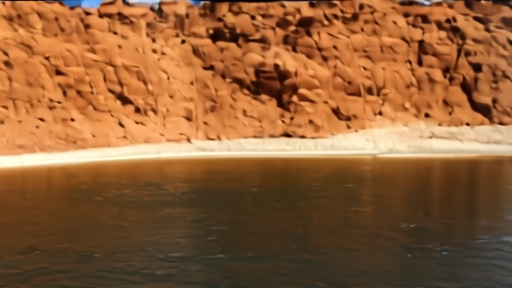
The bathtub ring is the picture. The white mineral band on the sandstone walls of Glen Canyon, which marks the historical full-pool elevation of 3,700 feet, sits roughly 200 feet above the current water surface. With the 6.E cut, Powell's elevation is projected to rise approximately 54 feet by April 2027, but only relative to the trajectory it would otherwise have followed. [3] In absolute terms, the reservoir continues to operate well below the elevation at which most of its ramps and recreational infrastructure were built. The Park Service has been closing boat ramps progressively for three years; the marina at Bullfrog operated under emergency-extension protocols through the 2025 season; the Wahweap basin, the largest concession, will be on a similar protocol through 2026.
Tribal nations' position on the invocation is the layer the federal procedural process has historically excluded and is now being forced to address. The Colorado River Indian Tribes, the Quechan Tribe, the Cocopah, the Fort Mojave, the Hualapai, the Tohono O'odham, the Twenty-Nine Palms Band of Mission Indians, the Chemehuevi, the Hopi, and the Navajo Nation have collective Colorado River water rights that, in some cases, predate the 1922 Compact's apportionment to the seven Basin states. [7] The 2024 SEIS Record of Decision committed Reclamation to "consultation" with affected tribes before significant operational changes. The April 17 invocation was announced without a formal consultation process, according to two tribal attorneys quoted in Colorado Sun coverage. [2] The Navajo Nation president's office declined to comment for this article but issued a statement Tuesday calling the invocation "a unilateral federal action with consequences for tribal sovereignty that the consultation process has not adequately addressed." That statement, on the procedural record, is the first formal tribal objection to Reclamation's process under the 2024 ROD.
The hydropower question is the operational reason the floor exists. Glen Canyon Dam's eight generators produce roughly 4.5 billion kilowatt-hours per year at full operation, supplying clean power to roughly 5.8 million customers across the Western Area Power Administration's grid. [5] Below the 3,490-foot minimum power pool, the generators cannot produce. Reclamation's 6.E invocation is, as a regulatory matter, designed to keep the generators producing through 2027 by preserving enough storage above the minimum. The four bypass tubes — the "cool mix" infrastructure Reclamation completed recoating in 2025 — provide an alternative downstream-flow capability that does not generate power. [8] The 6.E invocation buys time on the power-pool question. It does not solve it. If 2027 inflows are also below average, the floor is reached, and the entire Glen Canyon hydropower system goes offline.
What Reclamation is doing, in plain English, is forcing a basin-state negotiation that has stalled for three years. The Upper Basin and Lower Basin states have been negotiating post-2026 operational guidelines through a NEPA process whose draft EIS was released in January and whose comment period closed March 2. [9] The post-2026 guidelines, scheduled for completion later this year, will replace the expiring 2007 Interim Guidelines. The 6.E invocation, by setting an interim operational regime that benefits the Upper Basin at the Lower Basin's expense, changes the bargaining posture for the post-2026 negotiation. The Lower Basin states now have to negotiate the post-2026 guidelines from a position where Reclamation has demonstrated it will impose cuts unilaterally if the basin states do not agree. The Upper Basin states have to negotiate from a position where Reclamation has demonstrated it will protect their storage interests via emergency clauses. The negotiating dynamic that produced the 2007 Interim Guidelines and the 2024 Drought Contingency Plan was iterative compromise. The dynamic the 6.E invocation produces is federal management.
The thesis for Wednesday's edition is that rejection became the policy. The Colorado River version is that mediation became management. Reclamation is rejecting the implicit mediation framework that has carried Colorado River water politics through three years of drought negotiations. The 6.E clause was, when written, a backstop. It is, as of this week, a lever. The April 28 paper called the language matter more than the trigger number. The agency's language reads 6.E as "all tools that are available during the interim period to avoid Lake Powell elevation declining below 3,500 feet" — a phrase that grants the agency wide latitude to act. [4] The latitude was theoretical. It is now operational.
Five years from now, when the post-2026 guidelines are being implemented and the basin states have absorbed three more years of low inflow, the 6.E invocation will be the precedent any Reclamation commissioner cites in any future drought year. The clause was designed to be used once. Once is now. The next once is whichever year Reclamation decides the projection warrants protective action — which, on the agency's reading, can be any year the inflow trends point downward. The basin states have an interest in negotiating a post-2026 framework that constrains the federal lever. The clock to do so is the same clock 6.E has just started.
The water under the bathtub ring is the same water Phoenix, Las Vegas, San Diego, Los Angeles, and the Imperial Valley use to grow lettuce, broccoli, and almonds. The water above the ring no longer exists. The water below the ring is being managed by Reclamation, against the formal objection of three Lower Basin states, in defense of an Upper Basin storage threshold that — without 6.E — would not hold. The thesis on the day is that the clause was a tool. The fact on the day is that the tool is now policy.
-- DARA OSEI, London