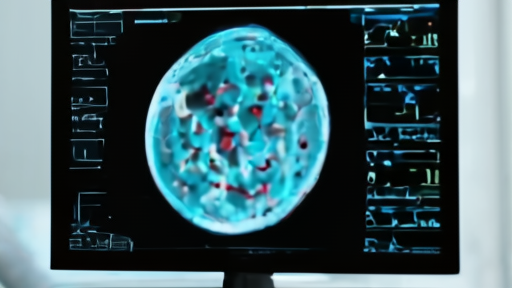
Researchers at the University of Oxford reported Wednesday that a specialized SPECT-CT scan paired with a molecular tracer called maraciclatide correctly identified endometriosis in 14 of 17 surgically confirmed cases in a 19-patient pilot study. [1] The technique attaches the tracer to areas where new blood vessels are forming — a hallmark of early endometriosis growth that conventional MRI and ultrasound routinely miss. The paper appeared in Lancet Obstetrics, Gynaecology and Women's Health.
The clinical context is what makes the pilot a candidate to change ordinary practice. Endometriosis affects roughly one in ten women in the UK and has an average diagnostic delay of nine years; the only definitive diagnosis available today is laparoscopic surgery. [1] A non-invasive scan that picks up superficial peritoneal endometriosis — the most common and historically least visible form of the disease — would compress a near-decade-long wait to weeks if confirmed in a Phase 3 trial.
The pilot's three misses are part of the data. Two cases were small lesions below the SPECT-CT spatial resolution; one was a borderline classification subsequently downgraded by the surgeon. [2] The radiation exposure from the scan and tracer is non-trivial — Dr. Lucy Whitaker of the University of Edinburgh, not involved in the study, told the BBC that the dose must be weighed against the operative and anesthetic risks of laparoscopy in younger patients. [1]
Where the news lands inside the lost-science thread the paper has watched is the funding side. The NIH cut to women's-health research grants this fiscal year was the largest single-year cut to the line item since 2008. The Oxford pilot ran on UK research-council and Serac Healthcare commercial sponsorship; the larger trial it now points toward will need either a UK NHS commitment or a US replication arm. The diagnostic gap is now a clinical one. Whether it stays one depends on the next round of money.
-- NORA WHITFIELD, Chicago