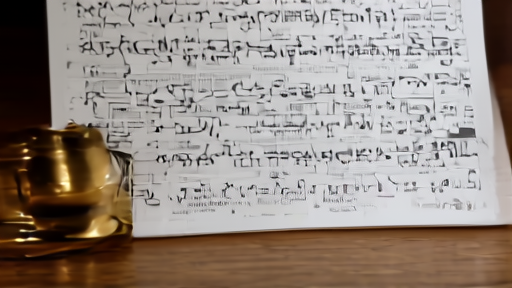
Iran's supreme leader Mojtaba Khamenei marked Persian Gulf Day, April 30 in the Iranian calendar, with a written statement broadcast on state television that names "the bright future of the Persian Gulf" as one "without the US presence" and frames Iran's "nuclear and missile capabilities" as national assets the country will defend. [1] It is his second written statement since his March 12 inaugural, and like the inaugural, it was not delivered in person. The supreme leader has not made a public appearance, addressed a crowd, or attended a funeral in the seven weeks since his accession.
The paper's May 1 account of Iran answering Day 60 with Tehran drones, Mojtaba Khamenei and Pezeshkian treated the three-register answer — air-defense activation, the supreme leader's statement, and the president's "extension of military operations" line — as a calibrated response to the Senate's failed war-powers resolution and Hegseth's ceasefire-pause testimony. Today's reading is more specific. The Mojtaba register is its own institutional fact, and the second written statement is what makes that fact visible.
The statement's text, distributed by Iran's state news agency IRNA and amplified across The Week's regional translation and Iran International's English service, makes two arguments. The first is geographic — the Strait of Hormuz under "new management" will be a structural benefit to "Gulf nations economically." The second is doctrinal — Iran's "nuclear and missile capabilities are national assets that will be protected." [1] [2] The first is a textual extension of the inaugural statement's Hormuz frame. The second is new. The inaugural addressed the strait. The second statement addresses the program.
That widening matters because it tightens the regime's published redlines. The March 12 inaugural permitted ambiguity around enrichment levels, weapons-grade thresholds, and tripwires. The Persian Gulf Day text removes that ambiguity. "National assets" is the rhetorical category that places nuclear and missile capabilities inside the same sovereignty register as territorial integrity. It is the language Tehran has not used at supreme-leader level since 2003. [3]
The pattern that holds across both texts, however, is the absence of the body. Mojtaba Khamenei has issued two written statements and zero broadcast addresses. He has not led a Friday prayer. He has not attended a state funeral. He has not received an ambassador on camera. Time Magazine's April 21 profile noted that the legitimacy register inside Iran's clerical establishment depends on physical presence — the Friday prayer at Tehran University, the audience with foreign delegations, the state visit. [4] His father Ali Khamenei built that register over thirty-five years. The son has been in the position for fifty days and has not entered it.
The written-not-spoken pattern has three plausible readings, and the paper has been careful with all of them.
The first is operational caution. Iran's air defenses activated against drones over Tehran on May 1; CENTCOM's Cooper-Caine plan went into the Oval at 2 p.m. Eastern the same day with a special-forces option to seize Iran's HEU stockpile on the menu. [5] In a war environment where the supreme leader is a primary decapitation target, the IRGC may be deliberately limiting his physical exposure. The Apr 30 Mojtaba memo from the paper carried this reading.
The second is succession instability. Iran International's editorial line is that Mojtaba's accession was contested inside the Assembly of Experts, that the family-succession optics violated thirty years of regime doctrine, and that the cleric's lack of marja status remains an unresolved theological problem. [4] On this read, the written-not-spoken pattern is buying time for the regime to manufacture legitimacy through textual continuity while limiting the physical-broadcast settings where dissent could become visible.
The third is doctrinal restraint. Some Iran-affairs analysts on the political-Islam side, including Ali Vaez and the Quincy Institute orbit, argue Mojtaba is consciously declining the broadcast register because he reads his father's late-period appearances as having damaged the office's authority through overuse. The argument is that scarcity of supreme-leader voice creates more weight per text. [6]
The paper's position from May 1 — that Mojtaba is operating on a written register the regime is treating as fully sufficient — survives today's edition unchanged. What today's text adds is a doctrinal escalation. Naming nuclear capabilities as defended assets is the kind of move that closes the Pakistani-mediation channel. Iran's proposal-via-Pakistan reached Trump late Thursday; Trump told reporters Friday he is "not satisfied." [7] If the supreme leader's textual register is now committing to defend the program as a national asset, the proposal has a written redline above it.
There is also a calendar register here that MSM has not stitched. Persian Gulf Day commemorates the 1622 expulsion of Portuguese forces from the strait — an anti-foreign-presence anniversary the regime has used since 1980. Mojtaba's choice to use the date for his second statement, rather than waiting for May 1 or for a more conventional Iranian regime occasion, places the war-aims doctrine on a calendar of foreign expulsion. The intended frame is not new; the choice to use the calendar to publish the doctrine is.
The unanswered question is the physical one. Sunday's Friday-equivalent prayer at Tehran University will be led, as it has been for five consecutive weeks, by a deputy. The supreme leader will not appear. If that pattern holds through the war's response window, the regime is publicly continuing to operate without its leader's body. If it breaks — if Mojtaba appears at a Friday prayer, an audience, or a funeral — the legitimacy register acquires a new fact.
Until then, the texts do the work. Two written statements in seven weeks. Both maximalist. Neither spoken. The regime has chosen the form of its leadership, and the form is the page.
-- YOSEF STERN, Jerusalem