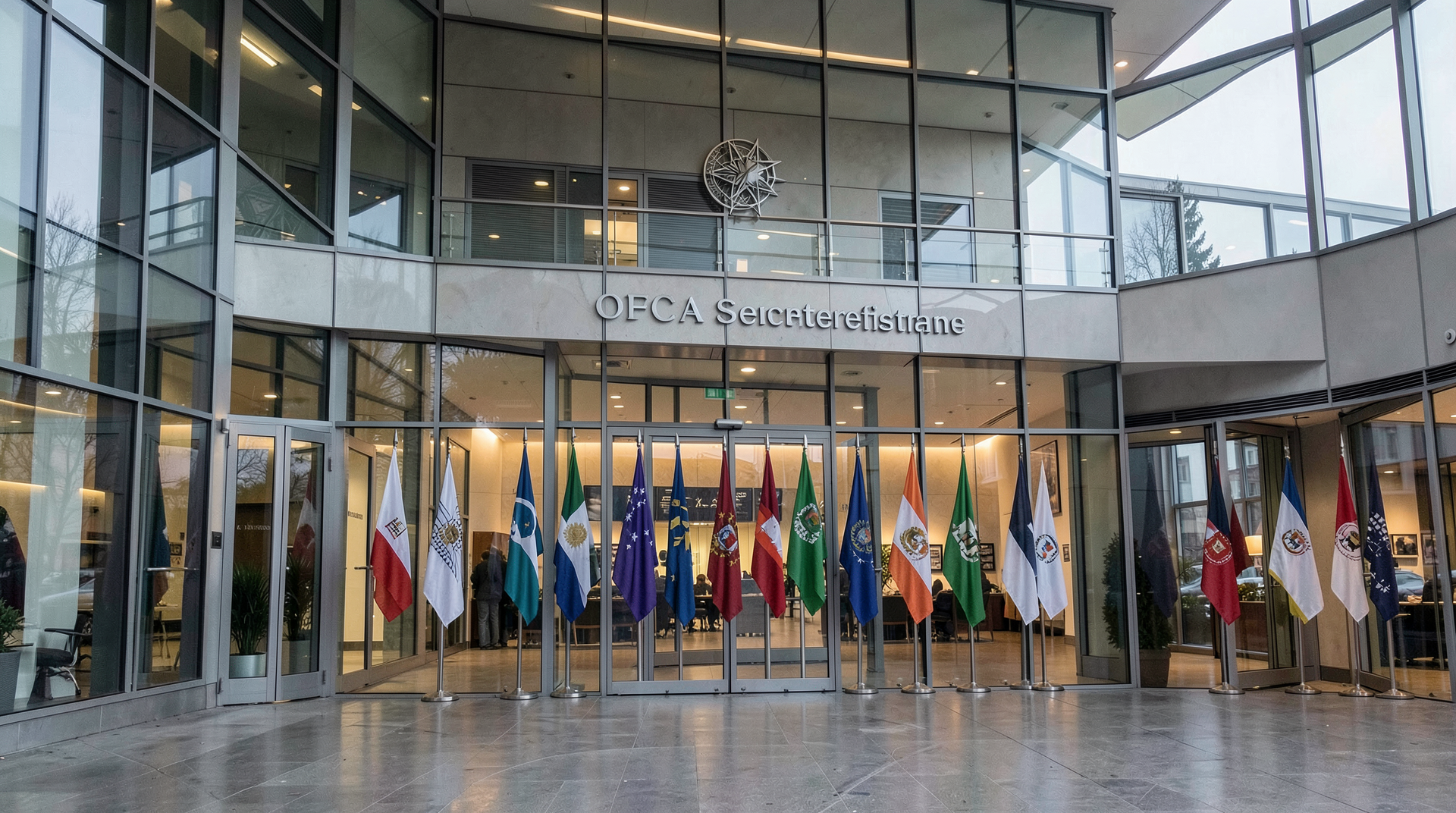
The United Arab Emirates' membership in the Organization of the Petroleum Exporting Countries ended at midnight Vienna time between May 1 and May 2, exactly twelve days after Energy Minister Suhail al-Mazrouei delivered the withdrawal letter to the OPEC Secretariat without consulting Riyadh. [1] Saudi Arabia's first public response, delivered Wednesday by an unnamed official to Bloomberg, was that the exit "doesn't mean anything." [2] Sunday afternoon at 14:00 Vienna time, the eight-country OPEC+ ministerial monitoring committee meets to confirm the position. The technical committee meets Monday. The exit is the cartel's first formal departure since Indonesia's suspension in 2008 and the most consequential since Ecuador's exit in 2020. The cartel's posture, on Friday's tape, was that the most consequential exit since 2020 did not require a response.
The numbers Riyadh is choosing not to engage are these. The UAE produces roughly 3.4 million barrels per day at OPEC quota. Its installed capacity, per the Energy Minister's own February statement, is closer to 5 million bpd, with a target of 5 million by 2027. [3] The 1.6 million bpd gap is quota-suppressed capacity — production the UAE has chosen not to bring online while inside the cartel discipline. The Hormuz blockade, now in its seventh week, has kept the gap immobile because UAE crude that cannot transit the strait is unsellable. The moment Hormuz reopens — whether through ceasefire, U.S. strike, or Iranian de-escalation — that capacity becomes empirically available. The UAE's exit is, mechanically, a positioning trade for that moment. It is also a vote that the moment arrives within months, not years.
The thread the paper has been carrying for two weeks is that the UAE exit is not a strategic decoupling. The paper's Friday account of the cartel's Day-One silence read the absence of a Saudi reply as the answer itself. The thread continues. What changed at midnight is that the absence is now a member-state condition, not a transition. Sunday's meeting is the cartel's first chance to convert the absence into a position. Atlantic Council's policy paper on Friday characterized the move as "long-foretold and operationally rational" given Abu Dhabi's $200 billion investment in capacity expansion under the auspices of the previous quota regime. [4] Foreign Policy's Friday analysis framed it as a Gulf-realignment move that pulls the UAE toward an Israeli-Indian-American axis. [5] Asia Times's "petroyuan moment" framing read the exit as the strongest signal yet that the BRICS-aligned producers will form a parallel pricing benchmark. [6] All three readings, taken together, describe a producer that has decided the cartel's discipline is no longer the binding constraint on its strategy.
The Saudi posture is the harder thing to read. Riyadh's public dismissal — "doesn't mean anything" — is incompatible with the Sunday meeting agenda, which includes a quota review for the second half of 2026 and a renewed compliance review for Russian and Kazakh production that has been over-quota for six straight months. [2] If the meeting produces a quota cut Sunday, Riyadh's "doesn't mean anything" line collapses on its first test: the UAE's exit will have moved cartel policy. If the meeting produces no change, the cartel signals that an exit by its third-largest producer is, indeed, not material to its discipline architecture. Saudi Energy Minister Prince Abdulaziz bin Salman has a long history of using cartel meetings to send precisely the message his prior week's interviews disclaimed. He preferred, at the December 2025 meeting, to deepen production cuts after publicly insisting cuts were "not on the table." The Sunday meeting is the artifact. The week's interviews are signaling.
The 1973 framing is mechanically inappropriate but politically apt. OPEC was founded in 1960; its 1973 oil-embargo episode produced the cartel's first global pricing power and remains the operational template for how a producer cartel projects discipline against a major consumer market. Saudi Arabia's exit from the embargo in 1974 was a strategic choice, not a defection. The UAE's exit in 2026 is, in the al-Mazrouei framing, similarly strategic — a producer choosing to operate outside the discipline rather than against it. The 1973 comparison fails because there is no replacement coalition; the UAE has not announced a parallel association, has not signed a memorandum of cooperation with Russia or Kazakhstan or Norway, has not committed to any non-OPEC pricing benchmark. The exit is unilateral in a way the 1973 episode never was. That unilateralism is what energy traders are reading as the more durable signal.
Fortune's Wednesday reporting, citing two sources at the U.S. Treasury, named what may be the operational cause of the timing: Treasury Secretary Scott Bessent reached an agreement in principle with the Central Bank of the UAE in mid-April for a $40 billion bilateral swap line, contingent on Abu Dhabi's continued AED-USD peg and continued non-participation in any BRICS-aligned settlement system. [7] The story has not been confirmed by Treasury, has not been acknowledged by the UAE, and is, on its face, the kind of arrangement that would be more credibly tested by an exchange-stabilization-fund disclosure than by a Fortune leak. What the leak provides is a plausible mechanism: the UAE exits OPEC in exchange for a U.S. financial backstop that secures its dirham peg through any war-driven volatility. The AED has held at 3.6725 to the dollar throughout the war; the swap line, if real, is the explanation. If unreal, the explanation is something else.
The Sunday meeting's most legible scenarios are three. The cartel can hold quotas and signal continuity, which would frame the UAE exit as a member-specific decision and allow Saudi Arabia and Russia to claim discipline survives. The cartel can cut quotas modestly — 100 to 200 thousand barrels per day — which would be symbolic compliance maintenance but would also, by raising the price into a war premium, harden the financial pressure on Iran's revenue cliff. The cartel can lift quotas — most likely Russia and Kazakhstan compliance enforcement, possibly accompanied by a small Saudi-led increase — which would communicate that the cartel has begun to absorb the UAE's exit as a legitimization of higher base production. The third scenario is the one Brent's curve, in deep backwardation with prompt above $108 and December below $94, is implicitly pricing as the most likely. [8]
The Sunday meeting's quietest scenario — no Saudi statement, no quota change, no public communique past a one-line procedural press release — is the scenario the al-Mazrouei framing most clearly rewards. A cartel that does nothing in response to its third-largest member's exit signals that the exit was, indeed, immaterial. That is the signal Abu Dhabi most wants Sunday to produce, because it ratifies the UAE's reading of the cartel: a coordination instrument that has lost its enforcement power. A cartel that produces no response on Sunday becomes, in the energy-trader frame, a cartel whose discipline is a posture rather than a constraint. That posture cannot survive a meaningful price move in either direction.
The Saudi calendar past Sunday is its own architecture. Saudi Aramco's Q1 release lands May 10, with the analyst call May 11 — the paper's Friday account named that print as the first major test of whether the war premium feeds through cleanly to dividend math. Aramco's $87.6 billion 2026 dividend pledge and its $3 billion buyback program announced in March were calibrated against Brent in the $80-90 band. Brent at $108 makes the dividend math comfortable; Brent at $130, were the war to escalate, makes the buyback math optional. The May 10 print is where Riyadh has to express, in a financial document filed under Saudi exchange-listing rules, whether the cartel discipline is something its sovereign petroleum company is funding or something its sovereign petroleum company is being asked to underwrite.
The UAE's exit also tests the diplomatic infrastructure that has held the Gulf together since the 2017-2021 Qatar blockade. The Gulf Cooperation Council met in Riyadh on April 22; al-Mazrouei did not attend. The bilateral track between Abu Dhabi and Riyadh, mediated by Kuwait's foreign ministry, has held but is now operating across an OPEC-membership gap. Bloomberg's reporting on Friday described GCC deputy ministers as "managing the optics" of the exit; the same reporting noted that no public communique from the GCC General Secretariat has acknowledged the UAE departure. [2] The infrastructure is, on its face, intact. What it has not yet absorbed is the fact that the UAE's strategic posture is now operating outside its institutional architecture for the first time since 1981.
What Saturday produces, in the meantime, is the silence Sunday is built to break. Brent on Friday gave back two percent on the Pakistan-relayed proposal headline; the curve remained in deep backwardation. Gasoline at the U.S. pump averaged $4.39 nationally. [9] The 45 commercial vessels turned back at Hormuz in the seven weeks since the blockade began are unmoved by the UAE exit, the OPEC+ Sunday agenda, or any of the financial architecture the week has produced. The blockade is the binding constraint. Until it lifts, the UAE's 1.6 million bpd of quota-suppressed capacity is theoretical capacity; the cartel's discipline is theoretical discipline; the swap line, if real, is theoretical financial cover. Sunday's meeting is the first place those theoreticals get tested in writing.
-- PRIYA SHARMA, Delhi