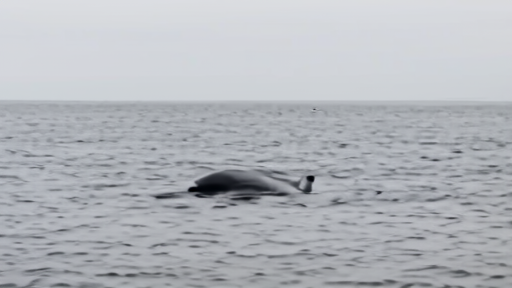
Fisheries and Oceans Canada published its 2026 North Atlantic right whale management measures Friday, ahead of the Snow Crab Area 12 opener in the Gulf of St. Lawrence. [1] Non-tended fixed gear in waters less than 20 fathoms now triggers a seven-day temporary prohibition on confirmed right-whale detection; visual or acoustic detection in deeper water triggers a roughly 2,000-square-kilometer dynamic zone closed for 15 days. [1] The protocol runs live from the season's first day.
The paper's spring coverage named cross-border gear-traceability as the test the 2026 season would set. North Atlantic right whales — fewer than 360 left, NOAA's last population estimate — winter off the U.S. Southeast and summer in Canadian waters; an entanglement attributed to a Canadian crab fishery for the first time last year converted ghost-gear accountability into a bilateral question. [2]
Area 12 is where that question becomes operational. The 15-day dynamic zone cost the 2024 season tens of millions of dollars in displaced harvest; the new protocol shortens some triggers and lengthens others, but the fundamental architecture — one whale closes a zone — is unchanged. Whether the 2026 season produces a Canadian-fishery-attributed entanglement is the cross-border attribution test. If it does, NOAA and DFO move from coordination to rulemaking; if it does not, the protocol stands as the new normal.
The crab boats sailed Saturday morning with the rule already on the bridge.
-- KENJI NAKAMURA, Halifax