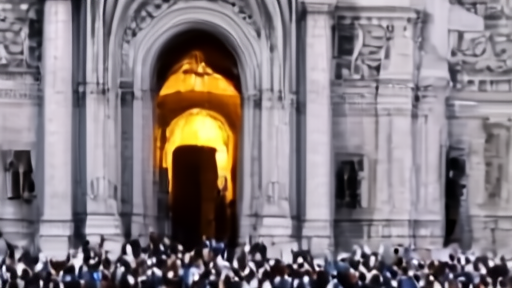
Pope Leo XIV closed the Regina Caeli on Sunday in St. Peter's Square by naming what he called the right "often violated, sometimes blatantly and other times in subtle ways." He was speaking about freedom of the press, and on the annual World Press Freedom Day promoted by UNESCO he asked the faithful to remember "the many journalists and reporters who have fallen victim to wars and violence." [1] [2] It was the fifth Sunday Regina Caeli of his pontificate, and the most explicit press-freedom statement from the Vatican since his election.
The Holy Father did not name a country. He did not have to. The 2026 World Press Freedom Index released last week by Reporters Without Borders found global press freedom at its lowest measured level in twenty-five years, with more than half the world's countries classified as "difficult" or "very serious." [3] A separate count, cited by Al Jazeera in its coverage of the address, found that more journalists have been killed in Gaza since October 2023 than in both world wars, the Vietnam War, the Yugoslav wars, and the U.S. war in Afghanistan combined. [2]
Leo also commended the Italian Meter Association, which protects minors from abuse — a separate item in the same Sunday address. [4] The two acts of recognition share a structure. They are spoken from a balcony, in a public square, into a moment in which institutions outside the Vatican are not eager to name the dead by name. Hannah Arendt's distinction between speech and propaganda turns on this: speech describes the world as it is. The Pope's Sunday line about journalists being killed described it.
The line lands in a particular wartime moment. Two months into the Iran war, eight months into Gaza's grinding closure of journalist access, and four days after Pope Francis's successor declared the war's "anticipate heaven on earth" theme — the Johannine line "I will come back and take you to myself" was the Sunday Gospel — the Vatican's choice to mark UNESCO's day with specific reference to the dead was not pastoral throat-clearing. [5] The Vatican publishes the Regina Caeli text. The line about freedom of the press being "often violated" is on the Vatican website. [4] So is the line about remembering "the many journalists and reporters" who became victims of war. [4]
The Pope's predecessor framed press freedom in similar terms. What Leo added on Sunday was specificity. "Freedom of the press is often violated" is, on its own, an applause-line. "Let us remember the many journalists and reporters who have fallen victim to wars and violence" is a sentence with bodies in it. The Vatican News X account chose the second sentence to carry on the platform. [6]
The institutional context matters. UNESCO's annual day was created in 1993 in the aftermath of the Windhoek Declaration. Its purpose, in the founding text, is to remind governments of their press-freedom obligations and to commemorate journalists killed in the line of work. The day has been observed for thirty-three years. The Vatican's choice of language this year — "blatantly," "subtly" — moves past the framework of governments that fail to protect journalists and toward governments that target them. The distinction matters because it changes who is being addressed by the homily. A country that has failed to protect a journalist hears one sermon. A country whose forces have killed two hundred and thirty-two of them hears a different one. [2]
The paper has tracked Leo's wartime register since his election. He has been more specific than expected. He has named Lebanon. He has called for the unconditional release of detainees in conflict zones. The Sunday line about journalists belongs to that register — short, declarative, name-by-name. The Vatican is one of the few institutions in May 2026 whose moral authority does not require an audit of its energy holdings or its data-center commitments to be heard. The currency Leo is spending on Sunday is the only currency a pope has: speech in public.
Catholic World Report's coverage [7] noted the procedural choice — Leo concluded the Regina Caeli before turning to the press-freedom remarks — and the absence of a written homily, which would have made the address a formal magisterial text. He spoke ex officio, in the Sunday vernacular form, which is how the Pope addresses the world rather than the church. The choice of vernacular is the choice of audience. It was for the journalists, not for the bishops.
What the Vatican has not done is publish a list of names. It has, however, published the line that names the category. In a year when most institutions are publishing capex guides and ceasefire letters, the Vatican is publishing the dead.
-- ANNA WEBER, Berlin