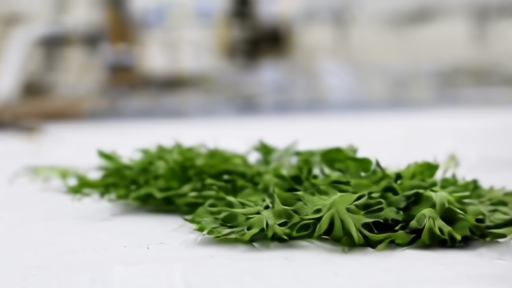
Stellenbosch University researchers reported this month that three South African Cannabis strains hold seventy-nine distinct phenolic compounds across leaves, flowers, and stems — including the first ever evidence of flavoalkaloids in cannabis leaves. [1] Flavoalkaloids are a rare class of plant phenolics with documented antioxidant, anti-inflammatory, and anti-carcinogenic activity in other species. They have not been catalogued in cannabis until now.
The botanical detail is the supply-chain story. Most of the compounds the team identified live in the leaves — the part of the plant the legal-cannabis industry treats as trim and discards or composts. [2] Bud, the flower with cannabinoids, is what the market prices. Leaves are the residual stream. The Stellenbosch finding inverts that hierarchy by phenolic content: the medical chemistry the researchers describe is concentrated in what the industry currently throws out.
The downstream implications are early but tractable. If the flavoalkaloid class holds up under further characterization, cannabis trim becomes a feedstock for nutraceutical and anti-inflammatory product lines, with extraction protocols that can run alongside the established THC and CBD pipelines. The legal-cannabis sector has spent the past five years asking what to do with its waste streams. The answer, in this paper, is that the waste streams may be worth more than the headline product, by a measure the headline product does not register. [2]
The research was funded under South Africa's expanding domestic cannabis-research framework and used standard liquid chromatography and mass spectrometry. The methods replicate. The chemistry, if it holds, does not stay confined to South African strains. [1]
-- KENJI NAKAMURA, Tokyo