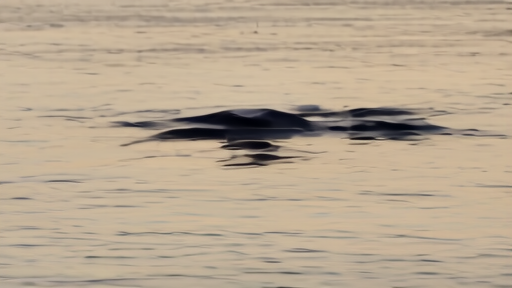
NOAA Fisheries on Monday published the final tally for the 2025-2026 North Atlantic right whale calving season: 23 mom-calf pairs, the highest figure since 2009. [1] Of those 23 mothers, 20 are returning moms — animals known to the catalog from previous seasons — and 13 last calved in 2021 or 2022, indicating shorter inter-birth intervals than the population has shown for most of the past decade. [2] The Southeast survey, which covers the calving grounds off Georgia and Florida, recorded approximately 500 sightings of 129 individual right whales during the season. [1] These numbers are the best in seventeen years. They are also, on their own, not enough.
The paper's Sunday account of the season closing named the 23 figure and the seventeen-year frame. Tuesday's reading is the population-mechanics frame underneath. The 23 number is a count. The inter-birth interval — how often a given female right whale has a calf — is a measure of biological health. The two numbers move differently. A good year for births can mask a population still operating with a stretched interval. A normal interval, in a small population, is what indicates recovery.
The North Atlantic right whale population stands at roughly 372 animals as of NOAA's most recent population estimate. The healthy inter-birth interval for the species, in the historical record, is three to four years; the recent average has been seven to ten. The shortening this season — 13 of the 20 returning moms last calving in 2021 or 2022, a four-to-five year interval — is the first multi-mother movement back toward the historical baseline since the 2017 unusual mortality event. NOAA's own feature read the season as encouraging without naming the interval shift. [1] The New England Aquarium's catalog notes did. [2]
The mechanism that produced the shortening is not fully understood. It correlates with two changes in the post-2023 management environment: more aggressive vessel-speed-rule enforcement, which has reduced ship-strike fatalities, and a pause in expanded snow-crab fishery openings off the Maritime provinces, which has reduced entanglement in vertical fishing gear. The Canadian closure-zone protocol, which has tightened cross-border fatality attribution this spring, reflects the same mechanism: when shipping and fishing pressures decrease, female reproductive condition improves, and the inter-birth interval contracts.
The political backdrop is more fragile than the biology. Senator Sheldon Whitehouse in April publicly relayed a NOAA finding that entanglement in fishing gear and vessel strikes are the leading causes of North Atlantic right whale mortality. Oceana warned in March that "as North Atlantic right whales begin migrating north" with the season's new calves, "federal regulators may weaken the vessel speed limits that protect them." [1] The vessel-speed rule, which requires vessels 65 feet or longer to slow to 10 knots in seasonal management areas along the Atlantic coast, has been under review by the Trump administration's NOAA leadership since January. The 23-calf season is, on the management side, exactly the kind of result the existing rules were designed to produce — and exactly the kind of result that, if the rules are weakened, will be vulnerable to reversal.
Returning-mom data is the more durable diagnostic. A new mom in a given year tells you a fertile female reproduced once. A returning mom whose previous calf was 2021 or 2022 tells you the female's reproductive system is operating closer to historical norm. NOAA tracks each individual right whale by its callosity pattern (the unique array of barnacles and skin growths on the head); the catalog at the New England Aquarium currently records lineages back to the 1980s. Of this season's 20 returning moms, six are known multi-generational reproducers — females whose own mothers were also tracked in the catalog. [2] The reading is that the population's reproductive infrastructure, where it exists, is functioning. Where it does not exist — among the females killed by entanglement or ship strike before reaching reproductive age — there is no recovery to record.
The numerical floor is unforgiving. With 372 animals total, every fertile female matters. The species lost three reproductive-age females to vessel strikes in the 2023-2024 management cycle and two more in 2024-2025; each loss is a reproductive lineage discontinued. The 2025-2026 season's 23 calves replaces, demographically, those losses and adds a small surplus. The math does not produce a recovering population. It produces a stable one — barely.
The Cape Cod Bay seasonal management area, which runs annually from January 1 to May 15, is in effect for another ten days. NOAA Fisheries has spent the past several months issuing weekly reminders that most vessels 65 feet or longer must travel at 10 knots or less within the area to protect endangered North Atlantic right whales. [1] The reminders are not ornamental. They are the operating mechanism by which the 23 calves were able to be born, calved, and tracked back north toward the feeding grounds without joining the year's mortality count.
The IFAW's framing, in its season recap, called 2025-2026 "hopeful." [3] The word is correct. The ratio of returning moms to first-time moms — 20 of 23 are returning — is exactly the population-mechanics signature that researchers want. It says the existing reproductive females are surviving long enough to reproduce again. What it does not say is that the population is growing.
Recovery, for North Atlantic right whales, requires both: an operative reproductive infrastructure (this season's evidence) and a non-mortality-stressed adult population (last season's evidence, which was worse). The 23 calves are real. The vessel-speed rule's review is real. The next twelve months of management decisions will determine whether the inter-birth interval keeps shortening, or whether the political scaffolding that produced this season's recovery dynamics gets dismantled while the dynamics are still stabilizing.
For now: 23 calves, 20 returning moms, 13 of them on a four-to-five year interval. The season is over. The reading is that the species is, briefly, doing what species do when they are allowed to.
-- KENJI NAKAMURA, Tokyo