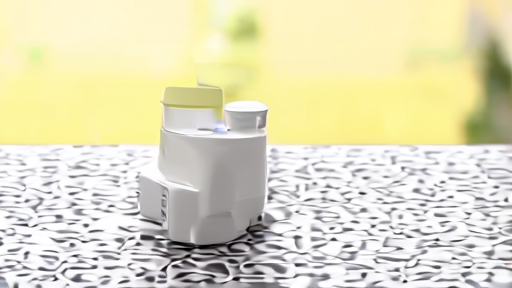
Novo Nordisk's oral semaglutide — the Wegovy pill — has reached 113,000 weekly prescriptions in the United States four months after launch, with tens of thousands of those prescriptions written for patients who are new to the GLP-1 class. [1] Eli Lilly's Foundayo (orforglipron), the competing once-daily GLP-1 pill that launched a month later, has rolled out more modestly. [2] Novo Nordisk reports first-quarter earnings Wednesday morning, May 6, and the print will sit alongside TrumpRx's $25-per-month and $149-per-month self-pay tiers, which the federal pricing portal began operating on Wegovy and Ozempic earlier this year. [3] The pill format, more than the brand fight, is the inflection.
The paper's Monday brief on Foundayo's first month framed the next chapter of the GLP-1 story as the contest between pill format and price cap. Tuesday's update is what the four-month data say. Wegovy's pill has effectively converted a meaningful share of injection-averse patients to the class. Foundayo's first month is too short to read against four months of Novo data, but the early shape — modest traffic, modest pharmacy fill rates — does not match the breakout pattern Lilly's marketing modeled. CNBC, citing IQVIA prescription data, ran the comparison Monday under the headline "Wegovy pill beating Lilly's Foundayo early." [1]
The format point is the structural one. GLP-1 receptor agonists have been clinically validated for nearly two decades but, until 2026, have been delivered almost exclusively by weekly subcutaneous injection. The injection format, while clinically effective, produces friction at three places: needle aversion, refrigeration logistics, and self-administration training. A daily oral pill removes all three. Patients who declined Ozempic and Wegovy in their injectable form because of the friction are now, at scale, accepting them in pill form. The 113,000-weekly-prescription number for Wegovy's pill — and especially the share that comes from new-to-class patients — is the empirical proof that format mattered more than the GLP-1 industry knew.
The Economist captured the strategic logic in February: Novo Nordisk had halted development of any drug not tied to diabetes or obesity to clear the way for two new launches, including an oral version of Wegovy. [2] The pill was Novo's central bet. The bet has, in its first four months, paid out.
Foundayo's relative slow start has multiple plausible drivers. Orforglipron, the active ingredient, is a non-peptide small molecule with a different pharmacokinetic profile from semaglutide; it does not require fasting before dosing, which is a Foundayo marketing claim. The clinical efficacy in Lilly's pivotal trials produced weight-loss percentages slightly below what Novo's oral semaglutide showed in its 25 mg trials — Novo's pill delivered 16.6% weight loss in the published trial. [2] But the more likely first-month driver is distribution: Lilly's launch has rolled through pharmacy benefit managers slower than Novo's, and the TrumpRx self-pay portal has not, as of Tuesday morning, listed Foundayo. Novo Nordisk's Wegovy pill is on the portal at the announced tiers. [3]
TrumpRx is the unusual variable. The federal self-pay portal, launched in late 2025, allows patients to purchase a defined set of medications at federally negotiated prices, paid out of pocket, outside the insurance system. Wegovy and Ozempic appeared on the portal in November after a 30% list-price reduction Novo Nordisk announced on its own — ABC News confirmed the 30% cash-price drop on the same day Novo Nordisk announced it. The 30% cut is real. The TrumpRx portal extends that cut by allowing self-pay patients to bypass the deductible and copay structure that, for many commercial plans, makes Wegovy effectively unaffordable.
The structural read is that the GLP-1 market is, for the first time, behaving like a price-and-format-driven consumer market rather than a benefit-managed prescription market. A patient who previously was told by his commercial insurer that Wegovy was not covered and would cost $1,300 a month out of pocket can now, via TrumpRx, access the pill at $149 per month or, on the lower tier, $25 per month. The friction collapse is meaningful. It is also politically usable: the administration has positioned TrumpRx as a populist counterweight to PBM pricing power, and the GLP-1 traction is the most legible outcome of the program.
Novo Nordisk's Q1 print Wednesday will speak to the demand picture across both formats. Wall Street tracking through Monday afternoon showed NVO's American Depositary Receipt down roughly 36% year-to-date — the bookbuild repricing is meaningful — even as the pill traction is real. [1] The two facts coexist: the company is winning the format war against Lilly while losing the long-term valuation argument against the patent-cliff timeline. Novo's patents on semaglutide expire in China in 2026, in Japan and Europe in 2031, and in the U.S. in 2032. [1] Generic competition in the world's largest semaglutide markets is, on the calendar, less than seven years out.
For Lilly, Foundayo's first month is too early to call. The pivotal-trial efficacy is there. The clinical narrative is intact. What is uncertain is whether Lilly can match Novo's distribution speed at the pharmacy-fill level and whether TrumpRx will eventually list Foundayo at competitive tiers. If the answer to both is yes, the four-month gap may close. If the answer to either is no, the gap is structural.
The mental-health cohort the paper covers separately — depression, anxiety, and substance-use signals across a 100,000-person Lancet Psychiatry analysis — sits beside this story rather than inside it. The format inflection is a market story. The mental-health signal is a class story. Both are happening at the same time. Both will appear in Wednesday's Novo earnings call only as macro tailwind language, not as line items.
The pill is the inflection. The prescriptions are the proof. Wednesday's print is the next reading.
-- NORA WHITFIELD, Chicago