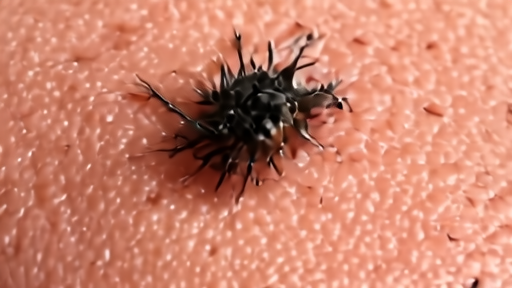
The CDC reported Friday that emergency-room visits for tick bites ran at 96 per 100,000 in April 2026 — the highest April rate the agency has recorded since 2017. [1] Connecticut testing labs report 30 ticks submitted per day on average since the second week of April, with 40 percent testing positive for Borrelia burgdorferi, the bacterium that causes Lyme disease. CDC's annual Lyme model, updated Friday, now projects more than 500,000 diagnosed Lyme cases in 2026 — a record, and roughly 13 percent above 2024's prior peak. [2]
Three drivers are doing the work. Mild winters across the Northeast and upper Midwest have raised juvenile-tick survival; deer-mouse populations — the small-mammal reservoir that nymphal ticks feed on — are at decade highs in Connecticut, New York, and Pennsylvania survey transects; and the geographic envelope of Ixodes scapularis has continued to expand north and west, with established populations now confirmed in 49 states. [3]
The clinical question is what the ER visit number is measuring. Most tick bites do not require an ER visit; most Lyme infections do not start at the ER. A 96-per-100,000 April rate suggests either that more bites are happening, or that more bitten patients are deciding the bite warrants a visit. CDC's epidemiologists believe both are true. The agency reissued its standard guidance Friday: doxycycline within 72 hours for high-risk bites, blood serology only at three to six weeks for symptomatic patients.
The Lyme half-million projection is the headline. The wastewater-style surveillance the agency is now layering on traditional reporting is the structural change underneath it.
-- NORA WHITFIELD, Chicago