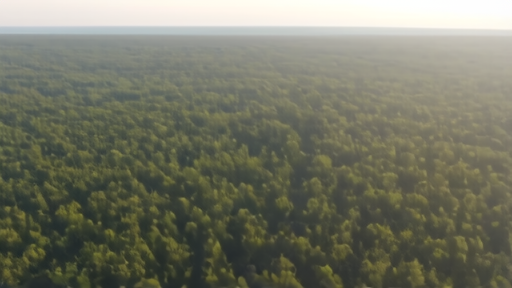
Brazil has built the largest conservation finance mechanism in history around a simple proposition: if a country can prove its forest is still standing — verified by satellite, not by self-report — it gets paid per hectare, every year.
The Tropical Forests Forever Facility, launched by President Luiz Inácio Lula da Silva at COP 30 in Belém, targets $125 billion in total capitalization. At launch, 53 countries endorsed the founding declaration, 34 of them tropical forest nations covering more than 90 percent of the world's tropical forest cover [1]. Committed capital at launch exceeded $5.5 billion.
The architecture is straightforward by design. Sovereign donors contribute to one pool. Private capital, attracted by returns linked to the performance payments, flows into a second. Together the two tranches are meant to finance annual disbursements to participating countries based on how much forest they protect and verify. The measurement method is satellite remote sensing — annual canopy cover readings, standardized, transparent, and difficult to game [2].
Brazil contributed $1 billion to the sovereign tranche. Germany pledged one billion euros. The United Kingdom, Norway, and a coalition of smaller donors made additional commitments. Lula's government structured Brazil's contribution as conditional on parallel participation from other sovereign partners — a leverage mechanism that signals Brasília does not intend to carry the fund's credibility alone.
The mechanism inverts the traditional logic of conservation finance. Historically, wealthy nations pledged money to protect forests and then waited for results that were difficult to verify and easy to overstate. TFFF payments are prospective and conditional: forest that is still standing on a satellite image in year two gets the year-two payment. Forest that disappears gets nothing. The incentive runs forward, not backward [3].
That structure required the FAO to develop and endorse a monitoring standard, which it did ahead of COP 30, establishing the technical working group that will govern forest monitoring, including how to account for degradation — a harder measurement problem than total canopy loss. A forest thinned but not cleared degrades slowly; the satellite record now needs to capture what it can of that gradient [1].
Latin American countries have the most at stake in the payment design. Brazil, the Democratic Republic of Congo, and Indonesia collectively hold the majority of the world's remaining tropical forest. Under TFFF, that endowment becomes a recurring revenue stream — not a loan, not a grant tied to project implementation, but a performance payment for continued stewardship. For Amazonian states like Pará and Amazonas, which sit directly over the forest and bear the economic pressure to convert it, the cash flows could shift the underlying math of land use.
The private sector tranche is the mechanism's largest unresolved question. Mobilizing $100 billion from investors requires returns. Those returns come from the performance payments, which in turn depend on forest nations actually maintaining cover. Conservation advocates have argued the model is robust; sovereign debt analysts have argued that returns will be too low and too uncertain to attract institutional capital at the scale required.
At $5.5 billion committed against a $125 billion target, the gap is large. The fund's administrators have a multi-year runway to close it. What they have already done — establish a satellite verification standard, secure sovereign endorsements, and launch with a credible founding pool — is further than any prior conservation finance initiative reached [4].
Whether the private market follows is the next five years' question.
-- LUCIA VEGA, São Paulo