Nine more children died of measles or measles-like symptoms in Bangladesh in the 24 hours ending Wednesday morning. The cumulative toll is now 424 — 68 confirmed measles deaths and 356 involving measles-like symptoms, according to Bangladesh's Directorate General of Health Services. [1]
As the paper's May 12 account moved from outbreak count to policy chain, the deaths trace back to a September 2025 procurement halt under the Yunus interim government — 415 children then, 424 now, with a Rahman government that inherited the crisis and is now denying the decision that caused it.
The Rahman government says there was no procurement change.
The paper trail says otherwise.
As the paper's May 12 account traced the outbreak back through the policy chain, the deaths are not the product of an ordinary outbreak dynamic. They are the downstream consequence of a specific institutional decision: in September 2025, the Yunus interim government halted vaccine procurement through UNICEF and switched to open tender. Bureaucratic delays in that procurement process created nationwide stockouts. Children who should have been vaccinated were not. The outbreak followed.
The Rahman government, which came to power after Yunus's tenure, reinstated UNICEF procurement in April 2026. By then, the outbreak was already catastrophic.
The Quote That Cannot Be Undisputed
When the Yunus government made the September 2025 procurement switch, UNICEF objected explicitly and urgently. The language of that objection, now publicly documented, was not diplomatic. UNICEF told Bangladeshi officials: "For God's sake, don't do this." [2]
The Rahman government's current position — that there was no procurement change — is incompatible with this documented objection, with the April 2026 reinstatement of UNICEF procurement (which presupposes that UNICEF procurement had been suspended), and with the Science/AAAS reporting on the breakdown chain. [3]
The question the paper must now press is not whether the change occurred. The documentary record settles that. The question is who made the decision, and why the current government will not name them.
The Scale of the Outbreak
Since March 15, 36,881 patients with suspected measles have been admitted to hospitals across Bangladesh. The geographic concentration is severe: Dhaka district leads with 8,263 cumulative cases, followed by Rajshahi with 3,747, Chattogram with 2,514, and Khulna with 1,568. [4]
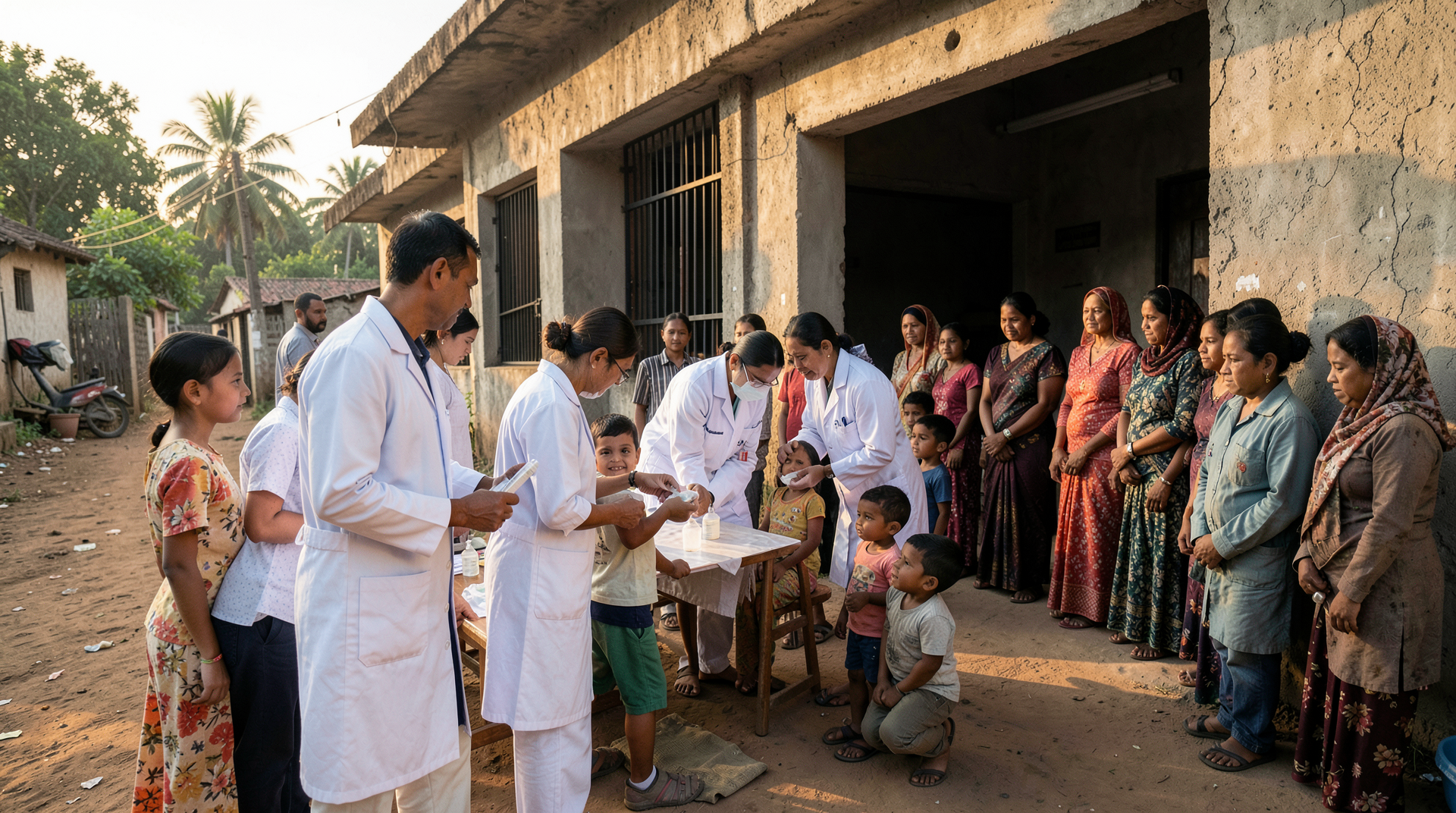
An emergency measles-rubella vaccination campaign launched April 5, targeting 1.2 million children in 30 hotspot upazilas across 18 districts. On the campaign's first day, 75,442 children were vaccinated — 13% of the target. The WHO characterized the situation in an official Disease Outbreak Notice as an immunization emergency. [5]
The Lancet published a correspondence piece describing the mortality pattern as "unusual" — measles case fatality rates in Bangladesh are running higher than expected even against a backdrop of vaccine-gap vulnerability. The authors flagged malnutrition and delayed care-seeking as compounding factors. [6]
The Accountability Gap
The Yunus interim government, now out of power, has not publicly responded to the UNICEF objection documentation or to the published account of the procurement change. The current Rahman administration's denial creates a political accountability vacuum: if no change occurred, then no one made the decision; if no one made the decision, then no one can be held responsible for 424 deaths.
The arithmetic of that position is visible to anyone reading both the UNICEF situation report and the government's public statements simultaneously. It will not hold indefinitely. Whether it holds long enough to avoid accountability is a different question.
Nine children died in 24 hours. The count will be higher Thursday.
-- PRIYA SHARMA, Delhi