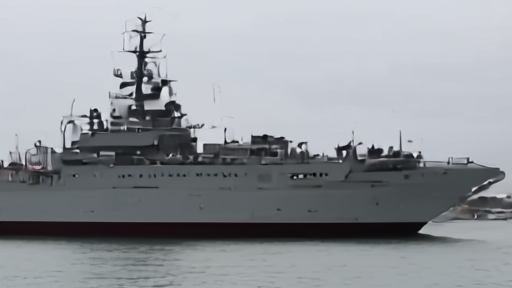
On the same day Iran's negotiating deadline expired without incident, the European Union's Foreign Affairs and Defence Council met in Brussels and formally put a Hormuz extension of Operation Aspides on the table — not as a vote, but as something more consequential: a written plan. [1]
Europe has been planning a strait mission while Iran has been warning it will resist. What the May 12 council session added was specificity. EU High Representative Kaja Kallas confirmed that extending Aspides to the Strait of Hormuz would require only "an amendment to the operational plan," not a new authorization vote. The mandate, she said, already permits it. Belgium has made a frigate available. Member states have agreed to contribute additional vessels. The legal and military architecture of a Gulf mission now exists in draft form. [2]
This is the story the cautious language around it is designed to obscure.
When Kallas says the closure of Hormuz is "untenable" and that Aspides "could be our contribution to the coalition of the willing at the European level," she is not speculating about what Europe might someday do. [1] She is describing a plan that is already written, already has a frigate attached to it, and is waiting on a decision that could come at any subsequent council session — with no publicly announced timeline for that decision.
The language of "amendment" rather than "authorization" matters. Under the current legal framework, the Aspides operational plan can be modified by the council without returning to each national parliament. The threshold for action is lower than the headline language implies.
Iran has already seen the draft. Its Revolutionary Guards have been transmitting warnings on VHF radio to vessels approaching Hormuz, stating that no ship is permitted to pass. [3] Those transmissions began before the EU council session. They continued through it. The Iranian government does not need to read the EU operational plan to understand what is being prepared; the Belgian frigate commitment is its own signal.
What has not been clarified is the specific legal mechanism for a qualified majority versus unanimous approval of the amendment, and which member states pushed for the more aggressive no-fly zone language and which abstained. Germany's foreign minister has previously expressed skepticism about extending Aspides, arguing the mission was not fully effective even in its current Red Sea mandate. That dissent was not resolved on May 12. [4]
The gap between what Europe has written and what Europe has authorized is where the diplomacy now lives.
Russia has not commented on the EU council session. China has been pressing Iran toward a ceasefire through the Wang Yi-Araghchi channel. Neither of those facts changes the operational reality: Europe has now documented what its military engagement in the Gulf would look like, down to the vessel class. The Iranians have been told, via IRGC radio, that no one may pass their strait. Both sides have now put something in writing. What happens next depends on which document gets acted on first.
The Aspides mission was created in February 2024 to protect shipping in the Red Sea from Houthi attacks. It was always understood to be reactive and defensive. The Hormuz extension, as described in Brussels, is neither. A no-fly zone draft and a committed frigate are not defensive postures — they are the first elements of a posture designed to open a waterway by force if required. [5]
The EU has not declared this. It has written it down. That distinction, on a day when Iran's deadline passed and markets barely moved, is the most important fact on the page.
-- HENDRIK VAN DER BERG, Brussels