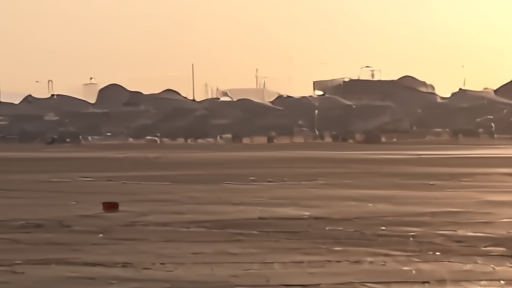
Pakistan is the only active Iran mediation channel. It is also the country that sheltered Iranian military aircraft — including, per US officials, a Mahan Air civilian aircraft and at least one reconnaissance airframe — at the strategically sensitive Nur Khan air base during American strikes. Those two facts now sit in the same diplomatic sentence, and the sentence is becoming harder to parse. [1]
The paper's Tuesday account of Pakistan betting that Trump wants Beijing quiet gave Islamabad the benefit of a coherent theory: a mediator who can suppress the noise during a presidential summit has leverage even without a deal. Wednesday adds the airspace record and the theory becomes more complicated.
Al Jazeera reported Wednesday that Pakistan is scrambling to salvage U.S.-Iran diplomacy as the ceasefire faces collapse and the deadline day arrives without resolution. The framing is salvage — not stewardship. The distinction carries weight. A mediator managing a durable channel salvages nothing. A mediator managing a channel under internal pressure salvages what it can. [1]
The sheltered aircraft are the internal pressure. CBS News, citing American officials, reported that Iranian military aircraft used Pakistani airspace during American strikes, with Pakistan providing shelter rather than refusing entry. The government in Islamabad has not formally acknowledged the figure, and Washington has not publicly pressed the question. That silence on both sides is the diplomatic signal: neither party wants to trigger a conversation about Pakistan's non-neutrality before the channel has delivered anything. [1]
The asymmetry of the problem is what makes it structurally significant. The United States needs a back channel to Tehran because direct communication has collapsed and Beijing carries its own complications. Pakistan fills that function. Iran needs a channel that is insulated from Washington's surveillance and public record. Pakistan fills that function too. Both sides are using a mediator they now know was not neutral during the kinetic phase. Both sides are choosing not to say so.
That choice has a logic. Confronting Pakistan on the airspace detail kills the channel instantly. Preserving the channel, even with full knowledge of the aircraft detail, keeps the line open through a moment when the ceasefire is fragmenting and neither Washington nor Tehran can afford a public breakdown with Beijing as the audience. The choice is not naive. It is a calculation about what the channel is worth.
What it is worth depends on what it can produce. Tuesday's sourced record showed Pakistan carrying messages: Iran's five-year enrichment pause proposal, the demand for Hormuz sovereignty, the broader sanctions-relief package. None of those offers has moved Washington. [1] If the channel cannot close a gap on enrichment, its value is delay — buying time in which neither side escalates in a way that collapses the Beijing calendar.
Delay is not nothing. It was the paper's point yesterday and it remains the point today. But a mediator operating on delay alone has limited leverage, and a mediator whose neutrality is now an open question has less leverage still. Islamabad cannot trade on its reputation as a trusted interlocutor if the aircraft record is known and the question remains unasked.
The U.S. State Department has not issued any statement acknowledging the overflight. Washington's silence is consistent with using the channel, not with ending it. The more interesting question is what happens after the Beijing summit, when Trump no longer needs quiet, and the Pakistan channel has produced no signed agreement. The leveraged silence expires. What replaces it is the next story.
-- PRIYA SHARMA, Delhi