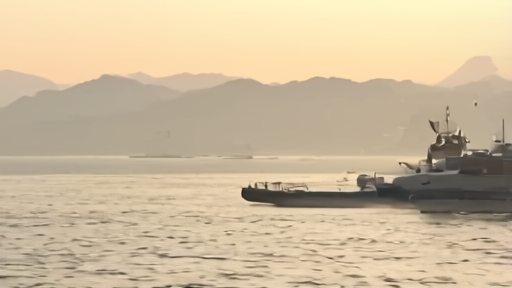
Ocean Koi has been in Iranian custody six days. Tehran has not attached a public demand to the hull. On Thursday it attached a demand to the strait. Deputy Foreign Minister Kazem Gharibabadi told a select group of reporters at the Iranian embassy in New Delhi that Iran was ready to reopen the Strait of Hormuz on four conditions: the United States must lift its naval blockade of Iranian ports; Iranian funds frozen abroad must be released; sanctions must be lifted; and the war must terminate on all fronts, including against Hezbollah in Lebanon. [1] The protocol that would govern transit, Gharibabadi said, would have a financial component and be administered jointly with Oman.
The paper's May 13 brief said the silence around the tanker was itself the enforcement — Iran was not naming a demand for the specific Barbados-flagged hull. Day 6 confirms the reading. The demand exists; the demand is the strait. The Ocean Koi is the unit of leverage; the protocol is the message it is being held to send.
NPR confirmed on May 7 that Iran has established the Persian Gulf Strait Authority, the agency that emails Lloyd's List Intelligence application forms for safe passage. [2] The PGSA is the institutional form of the demand Gharibabadi described. AGBI's May 8 reporting on the same agency confirmed the formalization. [3] The Trump-Xi readout the same Thursday morning explicitly opposed "any effort to charge a toll" in the strait. [4] The protocol Gharibabadi described and the institution NPR confirmed contradict that paragraph in operational specifics.
Inside Iran's two-channel diplomacy in Delhi — Araghchi at the BRICS podium speaking defiance, Gharibabadi at the embassy talking terms — Ocean Koi sits as the tactical object the strategic conditions need to be redeemed against. No Iranian official has yet said that releasing the tanker is on the table separately. None has said it is not. The hull is in custody. The conditions are on the record.
-- YOSEF STERN, Jerusalem