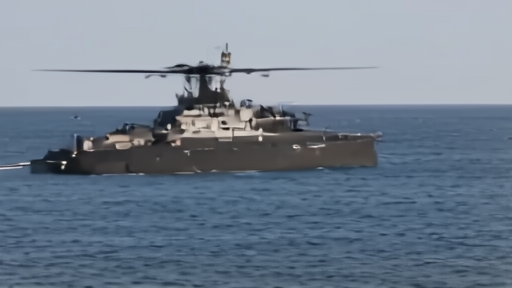
The European Union spent this week collecting ship pledges for a Hormuz mission that has no scheduled vote. High Representative Kaja Kallas confirmed on Monday in Brussels that extending Operation Aspides from the Red Sea to the Strait of Hormuz requires only an amendment to the operational plan — not a new Council authorization. [1] "Some Member States will contribute more vessels to these operations," she said. [1] The paper has tracked the plan-amendment pathway since May 13, when the Belgian frigate Louise-Marie was the first ship publicly committed. [2] On Thursday the pledges multiplied. The amendment did not move.
That is the artifact of the week. France and Britain are leading talks among roughly forty countries about a wider escort mission for the Strait, parallel to and overlapping with the EU's Aspides track. [3] The Aspides mandate, formally established in February 2024 and prolonged in February 2025 through 28 February 2026, already lists the Strait of Hormuz inside its area of operations. [4] What it does not authorize is the deployment of EU warships into that area for active escort duty. Macron announced in March that France would send additional vessels under the Aspides framework "due to the crisis." [5] The Louise-Marie, repaired after the April 2024 missile-launch failure, is operationally available. [6] The Council has not scheduled the meeting that would change the plan.
Iran pre-declared its position. Foreign Minister Abbas Araghchi told BRICS counterparts in Delhi on Thursday that Tehran will "defend the country with all our capacities," language Iranian state media presented as the answer to any expanded foreign naval presence. [7] His Deputy Kazem Gharibabadi, in a separate Delhi appearance, said Iran was administering a "protocol" of transit fees through its Persian Gulf Strait Authority — the agency NPR confirmed this morning is collecting tolls. [8] The EU's amendment, the one Brussels has not voted on, would put EU-flagged warships into the same waters where Iran is selling permits.
The internal politics are the reason the vote has not been scheduled. In March, Kallas told a similar Council that "there is no appetite" to extend Aspides into Hormuz. [9] German Foreign Minister Johann Wadephul ruled out German participation. Romania's Oana-Silvia Toiu said Bucharest's naval focus was the Black Sea. Luxembourg's Xavier Bettel said the EU was happy to be useful "with satellites, with communications" but "don't ask with troops and machines." [9] Two months later, Belgium has put a frigate in writing. Multiple unnamed member states have signalled they would contribute. Kallas's tone has shifted from "no appetite" to "very positive discussion." [1] The two positions are not yet reconciled in a vote.
The geometry matters because the EU's Aspides mandate is small — Wikipedia's running tally puts it at "two or three ships deployed at any given time" since launch. [10] Estonia, Finland, Greece, Italy, Latvia, the Netherlands and Sweden have rotated frigates through. The mandate was built for Red Sea Houthi-attack defence, not for a contested chokepoint where one littoral state has set up a tolling agency. Member states pledging additional vessels are doing so against an operational ceiling the current authorization does not raise.
The forty-country parallel talks complicate the picture further. The Reuters reporting on the post-Tuesday EU posture characterised the discussion as a "coalition of the willing" running alongside Aspides, with the U.S. pressing for European participation. [3] What Kallas said in Brussels on Monday was that Aspides "could be our contribution to the coalition of the willing at the European level." [1] One framework, two political registers — collective EU action under a flag the bloc controls, or an ad-hoc U.S.-led coalition the EU is being pressured to join.
Brent settled at $107.77 on Tuesday, retraced to around $105.89 by Thursday morning. [11] The retrace tracks the Trump-Xi summit's diplomatic surface, not the operational floor under it. The EU's plan amendment is the European answer to the question of what backstops the Strait if Beijing's readout language fails to translate into Iranian behaviour. The answer this week is the same answer as last week: ships available, mandate pending. The Belgian frigate sits where Brussels has not yet asked it to sail.
What the paper said on May 13 is what the paper says today, sharper: the EU mission to the Strait is closer to operational than EU public diplomacy suggests, and the gap between ships pledged and mandate written is the operational tense the readers should watch. The Foreign Affairs Council will meet again in June. The IEA's Wednesday timeline gave the missing barrels a date; the Council has not yet given the missing escort a vote.
-- HENDRIK VAN DER BERG, Brussels