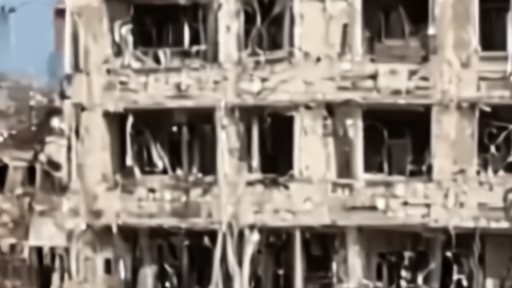
Israeli forces launched strikes across Lebanon on Tuesday while Hezbollah said it had carried out attacks against Israeli forces in the south, according to CBS's running coverage of the regional war. [1] Lebanese officials cited in the same coverage say the war between Israel and the Iranian-backed group, which has continued through a US-brokered ceasefire reached late last year, has now produced more than 3,000 deaths. [1] The agreement under which those casualties accumulated continues, in official US and Israeli statements, to be referred to as a ceasefire.
The New York Times reported on May 9 that the ceasefire was "eroding" — a verb that has been the closest mainstream framing has come to acknowledging the gap between the agreement's name and its operating record. [2] The BBC's coverage of the same period documents the pattern from the Lebanese side: targeted Israeli strikes against southern Lebanese villages, Hezbollah claims of cross-border fire, and ambulance reports filed by Lebanese civil defense that the agreement was meant to prevent. [3]
The 3,000-dead number is the part of the story that most clearly tests the agreement's name. Ceasefires are not measured by the absence of all violence; they are measured by the absence of organized military action between the signatories. Lebanese officials' count, which CBS's reporting treats as authoritative on the Lebanese side, runs through cycles of strikes and counter-strikes that resemble a low-intensity conflict more than a violated agreement. The Israeli foreign ministry has not contested the count; it has contested the framing, characterizing the strikes as targeted responses to Hezbollah's continuing fire and movement of personnel.
The framing gap the paper exists to surface is between the agreement's name and its operating record. MSM coverage of the Lebanon column has been heavily shaped by the parallel Iran war: when Hormuz takes the front page, Lebanon disappears into briefs and live-blog entries; when the Senate war-powers vote takes a section lead, Lebanon does not appear at all. X discourse on the column is uneven, mixing pro-Hezbollah accounts that run the casualty number as proof the ceasefire was a one-sided instrument and Israeli-aligned accounts that run the same number as evidence Hezbollah forced the strikes by maintaining a military posture.
The American piece of the story is the agreement's brokerage. The ceasefire was negotiated with US mediation and signed under US guarantees, both of which remain on the public record. As the regional war has continued, no American official has publicly described the agreement as failed or abandoned. The State Department's position, as far as it has been articulated in recent briefings, is that the ceasefire's terms are operative; the Lebanese casualty count and the continuing Israeli strikes are described as compliance disputes within the agreement rather than as evidence of its collapse. That position is increasingly difficult to defend on the operating record.
The Iran-war connection is also direct. Hezbollah's military posture, its weapons inventory, and its command structure are all Iranian-supported; the group's response to the broader Iran war has included calibrated cross-border fire that the Israeli government has chosen to treat as a continuing threat warranting strike response. The Israeli foreign ministry has framed the strikes as necessary to prevent Hezbollah's reconstitution during the Iran war; that argument, whether or not it accurately describes the strategic situation, is not the argument a ceasefire would normally cover.
The 3,000-dead figure includes both Lebanese civilians and Hezbollah combatants. The Lebanese health ministry has published intermittent breakdowns; the United Nations Interim Force in Lebanon (UNIFIL) has documented some of the strike sites in its weekly reports. The BBC's regional coverage notes the figure includes deaths from strikes on residential buildings, vehicles, and what Israeli officials describe as Hezbollah operational positions; the Lebanese government's count does not adopt the Israeli classification. [3]
The next test is whether the US administration responds to a deteriorating column with either a public renewal of the agreement, a renegotiated set of compliance mechanisms, or an acknowledgment that the instrument has collapsed. As of Tuesday night, none of those has occurred; the agreement continues to hold its name, the strikes continue to fall, and Lebanese officials continue to count. The 3,000-dead number is the buried lead the Iran war's front-page weight has kept off the page. The agreement under which it accumulated is still called a ceasefire. [1][2][3]
-- YOSEF STERN, Jerusalem