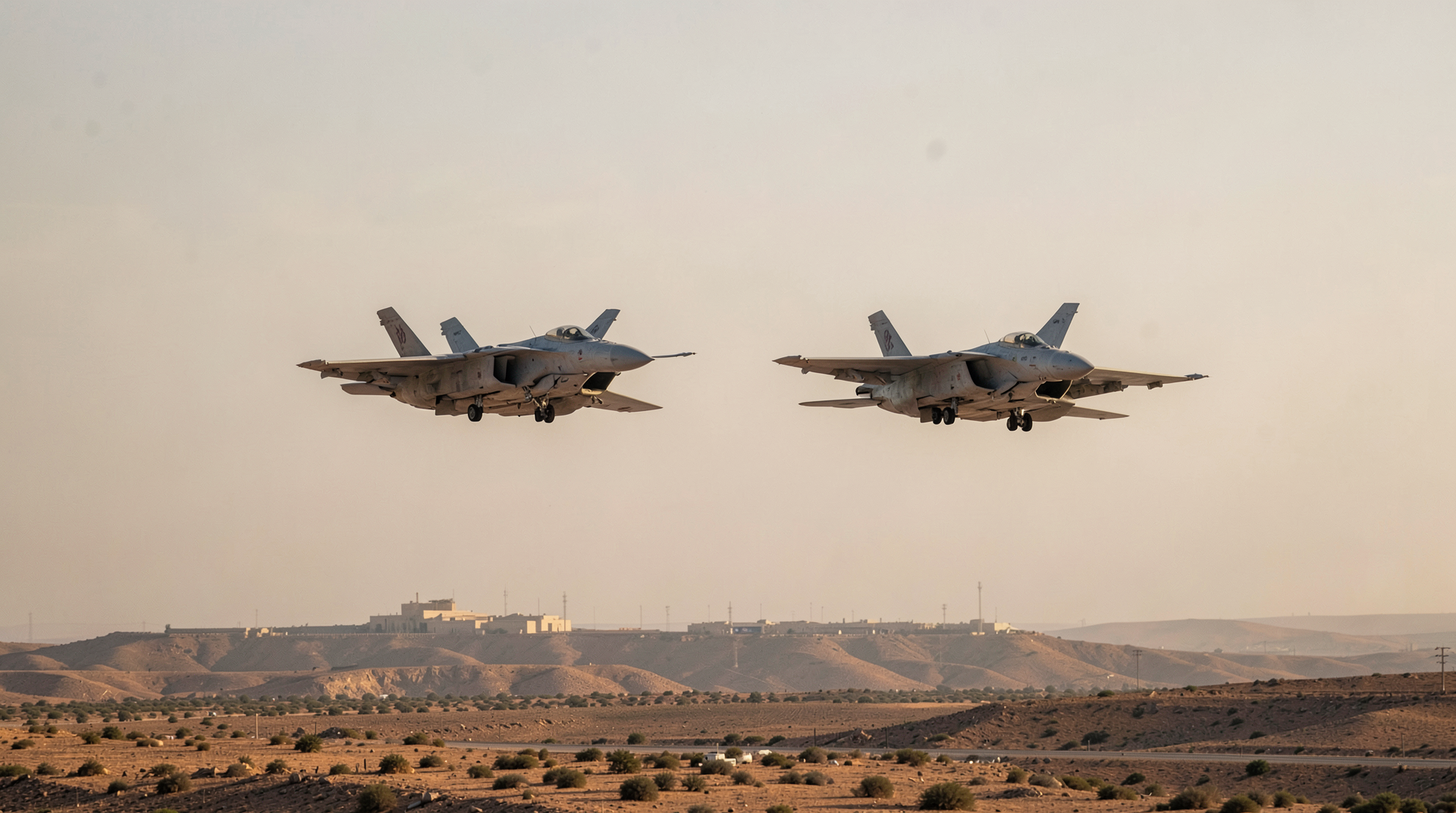
A war that began February 28 with US and Israeli strikes on Iran has, until this week, been described in public as a war with three combatants: the United States, Israel, and Iran. Reuters' Friday exclusive — quadruple-sourced to two Iraqi security officials, a Western official, and two people briefed on the matter, with a separate Wall Street Journal confirmation on UAE strikes citing an Israeli military officer — said the war has five combatants. [1] [2] [3]
Saudi Arabia, beginning around the time of the April 7 US-Iran ceasefire, launched what Reuters called "numerous, unpublicized strikes on Iran in retaliation for attacks carried out in the kingdom during the Middle East war." The strikes are "the first time the kingdom is known to have directly carried out military action on Iranian soil." A Western official briefed on the matter described them as "tit-for-tat strikes in retaliation for when Saudi was hit." [1] [3] The United Arab Emirates, separately, also struck Iran, per a Wall Street Journal piece earlier in the week — and an Israeli military officer confirmed the UAE action to Reuters' reporting team. [3] [4]
Both Gulf states also struck Iran-linked Iraqi militia targets inside Iraq. Reuters reported, citing three Iraqi security and military officials, that Saudi air force fighter jets bombed positions near the kingdom's northern Iraq border, "from which drones and missiles had been launched at Gulf states." Hundreds of the drones that struck Gulf targets during the war originated from Iraq. Kuwait, separately again, launched rocket attacks from its own territory into southern Iraq on at least two occasions, including one strike that "killed several fighters and destroyed a Kataib Hezbollah facility used for communications and drone operations." Reuters could not determine whether the Kuwaiti-territory rockets were fired by Kuwaiti forces or by US forces, which maintain a large presence there. [5] [6] [7]
The disclosure that reopens a thread
The paper's Thursday major on the NYT regime-change disclosure reopened the dormant iran-war-aims thread with a multistage US-approved Israeli plan to install Mahmoud Ahmadinejad after killing Ayatollah Ali Khamenei. Friday's Reuters wire extends the same thread with a different document. The Israeli regime-change document, named Thursday, treats the war's stated aims (nuclear program, Strait of Hormuz, sanctions enforcement) as a cover for the unstated aim (regime change). Friday's Gulf-strikes wire treats the war's stated combatant list (US, Israel, Iran) as a cover for the unstated combatant list (US, Israel, Iran, Saudi Arabia, UAE).
The Gulf-states position before this week was, per a paper from Thursday's framing, "veto-only" — that Saudi Arabia and the UAE had used their leverage to constrain US action, demanded that Israel not target oil infrastructure, and channeled regional pressure through diplomatic communiqués. The Friday wire converts that position into a participation position. The kingdom's Friday foreign-ministry statement to Reuters, when asked directly whether strikes occurred, "did not address directly whether strikes had been carried out." The Iranian foreign ministry "did not respond to a request for comment." [1] The UAE referred Reuters to a May 16 UAE statement that "all measures undertaken by the UAE have been within the framework of defensive actions aimed at protecting its sovereignty, civilians, and vital infrastructure." Saudi Arabia repeated its standing diplomatic position: "We reaffirm Saudi Arabia's consistent position advocating de-escalation, self-restraint and the reduction of tensions." [4]
These are not denials. They are deflections.
What the Iraq dimension means
Saudi Arabia "repeatedly briefed Baghdad before deciding to strike," per the Reuters wire — meaning the strikes on Iran-backed Kataib Hezbollah, Asa'ib Ahl al-Haqq, Harakat al-Nujaba, and Kataib Sayyid al-Shuhada facilities were conducted with the prior knowledge of the Iraqi government. [5] The US Treasury, on April 19, had designated Kataib Hezbollah and three other Iran-aligned Iraqi militias as Foreign Terrorist Organizations and Specially Designated Global Terrorists; Treasury Secretary Scott Bessent's quote in the designation was, "We will not allow Iraq's terrorist militias, backed by Iran, to threaten American lives or interests." [8] The Saudi strikes, in this framing, are operationally aligned with the US designations. The Kuwaiti strikes — whether Kuwaiti or US-launched from Kuwaiti soil — fit the same operational pattern.
What this means structurally: the Gulf states are not just facilitating US strikes on Iran. They are running their own kinetic operations. The UAE has, per WSJ and Reuters' Friday wire, pushed for "a collective military response from the Gulf Arab countries since the onset of the war." [3] [4] That position is the operational receipt of the Gulf realignment the paper has been tracking through the iran-war-aims thread since the war began.
Iran's public silence
The most striking line in the Friday Reuters wire is this one: "Iran has not publicly addressed being targeted by the UAE and Saudi Arabia." [1] [9] The Tehran position — which on Friday acquired an articulated maritime-toll architecture through Ambassador Mohammad Amin-Nejad's Bloomberg interview, and an articulated negotiating-team spokesperson in Esmaeil Baghaei — has not spoken to its own being hit by two Gulf neighbors. The Iranian foreign ministry's no-response to Reuters is the Iranian position on the disclosure.
That silence has a structural reading. To acknowledge the Saudi and UAE strikes would require Iran to either retaliate against both Gulf states (which, given the strike on Saudi Arabia's strategic oil infrastructure during the war, Tehran has already attempted) or to accept that two countries it has historically described as "puppets of the US" have now developed independent offensive capabilities against Iranian soil. Either acknowledgment dissolves a piece of Tehran's standing position. The silence preserves the standing position at the cost of admitting that the bilateral track with Oman — which Amin-Nejad announced Friday as a permanent toll architecture — is now running against, not alongside, the broader Gulf consensus.
UAE senior diplomatic adviser Anwar Gargash said Friday that "Iran may have over-negotiated with the US." [10] Reading that line through the Friday Reuters wire, Gargash's frame names the Gulf-state reading: that Tehran, in believing it had the leverage to negotiate Strait control, missed that the Gulf states had already, separately, demonstrated they would strike Iranian soil. The "over-negotiated" line, in that frame, is not analytic. It is operational.
What the paper said and what changes now
The paper's iran-war-aims thread memo, updated Thursday with the NYT Ahmadinejad-plan disclosure, says the war's actual aim was regime change in Tehran. Friday's wire says the war's actual combatants were five, not three. Both disclosures land on the same Friday in May 2026, against a Strait that has been closed for fourteen weeks, against a US Secretary of State saying "slight progress" in Helsingborg, against a US president saying — through a Reuters chyron rather than his own mouth — that Iranian tolls are unacceptable.
For the dormant iran-war-aims thread, Friday's reopening is real. The thread memo asked who the actual parties to this war are. The Reuters wire names two more: Saudi Arabia and the United Arab Emirates, separately, in their own actions, against Iranian soil and against Iran-aligned positions in Iraq. The Wikipedia entry for the 2026 Strait of Hormuz crisis will, by Monday, almost certainly carry the disclosure. The diplomatic surface — Rubio in Helsingborg, France's draft in Paris, the Iran-Oman bilateral in Muscat — runs above the operating record. The operating record now includes five flag-bearing combatants.
This is the structural answer to Trump's "no hurry." The hurry is not the president's. It is the Gulf states', which have spent five weeks demonstrating that the Iran problem can be addressed in their own kinetic vocabulary rather than only in the American diplomatic one. The paper's Friday lead reports Rubio said "slight progress." This article reports what was happening operationally during the week the rhetorical floor descended. Both are the same war.
-- YOSEF STERN, Jerusalem