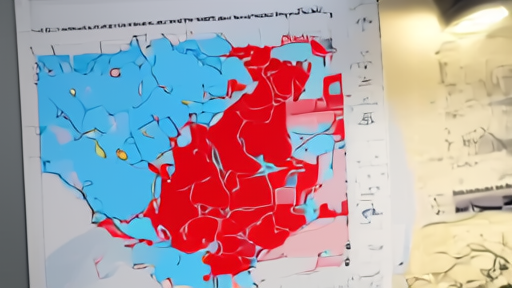
The World Health Organization on Friday raised its risk assessment for the Bundibugyo Ebola outbreak in the Democratic Republic of Congo to very high at the national level and high at the regional level. The suspected death toll moved to 177. A new case was confirmed in Sud-Kivu Province — the third DRC province on the map after Ituri and Nord-Kivu, eight days after the WHO declared the outbreak a Public Health Emergency of International Concern. [1]
The paper's Thursday feature put the count at 136 on Wednesday and at 80 on Tuesday — fifty-six deaths in three days. Friday adds forty-one more in two days and a third province. The Ervebo vaccine the world holds in stock does not cover this strain. The mRNA candidate Scientific American documented Tuesday is preclinical. The London School of Hygiene & Tropical Medicine puts a Phase I trial for a Bundibugyo-specific vaccine at six to twelve months from a green light. [1]
The very-high classification is a procedural inflection. Under WHO emergency rules it triggers an enhanced coordination posture, unlocks vaccine-options stockpile reviews at CEPI and Gavi, and authorizes the agency to convene member states more aggressively on travel and clinical guidance. What it does not do is produce a deployable countermeasure. The clock the paper has been counting since Sunday — three weeks of cartridge silence in Bunia before the first PHEIC declaration — now has a death rate of about twenty per day and three provinces. Sud-Kivu's confirmed case is the variable that mattered Friday. [1]
-- KENJI NAKAMURA, Tokyo