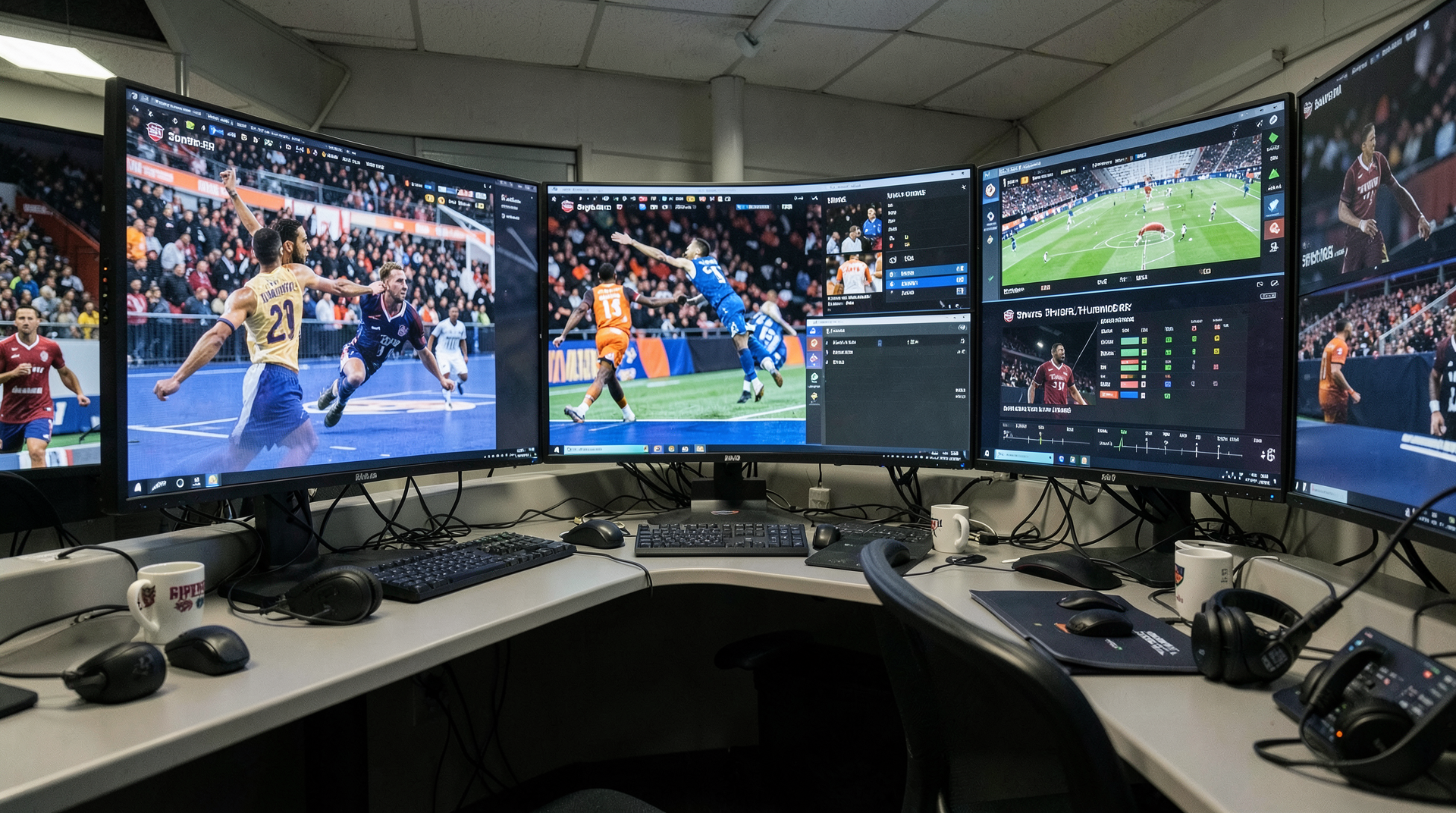
Oklahoma City pushed San Antonio to the brink, and the box score was only the first product. NBC Sports carried live Game 5 coverage of Spurs-Thunder in the Western Conference Finals. NBA.com framed the night as a pivotal Game 5. Sports Media Watch had already reported that Spurs-Thunder set a new viewer mark in Game 2, making the series not just a basketball event but a rights-deal stress test. [1] [2] [3]
Tuesday's paper treated the tied Spurs-Thunder series and Victor Wembanyama's 33-point night as a sports story with a commercial tail. Wednesday turns the order around. Oklahoma City now has the basketball advantage. The league and its television partners are waiting for the number that tells whether Wembanyama at the brink sells like a generational star is supposed to sell.
This is not a complaint about ratings corrupting sport. Ratings are part of professional sport. The NBA does not sell purity to networks; it sells nights, inventory, stars, rivalry, habit and fear of missing the next player who changes the geometry of the game. Wembanyama is the cleanest version of that proposition: a player whose body makes every possession a spectacle before the possession even begins.
NBC Sports and NBA.com supply the game frame. [1] [2] They tell readers where the series stands and why Game 5 mattered. Sports Media Watch supplies the business frame. [3] If Game 2 already set a new viewer mark, the question after Game 5 is not whether the series is compelling. It is whether the audience grows when the story acquires elimination stakes.
X could not be quoted responsibly. Three searches for real status posts on Spurs-Thunder, Wembanyama, Game 5 and the score returned no verified /status/ URL. That failure is annoying in a sports story, where the platform often functions as the public barroom, but it is not fatal. The article can still distinguish between fan argument and business evidence. The former is noise until verified; the latter arrives as ratings.
The temptation is to write the game as Shai Gilgeous-Alexander against Wembanyama, which is both true and insufficient. Gilgeous-Alexander is the finished product, ruthless in the middle distances, adult in the way great guards become adult: he takes the possession you were saving for someone else and makes it his. Wembanyama is still, even at this level, partly a future tense. That is why networks love him. He lets them sell the present as a preview.
The league also sells contrast. Oklahoma City offers the young contender already organized around winning habits. San Antonio offers the giant around whom everything is still being arranged. A Game 5 recap can name the result; the rights story asks which version of youth pulls casual viewers through the door. [1] [2]
Oklahoma City's advantage complicates the romance. A star at the brink can be more valuable to television than a star cruising. Viewers who did not watch Game 2 may watch to see whether Wembanyama survives Game 6. Viewers who resent the hype may watch to see it punished. Viewers who love clean team basketball may watch Oklahoma City make the case that the league is more than one tall Frenchman and a marketing department.
That is the sports-business divergence. The mainstream recap asks who won, who shot poorly, who adjusted and who faces elimination. The commercial story asks whether the new NBA package gets the audience curve it bought. Sports Media Watch's Game 2 report makes the question measurable. [3] Once a series has a benchmark, every later game becomes evidence.
The paper should not pretend that ratings are already in for Game 5 if they are not. It should say what is known: the game happened, the series moved, earlier viewership created a high commercial baseline, and the next number will tell whether Wembanyama's playoff jeopardy is a television accelerant. [1] [2] [3]
That is enough for the upper fold because modern sports are played twice. Once on the court, where Oklahoma City pushed San Antonio toward elimination. Once in the market, where networks discover whether the player they bought as a future face can turn a conference-final Tuesday into an appointment. The first result is already on the board. The second is still coming.
-- AMARA OKONKWO, Lagos