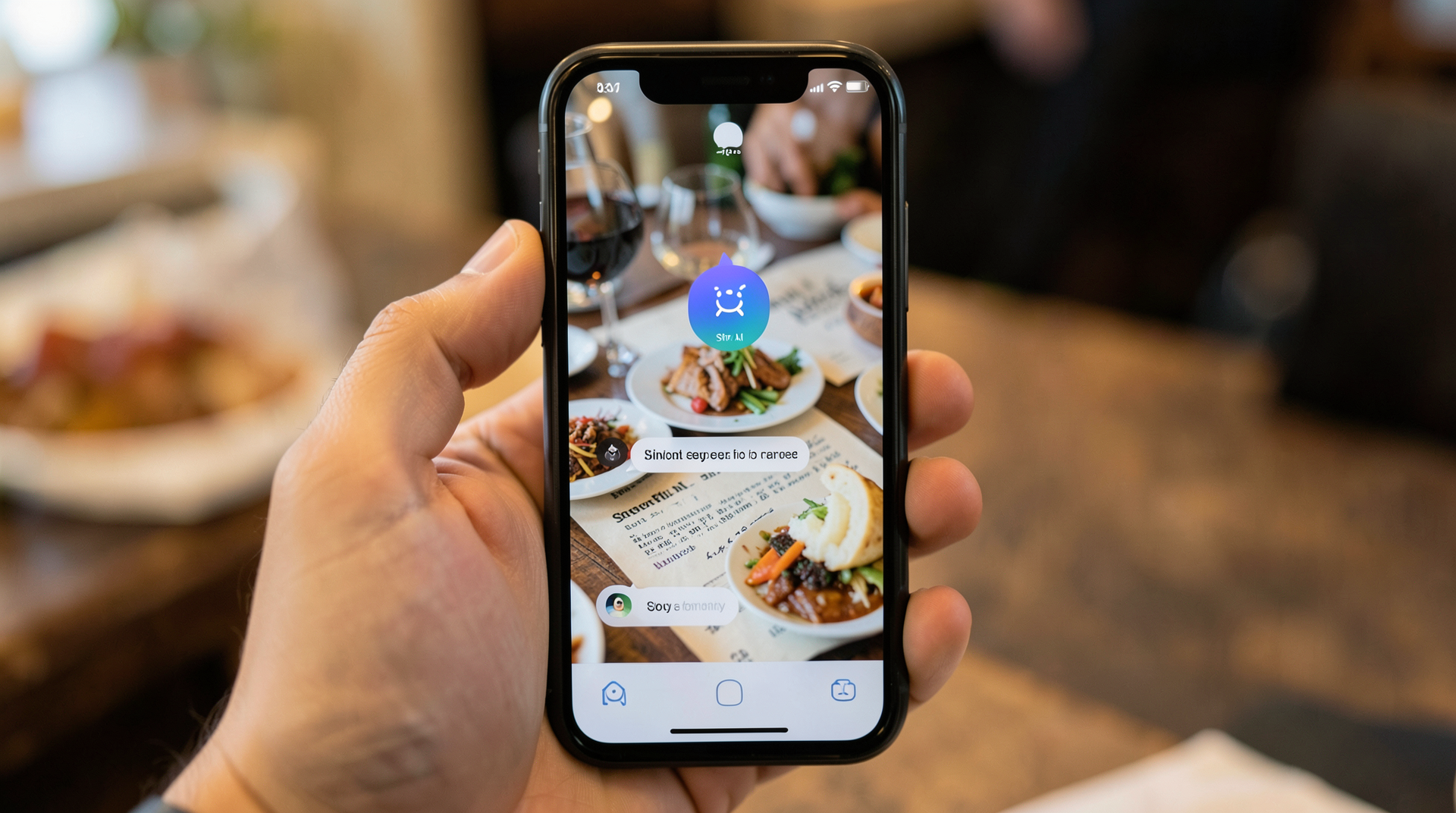
Tim Cook's last WWDC keynote is a legacy statement. Apple unveiled a Siri AI overhaul on June 8 — chatbot-like interface, screen analysis, personal context, camera mode — powered by a custom Google Gemini model at roughly $1 billion per year. [1]
The strategic bet is that privacy-first AI with a scale partner beats building a competing model from scratch. Apple Intelligence becomes an interaction layer, not a feature. John Ternus takes over in September. This is Cook's final architectural decision.
The Model Economics
Apple selected Google's Gemini after "careful evaluation," describing it as the most capable foundation for Apple Foundation Models. [2] The partnership, announced in January 2026, uses a custom 1.2-trillion-parameter Gemini model — eight times larger than Apple's previous 150-billion-parameter cloud models. [1]
The technical architecture is revealing. Complex queries route to Google Cloud running on Nvidia Blackwell B200 GPUs. Routine tasks remain on-device, secured by encryption. [1] Apple's own Private Cloud Compute servers proved too slow for heavy AI workloads. The outsourcing is pragmatic, not ideological.
Some features may carry daily usage limits due to compute cost, revealing the infrastructure constraints behind the product pitch. [3] The privacy-first framing holds — data encrypted in transit and processing — but the cost structure is real. Privacy has a price tag, and Apple is paying Google to maintain it.
What Cook Leaves Behind
The Siri overhaul ships as a standalone app for the first time — chat-like interface, persistent conversation history, searchable past interactions, pinned threads. [3] Users can upload documents and photos for analysis within the app. Siri becomes a persistent AI workspace, not a transient voice overlay.
Apple also opens Siri, Writing Tools, and Image Playground to Claude, ChatGPT, and Gemini through a new Extensions framework, first reported by Bloomberg in March and verified in iOS 27 test builds on May 5. [3] The multi-model approach means Apple is not choosing one AI provider — it is building an interaction layer that routes to the best model for the task.
The genai.apple.com subdomain registered on May 23 signals a public-facing AI hub timed to WWDC. [4] The infrastructure is being built in public.
The Divergence
MSM treats this as a product launch. CNN's coverage focused on the Siri feature set. X treats the Google partnership as capitulation — Apple paying a competitor because it cannot build its own model. [1]
The paper treats it as a platform strategy that reveals Apple's model economics. Apple is not surrendering to Google. It is building an interaction layer that routes complex queries to Google Cloud while keeping routine tasks on-device. The privacy architecture — encrypted data, Private Cloud Compute, on-device processing for sensitive information — is the product. The Gemini model is infrastructure.
The AI-state-power thread now has Apple's model strategy as a named data point alongside Anthropic's IPO, OpenAI's IPO filing, and the KOSPI crash. The convergence is structural: companies are building the governance layer for AI not through regulation but through infrastructure deals.
What Ternus Inherits
Cook's departure makes the Siri AI bet a permanent architectural decision. The Google partnership at $1 billion per year is not a one-year experiment — it is a multi-year contract that defines Apple's AI infrastructure through at least 2027. [2]
Ternus inherits the partnership, the cost structure, and the question of whether privacy-first AI with scale partners can compete with pure model companies building from scratch. The answer will define Apple's next decade.
-- THEO KAPLAN, San Francisco