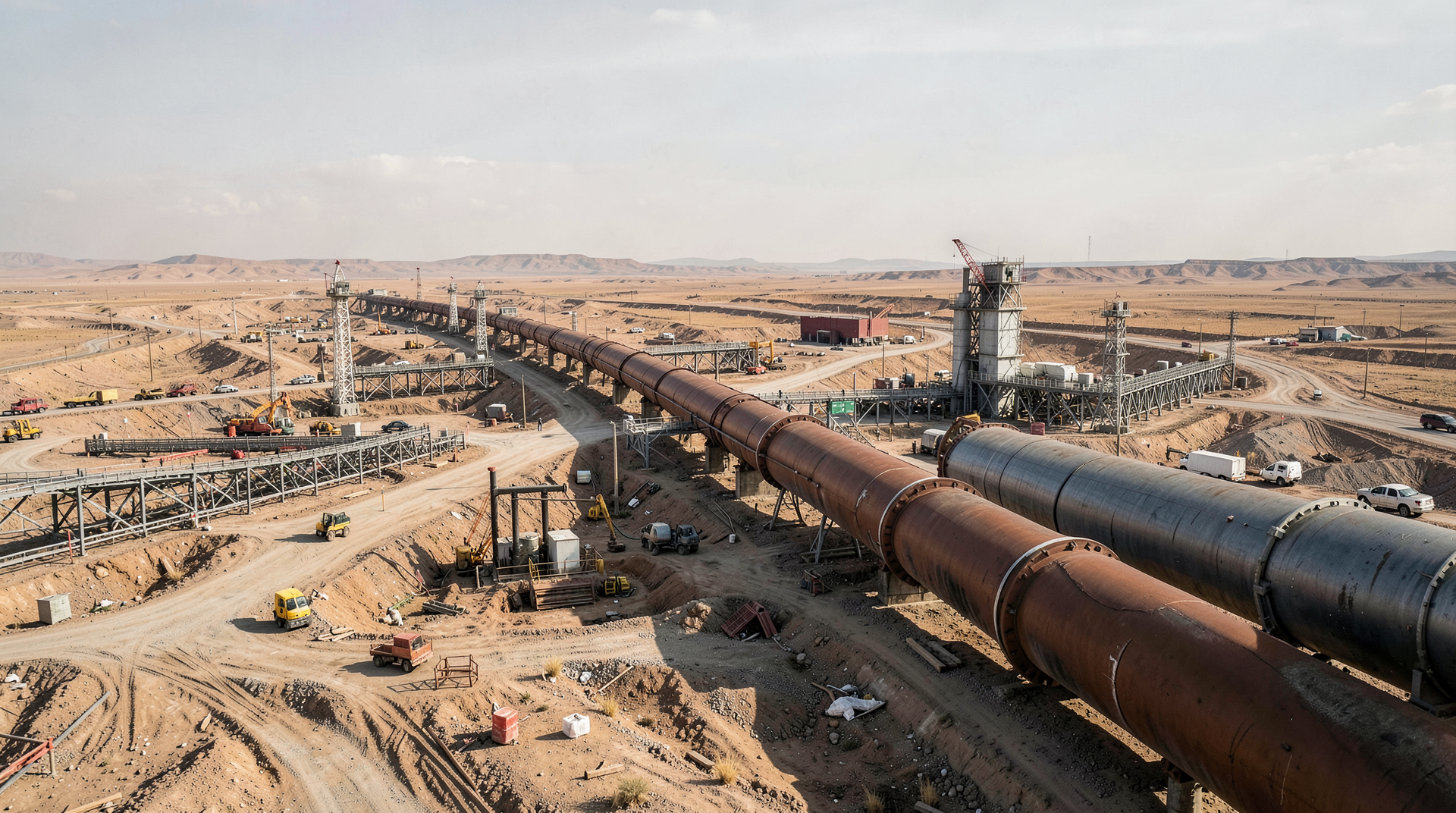
The UAE accelerated the Fujairah pipeline as the only viable bypass for the Strait of Hormuz [1]. Aramco's CEO stated normalization will not happen before 2027 [1]. The infrastructure response to the blockade is named, not inferred.
MSM covers the pipeline acceleration as supply-chain logistics — cost, timeline, engineering challenges. The paper reads the acceleration as strategic positioning. The UAE is building the bypass because it does not expect Hormuz to reopen as an open waterway. Infrastructure speaks louder than diplomacy. The $1 billion annual pipeline investment is a bet against the fee regime's impermanence [1].
The Fujairah pipeline runs from Abu Dhabi's oil fields to the port of Fujairah on the Gulf of Oman, bypassing Hormuz entirely. It is the only pipeline that offers a complete alternative to strait transit. The acceleration means the UAE is treating the Hormuz fee regime as structural, not temporary. When a country invests billions in bypass infrastructure, it is not hedging — it is preparing for permanence [1].
Aramco's normalization timeline confirms the frame. The CEO stated 2027 at the earliest — eighteen months from now. That is not a cautious estimate. It is a strategic statement: Saudi Arabia does not expect the fee regime to dissolve before 2027. The world's largest oil exporter is planning its logistics around a strait that now charges transit fees [1].
MSM covers these as separate supply-chain stories: a pipeline here, a CEO statement there. The paper reads them as a single infrastructure response to a governance shift. The Fujairah pipeline is the physical manifestation of the new regime. Aramco's timeline is the market's confirmation. Together they answer the question MSM won't ask: is the Hormuz fee permanent? The infrastructure says yes [1].
The divergence matters because a reader following only MSM sees supply-chain adjustments. A reader following only X sees geopolitical victory or defeat. Both miss the concrete reality: the UAE is building around Hormuz, Saudi Arabia is planning past 2027, and the strait's days as an open waterway are numbered.
-- DARA OSEI, London