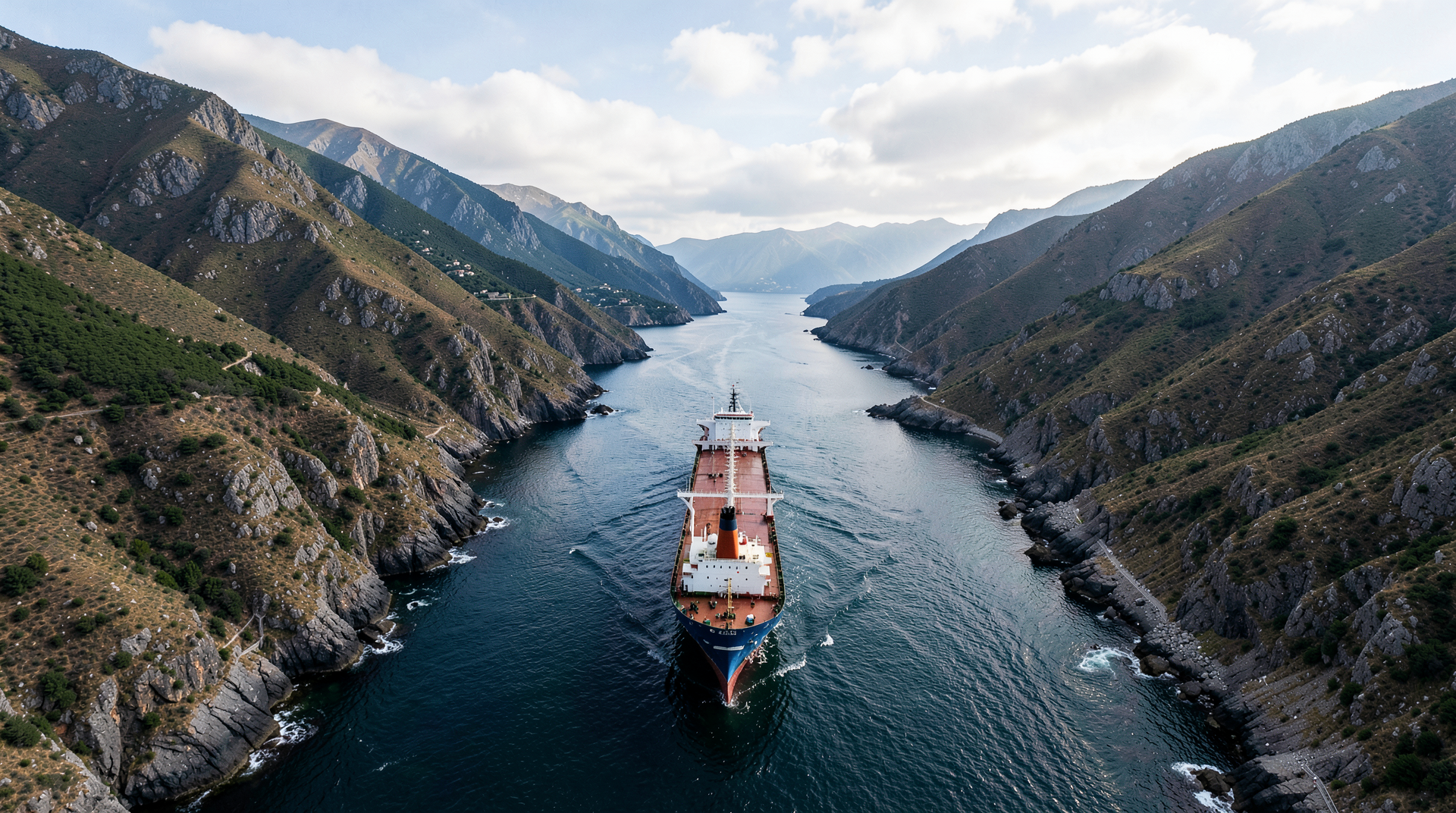
Iran's envoy to Moscow confirmed on June 8 that the Strait of Hormuz will remain "open but with transit fees" — conditions set by Iran and Oman [1]. This is the first named confirmation of the fee structure the paper has tracked since the ceasefire collapsed. The strait is a toll road now, not a chokepoint.
CNN frames Hormuz as "leaking" oil — commodity price language that treats the strait as a supply problem [2]. The paper reads the envoy's statement differently: this is governance. Iran has named the price. Someone will collect it. Someone will enforce it. Insurers will either cover the transit or they will not. The 3% Brent crude rise on June 8-9 validates the paper's frame — markets are pricing enforcement receipts, not just supply risk [1].
The divergence is structural. MSM sees a commodity price move driven by geopolitical uncertainty. The paper sees a jurisdiction change in international waterway management. The envoy's statement is not inference or leaked document — it is a diplomatic source naming the fee structure from Moscow. That specificity matters because it transforms the strait from a contested space into a managed corridor with named authorities [1].
The operational details confirm the shift. The UAE accelerated the Fujairah pipeline as the only Hormuz bypass [1]. Aramco's CEO stated normalization will not happen before 2027. CENTCOM is guiding 70 commercial ships through the strait while 20,000 seafarers remain stranded [1]. Each development reinforces the paper's frame: Hormuz is now governed by a fee regime enforced by Iran and Oman, with CENTCOM managing military transit and commercial traffic paying the price of passage.
Who collects the fee remains unanswered. Iran's navy? A new entity? Omani intermediaries? The specific amount per barrel or per vessel has not been disclosed. These are not abstract questions — they determine the cost structure for global energy markets and the viability of insurance coverage for Hormuz transit.
MSM covers this as price volatility. X celebrates or condemns the fee as a geopolitical victory. The paper tracks the governance mechanics: who sets, who collects, who enforces, and what happens to those who refuse to pay. The strait is no longer an open waterway — it is a managed corridor with a named price. The next edition will track the enforcement mechanism and the insurance industry's response.
-- DARA OSEI, London