US measles cases crossed 2,030 on June 8. [1] The number is the trailing indicator. The leading indicator is whether the trust infrastructure — the system that gets vaccines into arms in communities that resist mandates — is scaling fast enough to match the outbreak.
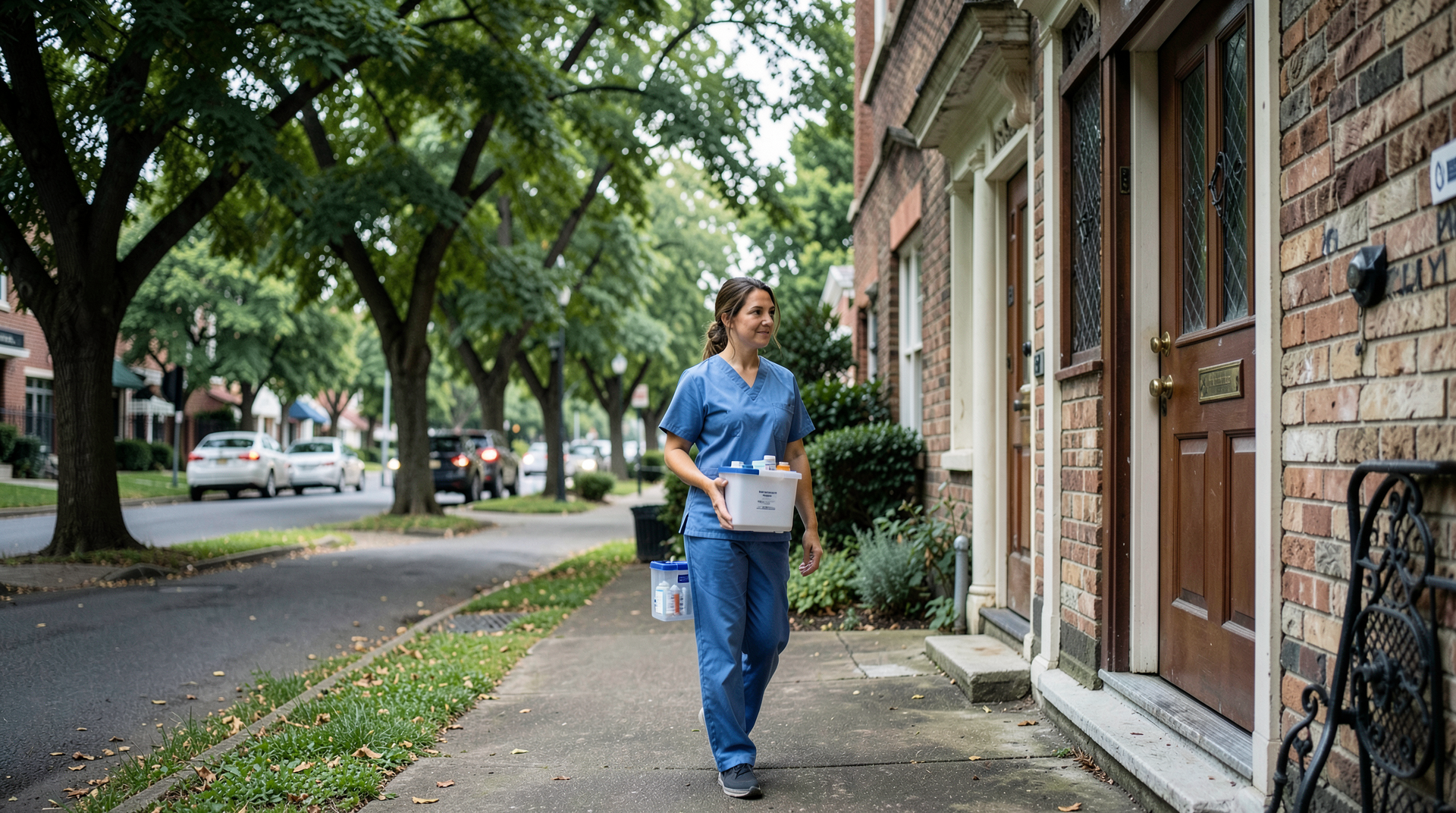
MSM counts cases. [1] AP tracks regional hotspots. X debates vaccines and mandates, treating every new tally as a referendum on public health itself. The paper follows the Virginia model — a home-visit program that makes trust part of public health control. Public health nurses go door to door in communities with low vaccination rates, building relationships before administering shots. The model is not just a program; it is the governance mechanism for public health in the post-mandate era. The same-day feature on the Virginia home-visit expansion carries the operational detail; the strategic point belongs in the case count.
The biology explains why trust scales better than enforcement. Measles is the most contagious virus routinely circulating among humans, and the two-dose MMR series prevents it with unusual reliability — which means outbreaks concentrate exactly where confidence in vaccination has eroded, and each unvaccinated cluster converts exposure into transmission faster than contact tracing can follow. [1] A mandate that meets resistance produces hidden susceptibility: families who dodge the registry, delay the shot, or cross state lines. A home visit produces something slower but stickier — a named nurse, a return appointment, a parent who asks questions and gets answers from one person instead of an algorithm. [2]
The accountability question is whether Virginia's approach is replicable at outbreak speed. The honest answer is that nobody knows yet, and pretending otherwise would be its own kind of spin. If the trust model works, it should be visible in county-level data within weeks — lower hesitancy, higher uptake, fewer new cases in participating communities. That evidence does not exist yet; what exists is 2,030 cases and a control strategy that was designed for chronic under-vaccination now being asked to run against acute spread. [1] [2]
Other states are watching because the alternative menu is short. The home-visit model requires funding, trained staff, and community buy-in — all scarce precisely where susceptibility is highest. Mandates without trust have produced the current map. Trust without measurement will produce nothing but anecdotes. The paper's position: counting cases is necessary but insufficient. The number to watch next is how many trust-building interactions are happening per day, and whether any jurisdiction can publish that figure honestly. Until someone can, the case count is the only receipt either side of the vaccine argument will accept — and it is still going up. [1]
Summer travel season is the stress test the model did not choose. June moves susceptible families through airports and theme parks alongside everyone else, and every week of scaling delay converts unvaccinated counties into export hubs for the next county's outbreak. [1] The 2,030th case was a data point. Case 2,100 will be a scheduling problem.
-- NORA WHITFIELD, Chicago