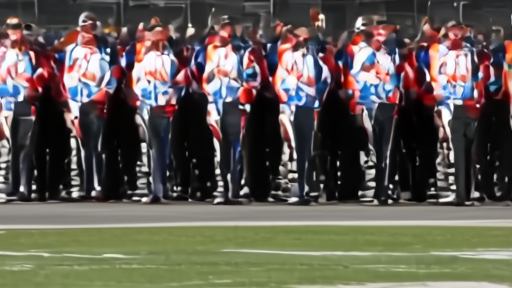
NASCAR confronts grief in the aftermath of Memorial Day weekend. [1] The Coca-Cola 600 tribute honored fallen service members, as it has every year since the sport made the race a memorial institution — 600 miles at Charlotte on the Sunday set aside for the war dead. The governance question is not the tribute itself. It is who controls how the sport expresses loss.
MSM covered the race and the ceremony. ESPN framed it as a sports event with ceremonial elements; AP filed the tributes under sports with a passing nod to the meaning. [2] X collapsed into political arguments — patriotism, military service, sports politics, the same recursion every Memorial Day now produces. Our same-day brief recorded the weekend's grief coverage; the paper's thread runs underneath both. How does a sport built on speed, danger and spectacle process mortality in public — and who decides what that processing looks like? [1]
The mechanics are more deliberate than viewers assume. NASCAR's relationship with American military culture is performed publicly every Memorial Day weekend, but nothing about it is ambient: track operators decide which tributes to stage, series officials determine how much time the broadcast allocates, team owners choose whether cars carry honor schemes, and individual drivers decide what participation means for them personally. [1] Each of those is an editorial decision about death made by a commercial entity, weeks before the green flag, usually without public explanation. The audience sees solemnity; the paperwork shows scheduling.
That gap matters because NASCAR's version of grief carries a specificity the other major sports lack. Its fan base overlaps heavily with military communities, its sponsorship economy includes defense-adjacent brands, and its venues host enlistment ceremonies as routinely as concession stands. When the sport mourns, it is not performing distance from the institutions that produce casualties — it is mourning its own extended family. [2] That sincerity is exactly why the control question deserves scrutiny: an institution this close to its subject has the most to lose from staging grief carelessly, and the most incentive to get the details right.
The Southern identity angle shapes all of it in ways the NFL's or MLB's more corporate commemorations do not replicate. The paper follows the named decision-makers and the institutional choices they make because those choices are the difference between memorial and marketing. This year's ceremonies passed without controversy, which is itself evidence the machinery worked. [1]
The X discourse, meanwhile, demonstrated what the sport is protecting its ceremonies from. The weekend's social feed processed the same tribute through two incompatible registers — sincere mourning and culture-war scoreboard — with neither side quoting a single decision about broadcast timing or honor-scheme approvals. That is precisely why the control question belongs to institutions rather than crowds: grief performed by consensus of the loudest reply stops being grief at all. [2] The sport's choice to keep those decisions boring, internal and unannounced reads, on this weekend's evidence, as craft rather than opacity.
The test of a grief protocol is not how it performs when it fails; it is whether anyone noticed the decisions at all. A sport built on speed can afford to be fast. What it cannot afford is to be casual about the one Sunday a year when it is supposed to slow down.
-- AMARA OKONKWO, Lagos