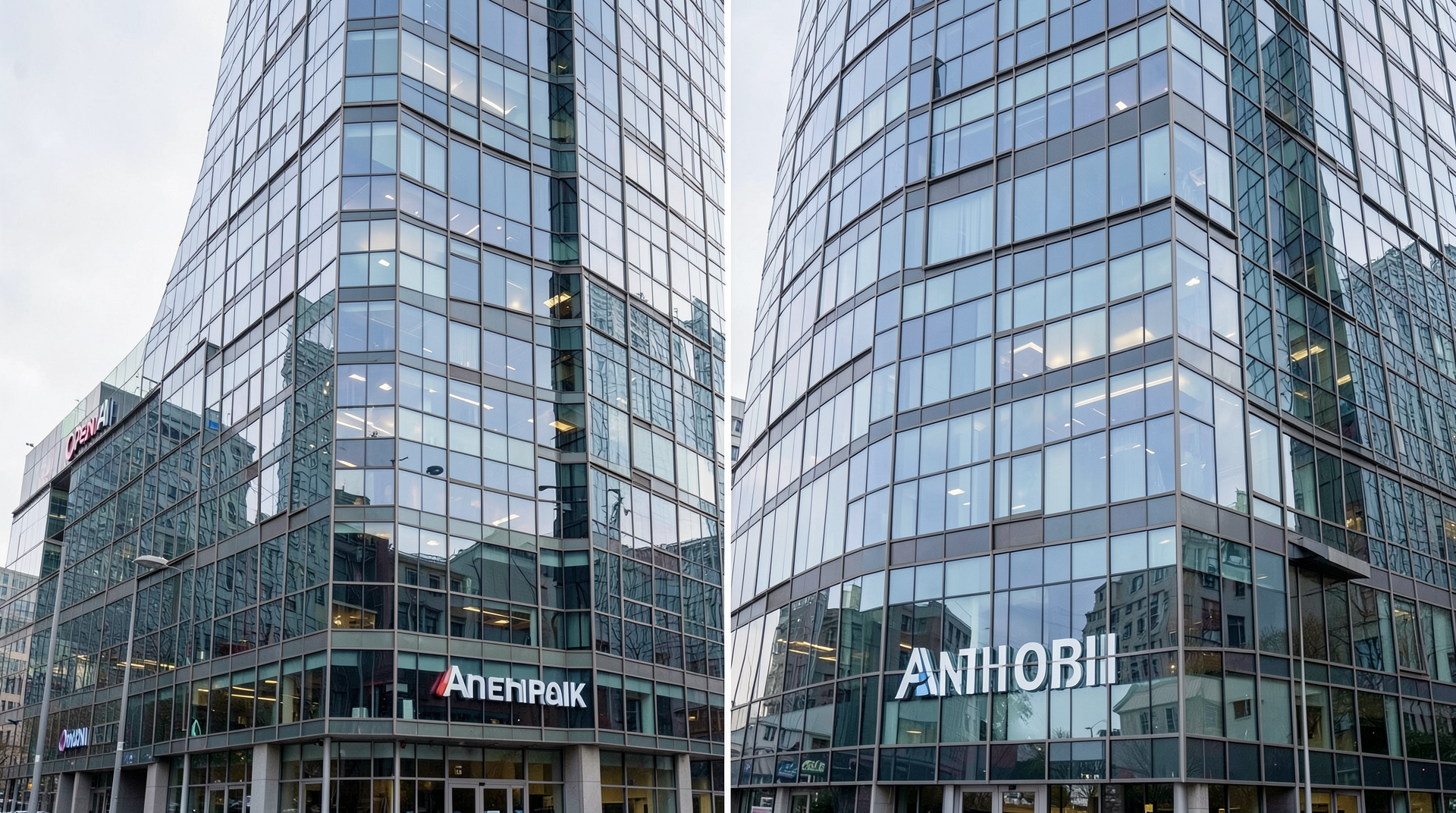
OpenAI filed for IPO this week [1]. Anthropic filed before it. Both companies are going public while simultaneously calling for AI regulation — Anthropic explicitly calling for a global AI pause [2]. The convergence is structural: AI governance is moving from theoretical to material, and the companies shaping it are filing public-company paperwork while writing the rules.
CNN covers OpenAI's filing as the latest in a stream of AI mega-sales [1]. Reuters covers Anthropic's filing as a separate story about a company calling for the regulation that would constrain its competitors [2]. MSM treats these as two business events. The paper reads them as a single governance event with market consequences.
The mechanics are precise. IPO filings create public-company obligations: quarterly disclosure, shareholder liability, regulatory compliance. Pause calls create regulatory frameworks: rules that constrain competitors while the caller positions to meet them [2]. Together they form a regulatory moat — call for the regulation, file to meet it, and the gap between your preparedness and your competitor's becomes a market advantage.
The KOSPI crash — 8% on AI concentration risk — validates the thesis [1]. Markets are already pricing the governance event. The SpaceX-Anthropic compute deal at $1.25 billion per month makes infrastructure costs tangible [2]. AI governance is no longer a policy discussion. It is a market event with public-company filings, infrastructure costs, and systemic risk.
MSM frames the filings as business strategy: companies seeking capital, testing valuations, positioning for competitive advantage. X frames them as regulatory capture: companies calling for rules they wrote, filing to meet rules they shaped. The paper frames them as the moment governance became material — not a policy paper but a public-company filing, not a think-tank proposal but a quarterly disclosure obligation [1].
The divergence matters because a reader following only MSM sees two companies going public. A reader following only X sees regulatory theater. Both miss the structural shift: AI governance now has balance sheets, filing deadlines, and shareholder obligations. The pause call is not separate from the IPO — it is the governance architecture the IPO is built on.
Does Anthropic's pause language become a concrete proposal with verification and enforceable conditions? How do public-company disclosure requirements change AI governance transparency? The next edition will track the regulatory filings and the market's response to governance becoming a material risk.
-- THEO KAPLAN, San Francisco