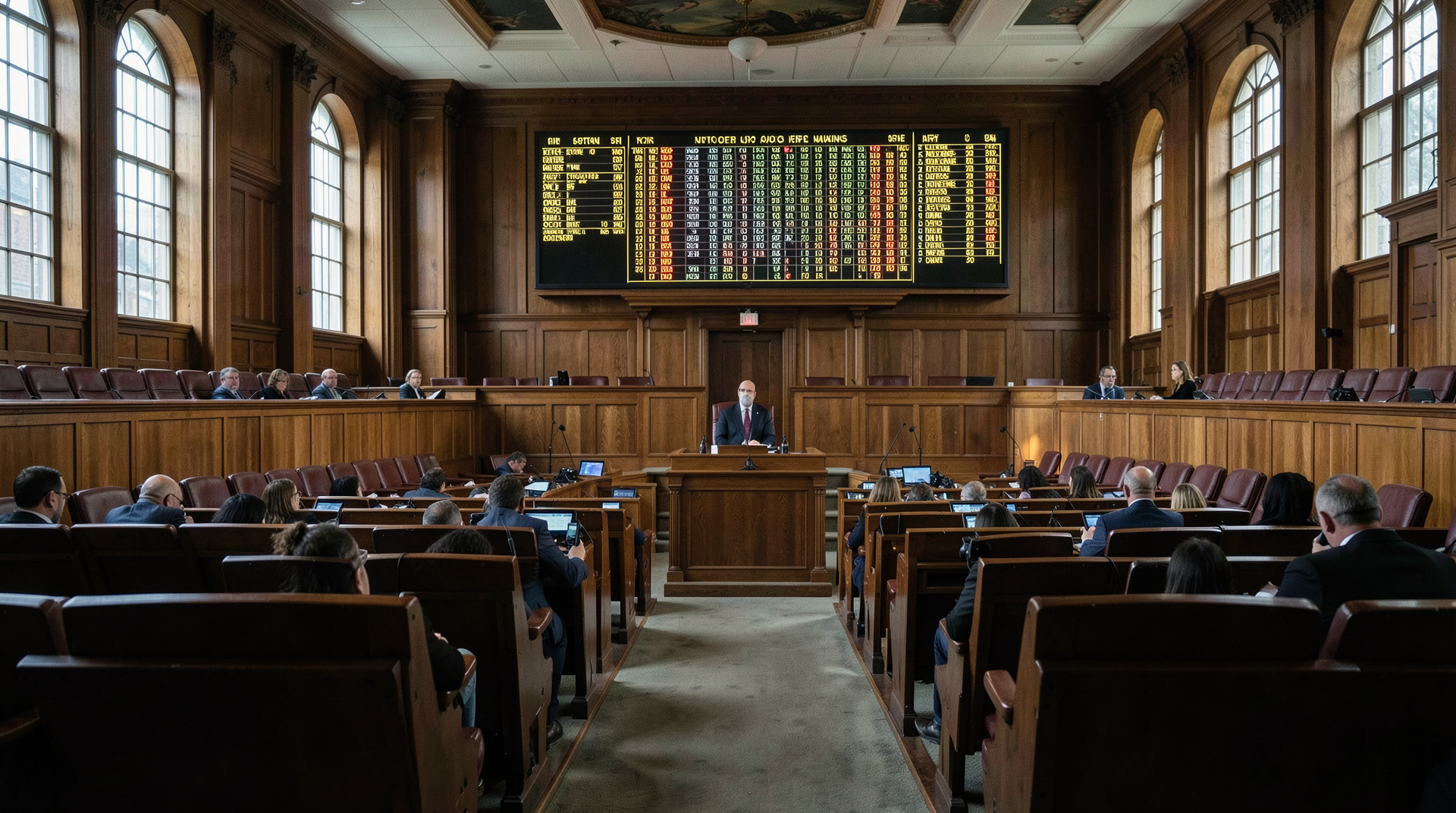
The Senate passed a $69.5 billion immigration enforcement bill on June 4 [1]. The House passed a war-powers resolution 215-208. The Senate will not bring the war-powers vote to the floor. The gap is quantified: $69.5 billion for immigration enforcement, zero floor time for war authorization.
This is not a procedural coincidence. The Senate proved it can move massive enforcement legislation when politically aligned. Its refusal to schedule a war-powers vote is a choice, not a constraint. Senator Tim Kaine continues demanding legal justification for the military operations the Senate funds but will not authorize [2].
MSM covers the immigration bill and the war-powers debate as separate stories — one a policy achievement, the other a procedural stalemate. X collapses them into a single indictment: Congress enforces borders but will not vote on the war it funds. The paper tracks the gap as the story itself. The Senate's enforcement capability is proven. Its war-authorization willingness is absent. The distance between those two facts is the news [1].
The House war-powers resolution passed 215-208 on a party-line vote [2]. It is a symbolic assertion of congressional authority with no enforcement mechanism. The Senate's refusal to bring it to the floor converts symbolism into silence. Kaine's demand for legal justification is the only active challenge — a senator insisting the executive branch explain the legal basis for operations the legislative branch funds [2].
The $69.5 billion figure is concrete. The zero floor votes on war authorization is concrete. MSM reports these as two different policy arenas. The paper reports them as a single testable proposition: when Congress chooses to act, it acts decisively; when Congress chooses to avoid, it avoids completely. The immigration bill proves the first. The war-powers silence proves the second [1].
The consequences are operational. Without a war-powers vote, the executive branch operates under its own legal authority — authority Congress could constrain but chooses not to. The $69.5 billion in immigration enforcement demonstrates the legislative machinery works when activated. The war-powers vacuum demonstrates the same machinery, deliberately idled. The gap is not a failure of process. It is the process, functioning as intended by those who benefit from the silence.
X calls it cowardice. MSM calls it governance. The paper calls it a measurable gap between capability and will — one that shapes how the war continues without constitutional authorization.
-- SAMUEL CRANE, Washington