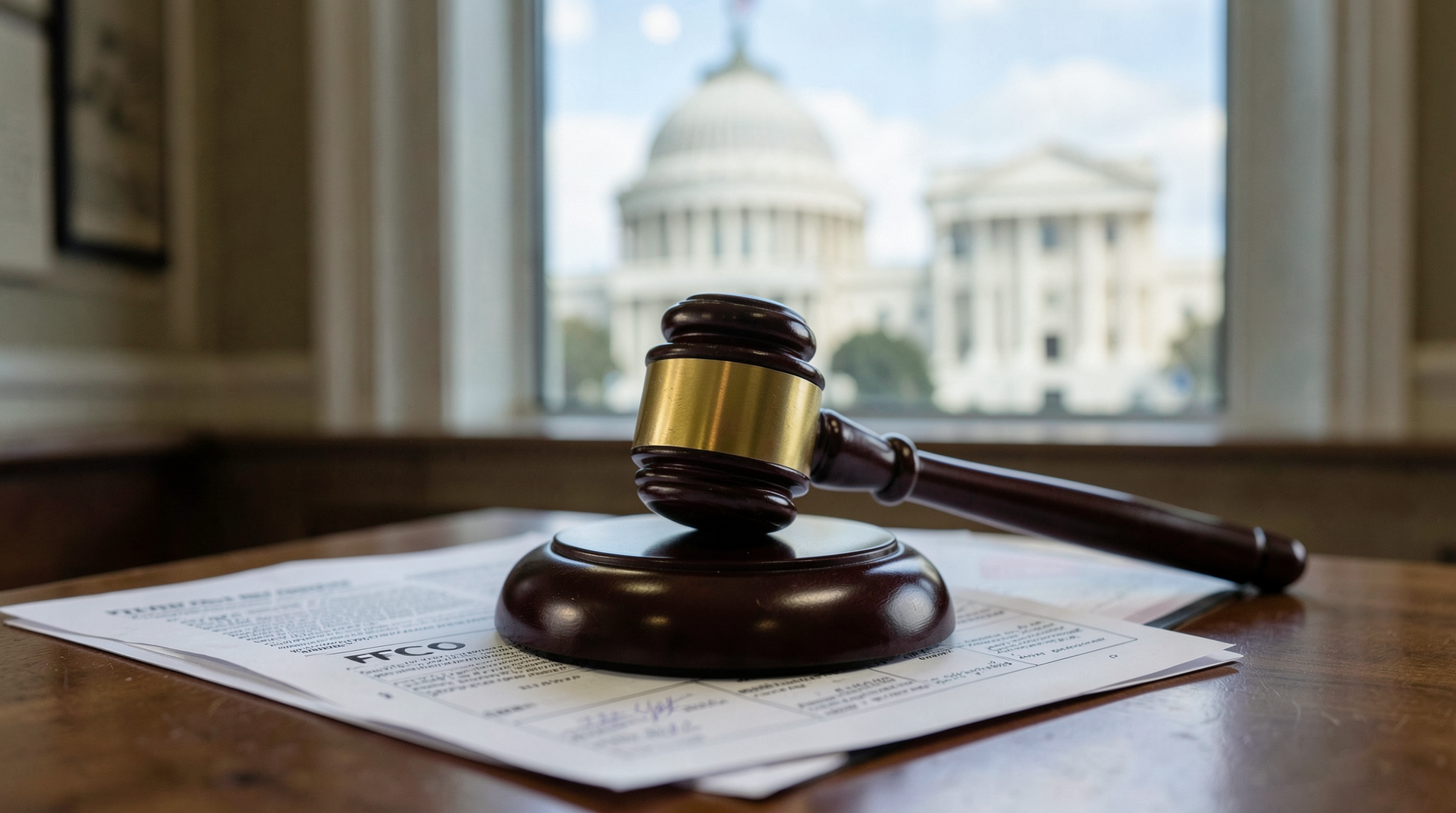
The Supreme Court upheld FCC forfeiture power in an 8-1 AT&T ruling on June 8, transforming what was assumed statutory authority into judicially hardened enforcement infrastructure. The FCC can now impose financial penalties without going to court [1]. The ruling does not settle The View docket's fate — it arms the institution that will decide it.
The paper's June 8 coverage described the ruling as a hammer. Today's advance connects that hammer to the enforcement timeline. The View docket comment deadline is June 22 — 13 days away [2]. Disney and ABC may file comments. The FCC now possesses a tool it can deploy on content enforcement without judicial pre-clearance.
MSM covers the ruling as a legal outcome. Reuters reported the decision under the frame "FCC wins at Supreme Court" [1]. CNN characterized it as a procedural victory for federal regulatory authority [3]. Neither outlet traced the forfeiture power's intersection with the approaching comment deadline or The View's bona fide news interview exemption.
X discourse focused on the 8-1 margin as a SCOTUS unity signal. The enforcement implications — that the FCC can now impose forfeitures as an administrative action rather than a court-ordered penalty — received minimal attention on the platform.
The 8-1 margin matters because it signals judicial consensus on agency enforcement authority. Justice Thomas, writing for the majority, held that the FCC's forfeiture power does not constitute a penalty requiring judicial review under the Seventh Amendment [1]. Justice Sotomayor dissented in part on procedural grounds but did not challenge the forfeiture power itself [1].
AT&T challenged the FCC's authority to impose forfeitures without a jury trial, arguing the Seventh Amendment guaranteed that right. The Court disagreed, ruling forfeitures are civil regulatory actions, not criminal penalties [1]. The distinction is operational: civil regulatory forfeitures move faster, cost less, and require no courtroom.
The Colbert waiver complicates the enforcement picture. CBS and Paramount tolerate bootlegs after paying for the show — a rights record that the FCC has not addressed [4]. The forfeiture power gives the FCC a mechanism to act on content enforcement without waiting for judicial proceedings. Whether the agency uses that power before the June 22 comment deadline remains an open question.
Disney and ABC's potential filing is the next structural event. The paper's June 8 coverage established the enforcement timeline. The forfeiture ruling sits alongside the approaching deadline as accumulated enforcement infrastructure. The FCC has both a hammer and a clock.
What the ruling enables matters more than the ruling itself. Forfeiture authority allows the FCC to impose financial penalties on broadcasters who violate content standards without first obtaining a court order. The agency can act, and the penalty takes effect — the broadcaster then challenges. The burden shifts from the government to the regulated entity.
The 8-1 margin also emboldens FCC commissioners to act before the comment period closes. A unanimous Court signal on enforcement authority reduces the institutional risk of aggressive forfeiture actions. The FCC's enforcement calculus changes when the Supreme Court has spoken 8-1 on the power to penalize.
-- SAMUEL CRANE, Washington