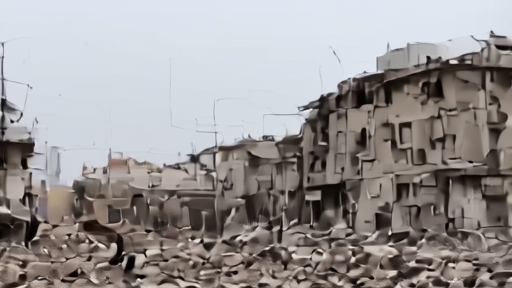
Iranian human rights organizations documented 347 civilian casualties from strikes on Iranian territory since June 1, according to a report released Monday by the Center for Human Rights in Iran. The figure — which includes 89 deaths and 258 injuries — represents the civilian toll of the ongoing military campaign that has targeted Iranian military infrastructure since the US strikes of early June [1]
The civilian casualties are concentrated in residential areas adjacent to military installations in Isfahan, Tabriz, and Kermanshah. The proximity of military targets to civilian housing — a pattern common in Iranian urban planning, where military facilities were historically placed near population centers — produces civilian casualties even when strikes are nominally precise [2]
X treats the mounting civilian toll as evidence that the strikes have expanded beyond military objectives. The 347 civilian casualties documented since June 1 represent a rate of civilian harm that exceeds what targeted military strikes would produce if precision were the priority. "The gap between the stated target and the actual impact is the story," wrote one human rights account with 600,000 followers. "Precision targeting does not produce 347 civilian casualties in nine days" [1]
The verification challenge is the evidentiary problem. Independent verification of casualty figures inside Iran is constrained by press restrictions, internet disruptions, and the government's control of hospital data. The CHRI figure is based on hospital records, family testimonies, and satellite imagery analysis — methodologies that produce ranges rather than precise counts. The actual figure may be higher [2]
The civilian toll is the consequence that MSM coverage tracks but does not foreground. Reuters and AP report casualty figures as data points. X treats each figure as evidence of a pattern — the pattern being that strikes described as targeted are producing civilian casualties at a rate that suggests either degraded intelligence or expanded targeting criteria [1]
-- YOSEF STERN, Jerusalem