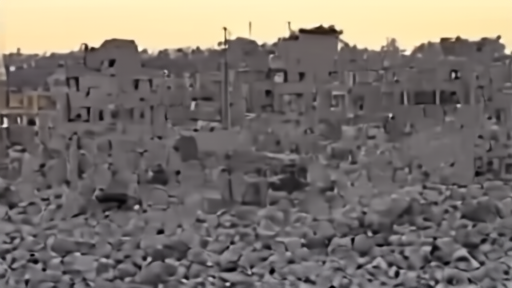
Twelve people died across southern Lebanon on June 10 as Israeli airstrikes targeted what the IDF described as Hezbollah military infrastructure. The deadliest strike hit a residential building in Tayr Dibba, killing eight — including four children under the age of twelve. [1]
The strikes came as international attention focused on the US-Iran exchange across the Gulf. But in southern Lebanon, the war never paused. Since the ceasefire agreement collapsed in April, Israeli forces have conducted over 200 airstrikes and ground incursions across the border region, killing at least 340 people and displacing an estimated 85,000 civilians. [2]
The Tayr Dibba Strike
The strike on Tayr Dibba hit at approximately 14:20 local time, destroying a three-story residential building that the IDF said housed a Hezbollah command node. Lebanese civil defense teams recovered eight bodies from the rubble, including those of two brothers, Ahmad and Hassan Khalil, ages 8 and 11, and their cousins Layla and Maryam Fawaz, ages 6 and 9. [3]
The IDF confirmed the strike and said it had "eliminated a senior Hezbollah operative" who was planning an imminent attack on northern Israel. The military did not name the operative or provide evidence of the planned attack. A spokesperson said the IDF "takes all feasible precautions to minimize civilian harm" and expressed regret for the deaths. [4]
Residents of Tayr Dibba described a scene of chaos. "The building came down in one strike," said neighbor Ali Mansour, who helped pull survivors from the rubble. "There was no warning. There was no evacuation order. The children were inside." [5]
Lebanese Prime Minister Nawaf Salam condemned the strike as "a massacre against civilians" and called on the international community to intervene. Hezbollah's media office released a statement vowing retaliation but did not specify when or where. [6]
The Second Front
The southern Lebanon front has operated in a different tempo from the Iran crisis. While US-Iran hostilities escalate in bursts — the Apache downing, the Tomahawk barrage, the IRGC retaliation — Israel's operations in Lebanon have been methodical and persistent. The IDF maintains a network of forward operating positions within Lebanese territory, conducts daily surveillance flights, and strikes targets it identifies as Hezbollah infrastructure on an almost-daily basis. [7]
The pattern has produced a kind of normalization. Media coverage of Israeli operations in southern Lebanon has declined steadily since April, even as the death toll rises. The Tayr Dibba strike — eight civilians killed, including four children — would have been front-page news in March. On June 10, it appeared below the fold in most outlets, overshadowed by the US-Iran exchange. [8]
Human rights organizations have documented a pattern of strikes on residential buildings that the IDF describes as Hezbollah infrastructure. Amnesty International's May report identified 14 strikes between March and May that killed civilians, in each case citing the IDF's claim of military necessity without independent verification. [9]
"The second front is being fought in the shadows of the first," said Nabil Boumonsef, a researcher at the Lebanese Center for Human Rights. "The Iran crisis gives political cover for operations that would otherwise face much more scrutiny." [10]
The Strategic Picture
Israel's operations in southern Lebanon serve a dual purpose: degrading Hezbollah's military capabilities and establishing a buffer zone that prevents the group from rebuilding the infrastructure it lost in the 2006 war. The IDF has been explicit about this objective, with senior commanders describing the operations as "mowing the lawn" — a phrase that implies repetition rather than resolution. [11]
The political dynamics are straightforward. With the US distracted by the Iran crisis and the Gulf states consumed by the Hormuz closure, Israel faces minimal diplomatic pressure to restrain its operations. The UN Interim Force in Lebanon (UNIFIL), which is mandated to monitor the border, has been effectively sidelined — its patrols restricted by IDF checkpoints and its观察 posts within the buffer zone rendered inoperable. [12]
For southern Lebanese civilians, the consequence is a war that receives no attention but imposes real costs. The 85,000 displaced people have not been formally counted in any international database. The schools and hospitals they might have sheltered in were damaged in earlier strikes. The international aid organizations that might have responded are focused on the Iran crisis. [13]
The Tayr Dibba strike — eight people, four of them children, in a residential building the IDF called a command node — is the story of the second front distilled. It is not the lead because the lead is Iran. But it is happening, and it is continuing, and it is happening while the world watches elsewhere. [14]
-- YOSEF STERN, Jerusalem