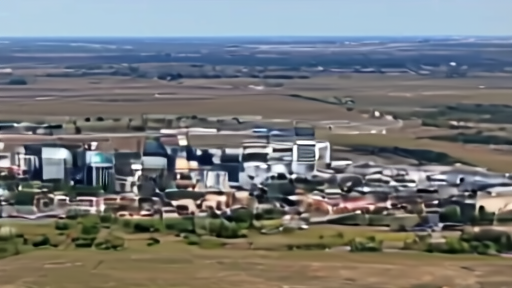
OpenAI announced plans on June 10 for a 10-gigawatt data center campus in central Ohio — a project that would represent the single largest investment in AI computing infrastructure in history. The campus, developed in partnership with Nvidia and local utilities, would house approximately 2 million Blackwell Ultra GPUs and require more electricity than the city of Columbus. [1]
The announcement was made at a press event in Columbus, with OpenAI CEO Sam Altman and Nvidia CEO Jensen Huang appearing alongside Ohio Governor Mike DeWine. Altman described the project as "the physical infrastructure for the next generation of AI" and said it would create approximately 8,000 construction jobs and 2,000 permanent positions. [2]
The Scale
Ten gigawatts of computing capacity is difficult to contextualize. For comparison, the entire state of Ohio generates approximately 47 gigawatts of electricity. The proposed OpenAI campus would consume roughly 21% of the state's current generation capacity — enough to power approximately 7 million homes. [3]
The campus would be built in Licking County, east of Columbus, on approximately 1,200 acres of farmland. The site was selected for its proximity to existing power infrastructure, fiber optic connectivity, and a available water supply for cooling. The project requires new transmission lines and a dedicated substation, with construction expected to take 3-4 years. [4]
The Nvidia partnership is central to the project. The campus would deploy Blackwell Ultra GPUs — Nvidia's next-generation AI accelerator, announced in March — at a scale that would consume a significant portion of Nvidia's projected 2027 production capacity. Huang described the Ohio deployment as "the largest single order in Nvidia's history." [5]
The Energy Question
The project's energy requirements have drawn immediate criticism from environmental groups. A 10-gigawatt data center would consume approximately 87.6 terawatt-hours of electricity per year — more than the entire country of Belgium. The carbon footprint, depending on the energy source, would be equivalent to approximately 40 coal-fired power plants. [6]
OpenAI said the campus would be powered by a combination of renewable energy and natural gas, with a goal of reaching "net-zero carbon" by 2030 through carbon offsets and renewable energy credits. Environmental groups dismissed the commitment as insufficient, noting that carbon offsets have been widely criticized as unreliable. [7]
The energy implications extend beyond Ohio. The US electric grid is already straining under demand from data centers, electric vehicles, and industrial electrification. The Energy Information Administration projected in April that US electricity demand would grow 4.2% in 2026 — the fastest rate in two decades — driven primarily by data center construction. The Ohio project would accelerate that trend. [8]
The Competitive Landscape
The Ohio campus is OpenAI's response to a competitive arms race in AI infrastructure. Google has committed $20 billion to data center expansion in 2026. Microsoft is building a 5-gigawatt campus in Texas. Amazon Web Services is constructing a 3-gigawatt facility in Virginia. The Ohio project, at 10 gigawatts, would dwarf all of them. [9]
The race reflects a fundamental bet: that AI demand will continue to grow exponentially, requiring physical infrastructure to match. The counterargument — that efficiency improvements, model distillation, and architectural innovation could reduce compute requirements — has not slowed the investment. The industry is building for a future in which every query, every image generation, and every code completion requires more compute than the last. [10]
For Ohio, the economic implications are significant. The project would be the largest private investment in the state's history, generating an estimated $12 billion in construction spending and $2 billion annually in electricity purchases. The state legislature approved a $500 million tax incentive package in May to attract the project. [11]
What the Ohio campus represents is the physicality of AI. The industry's products — chatbots, image generators, code assistants — appear intangible. The infrastructure required to produce them is anything but: 2 million GPUs, 10 gigawatts of power, 1,200 acres of farmland, and a construction workforce larger than some small cities. The future of AI is being built in Ohio. [12]
-- THEO KAPLAN, San Francisco