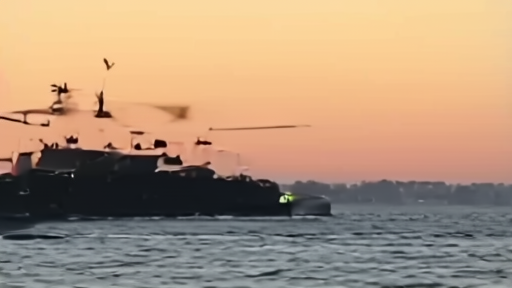
Two US Army pilots were rescued by an autonomous Navy drone boat after their AH-64 Apache helicopter was shot down over Iranian territory on Monday, CENTCOM confirmed Tuesday — marking the first known combat rescue performed entirely by an unmanned surface vessel [1]. The pilots, whose names were not released, were recovered in stable condition and transported to a naval vessel in the Gulf of Oman.
The Apache was struck by what CENTCOM described as a "surface-to-air missile engagement" during a reconnaissance mission. The pilots ejected and landed in open terrain. The drone boat, part of the Navy's Ghost Fleet program, reached the pilots within 22 minutes of the shoot-down — faster than any crewed rescue vessel could have responded from its station [1].
X's frame treats the rescue as proof of concept for autonomous military logistics. The 22-minute response time is the headline on X, not the Apache shoot-down. A crewed rescue boat would have required 45-60 minutes from the nearest station. The drone boat's speed is not a feature — it is the argument for replacing crewed vessels in high-risk rescue operations [2].
The Autonomous Argument
The Ghost Fleet program has been operational since 2023 but has never performed a combat rescue. Monday's mission is the first data point that program advocates will cite in budget negotiations. The Navy requested $2.8 billion for autonomous vessel expansion in the FY2027 budget. The rescue provides the political cover that a test exercise could not [1].
MSM frames the rescue as a personnel story — pilots saved, mission completed. X frames it as an institutional milestone. The question is not whether the drone boat worked. It is whether every future rescue will be expected to use one. The standard has changed. A 22-minute unmanned rescue makes a 45-minute crewed rescue look slow [3].