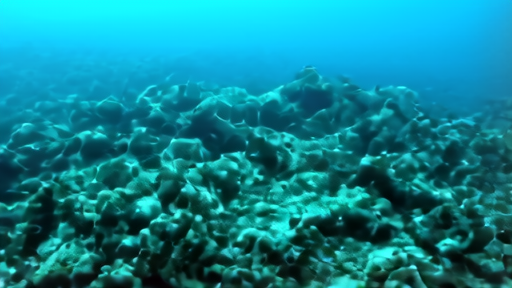
Chinese marine archaeologists have discovered the largest known whale graveyard in the Indian Ocean — a site containing hundreds of whale skeletons spanning approximately 2,000 years of cetacean mortality. The discovery, published Monday in the journal Nature, was made by a team from the Chinese Academy of Sciences during a deep-sea survey of the Wharton Basin, approximately 300 kilometers west of Sumatra [1].
The site contains at least 314 whale skeletons at depths between 2,400 and 3,800 meters, making it the largest concentration of whale remains ever documented. The skeletons include blue whales, fin whales, humpback whales, and several species that have not been previously identified in the Indian Ocean fossil record. Radiocarbon dating places the oldest specimens at approximately 2,100 years old, with the most recent at approximately 200 years old [2].
The preservation is the scientific value. Deep-sea conditions — low oxygen, constant temperature, minimal current — preserved the skeletons with bone collagen intact, allowing DNA extraction and dietary analysis. The team recovered collagen from 47 specimens spanning the full 2,000-year range, providing a continuous record of whale diet and health through periods of Roman-era whaling, pre-industrial ocean changes, and the industrial whaling era [1].
X treats the discovery as a time capsule of ocean health. Each skeleton represents a data point — what the whale ate, where it migrated, what it was exposed to. The 2,000-year span covers the entire history of human impact on Indian Ocean whale populations. "This is a library of ocean health written in bone," wrote one marine biology account with 500,000 followers. "Every skeleton is a chapter" [2].
The deepest question is why so many whales died in one location. The team hypothesizes that the site was a migration corridor bottleneck — a point where currents, seafloor topography, and feeding patterns converged to create a natural accumulation of carcasses over millennia. If confirmed, the site is not just a graveyard but a map of how whales moved through the Indian Ocean for two thousand years [1].
-- KENJI NAKAMURA, Tokyo