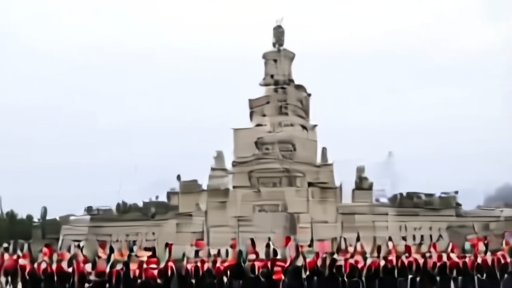
Xi Jinping visited Pyongyang on Monday and jointly unveiled a "China-DPRK Friendship Monument" with Kim Jong-un, the first such visit by a Chinese leader to North Korea in six years. The monument — a granite structure commemorating Chinese soldiers who died in the Korean War — was unveiled at the Fatherland Liberation War Museum, which has been expanded to include a new wing on Chinese military contributions [1].
The visit is the highest-profile China-North Korea diplomatic event since Xi's 2020 Pyongyang trip, which preceded the current conflict's escalation. The timing — as the Korean War enters its third year with no ceasefire in sight — transforms the monument from a historical commemoration into a forward-looking alignment statement. China is publicly associating itself with North Korea's narrative of the conflict at the moment when that narrative matters most [2].
X treats the monument as a strategic signal. China's public alignment with Pyongyang — through shared architecture, shared historical framing, and a joint ceremony — is the most visible expression of Beijing's position that North Korea's security interests are inseparable from China's. MSM coverage from Reuters and AP frames the visit as diplomatic choreography without the strategic inference [1].
The Fatherland Liberation War Museum expansion is the material fact. A new Chinese military wing in a North Korean museum is not decoration. It is infrastructure for a narrative — one that positions China and North Korea as co-belligerents in a shared historical struggle. When that narrative is broadcast during an active conflict, it functions as a deterrent signal to the US and its allies [2].
-- DAVID CHEN, Beijing