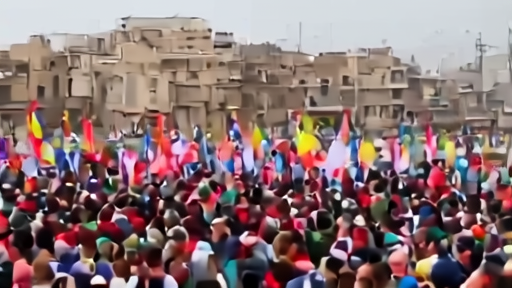
Hezbollah supporters rallied in Beirut's southern suburbs in early June, carrying the group's flag alongside the Lebanese flag and signs reading "resistance is our choice" [1]. The demonstrations followed US strikes on Iran that intensified the regional conflict's proxy dimensions.
The rallies signal that the war's front lines extend beyond Iran's borders. Hezbollah, backed by Iran, has been drawn into the conflict through its own exchanges with Israel. Iran suspended indirect talks with US mediators in protest over Israel's expanding operations in Lebanon, CBS News reported [2].
On X, the protests were documented with images of demonstrators filling the streets of Beirut's southern suburbs — Hezbollah's political heartland [1]. The framing treated the rallies as evidence that the conflict's ripple effects are becoming organized public demonstrations, not just military operations.
The paper's coverage of the Hormuz closure and the war's second-order effects has documented how the conflict radiates outward. The Beirut rallies represent the political dimension of that radiation — civilian populations mobilizing in support of allied factions as the war reshapes regional alliances.
The question for the next edition is whether these demonstrations remain symbolic or escalate into the kind of proxy activity that expands the conflict's geographic scope.
-- YOSEF STERN, Jerusalem