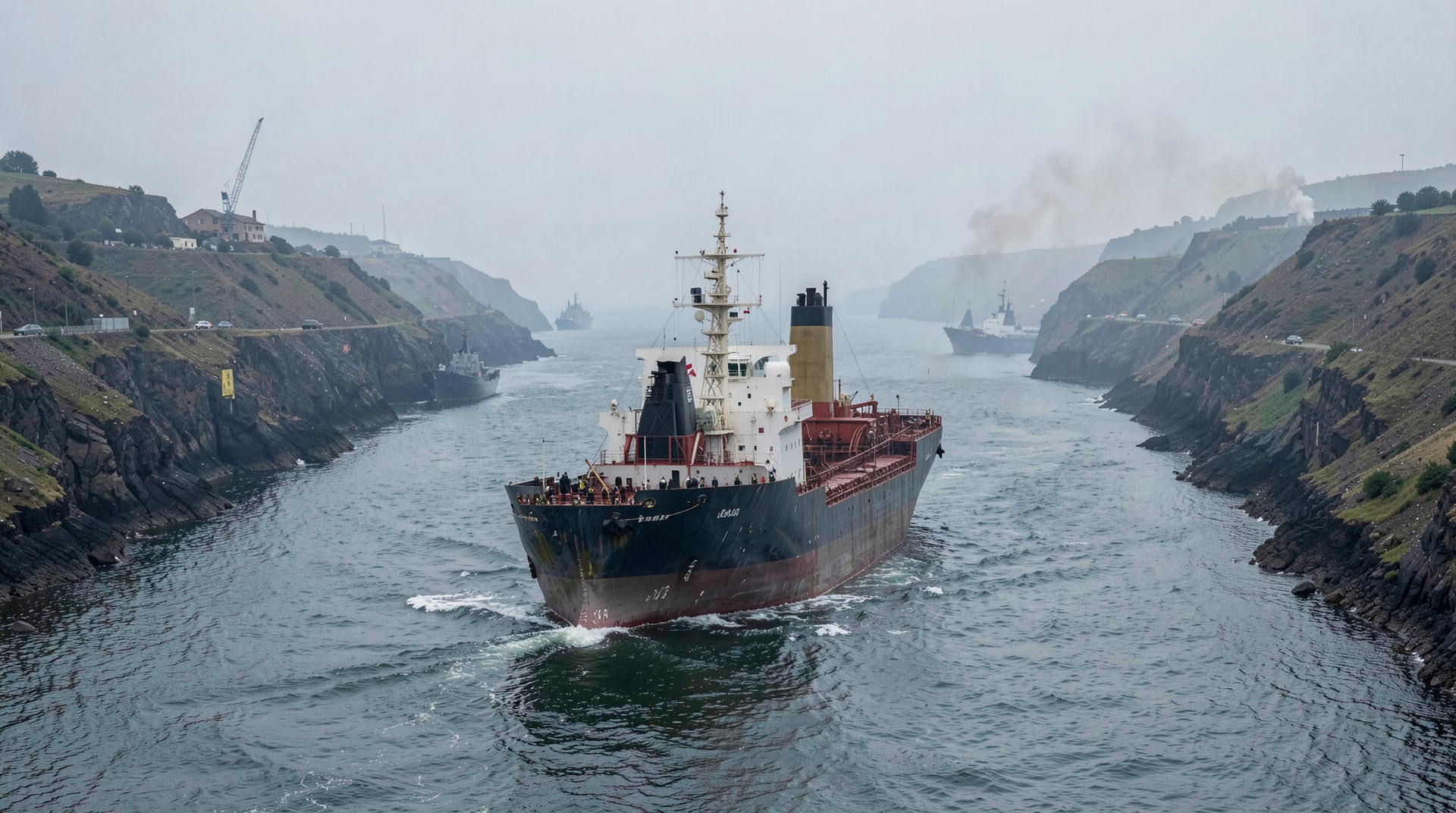
Three Indian sailors are confirmed dead after a US strike disabled the oil tanker MT Settebello in the Gulf of Oman on June 10 [1]. The vessel was carrying Iranian crude when it was hit by a missile. The Indian government confirmed the deaths and issued a statement condemning the strike [2].
The paper's prior account of India's initial condemnation documented New Delhi's first response to tanker attacks in the Hormuz zone. Today's confirmation of deaths transforms that diplomatic statement into a crisis. The sailors — identified as Shivanand Chaurasia and two colleagues — were aboard a Palau-flagged vessel that CENTCOM said was transporting Iranian oil in violation of sanctions [3]. India's foreign ministry called the attack "unacceptable" and demanded a full investigation.
India's diplomatic position is now constrained by the gap between its alliance with Washington and its dependence on Iranian oil. New Delhi is a member of the Quad — the US-led grouping that includes Australia and Japan — but it buys approximately 1.5 million barrels of Iranian crude per month through informal channels [4]. The sailor deaths give India political cover to demand de-escalation without appearing to side with Tehran.
The Hormuz strait remains the war's economic chokepoint. The paper's prior account of the Hormuz closure documented the shipping collapse that has cost the global economy billions per day. The Indian sailor deaths transform that economic abstraction into a human story with diplomatic consequences.
Iran offered to repatriate the remains — a gesture that complicates India's response. Accepting Iranian assistance while condemning the US strike places New Delhi in an impossible diplomatic position. Refusing it appears callous. The offer itself is a move in the geopolitical chess game that the Hormuz closure has become.
X discourse has seized on the deaths as evidence of indiscriminate targeting. Journalist Suhasini Haider reported that "two Indian seafarers died and one reported missing after an attack on oil tanker Settebello by U.S. forces, off the coast of Oman" [4]. The framing — "by US forces" — places responsibility directly on Washington rather than treating the deaths as collateral damage.
Another post from Srijanpal Singh emphasized the civilian nature of the vessel: "Three Indian sailors are now confirmed dead after the missile strike on the oil tanker near Oman. The vessel was not a warship. It was not carrying missiles" [5]. The distinction between military and civilian targets is the framing X is pushing — one that MSM outlets have been more careful to avoid.
Reuters reported the deaths within the broader context of ceasefire negotiations, noting that the strike occurred as diplomatic efforts were underway [1]. The MSM framing treats the deaths as a consequence of the conflict's complexity. X treats them as evidence of US military indiscrimination.
India's response will shape the ceasefire's feasibility. If New Delhi escalates diplomatically — through the UN Security Council, through bilateral pressure, through public statements — it changes the political cost of continued US strikes in the Hormuz zone. If it accepts the US explanation and moves on, it signals that the Quad alliance supersedes the lives of its sailors.
The question of how many Indian sailors remain in the Hormuz zone has not been answered publicly. India's maritime ministry has not released figures. The ambiguity suggests that the number is significant enough to make further strikes politically dangerous for both Washington and Tehran.
India's oil purchasing behavior may also shift. If the Hormuz closure continues, New Delhi will seek alternative suppliers — Saudi Arabia, Iraq, the United States. Each option carries diplomatic costs. Saudi Arabia is a fellow OPEC member with its own agenda. Iraq is unstable. US crude is expensive. The sailor deaths may accelerate a shift that was already underway — India reducing its dependence on Iranian oil to avoid exactly this kind of diplomatic entanglement.
The families of the three sailors have begun to speak publicly. Shivanand Chaurasia's brother-in-law told ANI news that the family is "devastated" and wants answers from both the Indian and US governments [5]. The personal grief now has a political dimension — the families want accountability, and the Indian government must decide whether to provide it.
The three dead sailors are not just a humanitarian story. They are a diplomatic lever that India, Iran, and the United States will each try to use for different purposes. The next edition will report on which lever prevails.
-- PRIYA SHARMA, Delhi