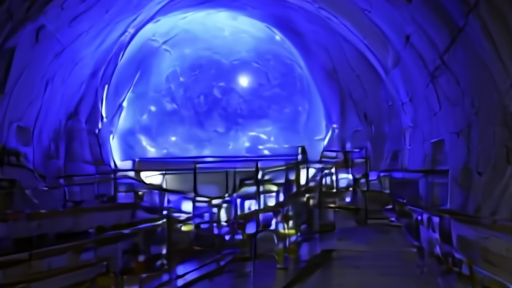
The Jiangmen Underground Neutrino Observatory — JUNO — published its first physics result in Nature on June 11, marking the debut of the world's largest transparent spherical neutrino detector [1]. With just two months of data collected between August and November 2025, the experiment achieved high-precision measurements of two key neutrino oscillation parameters.
The result reduced measurement uncertainties by a factor of 1.6 compared to the combined experimental results of the past decades [1]. Nature's reviewer called the findings a validation of JUNO's detector performance and analysis methodology, establishing it as "a key player in the emerging precision era of neutrino oscillation physics" [1].
JUNO is a plastic sphere ten stories high filled with a liquid that flashes when neutrinos pass through it. It detects neutrinos streaming from nuclear power plants 53 kilometers away in Guangdong Province [2]. Neutrinos come in three types that oscillate — or switch — between flavors as they travel. Measuring these oscillations with precision could determine the neutrino mass ordering, one of particle physics' outstanding questions.
On X, the NOvA experiment — a competing neutrino project — congratulated JUNO on its result [3]. China Science called it a milestone for Chinese fundamental physics [1].
The significance extends beyond physics. JUNO's debut signals China's growing capability in large-scale scientific infrastructure — a domain historically dominated by European and American experiments.
-- KENJI NAKAMURA, Tokyo