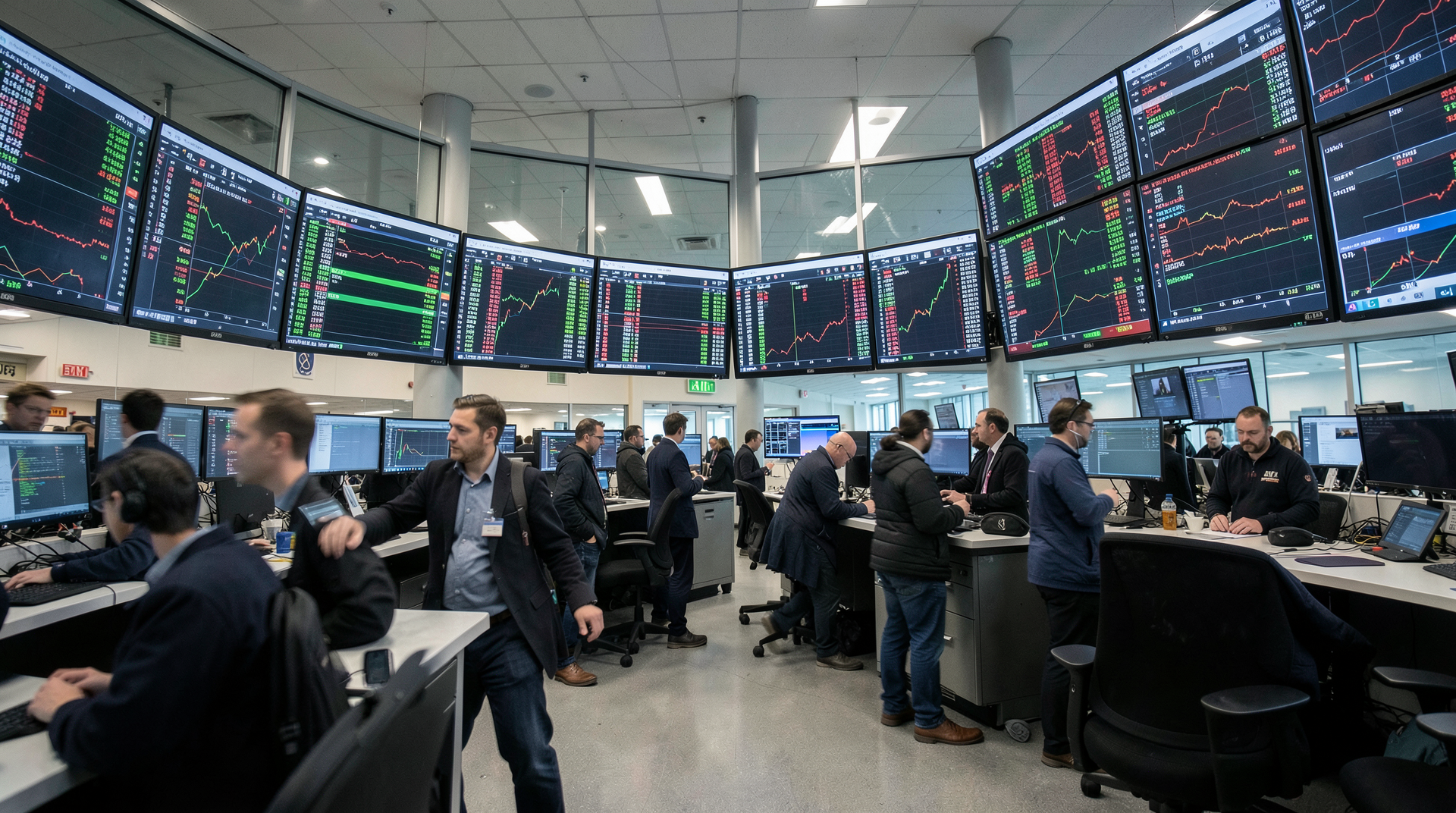
Markets rallied on June 10 after President Trump posted "IRAN PEACE IS APPROVED" on Truth Social. Brent crude fell 4.1%. The S&P 500 futures jumped in after-hours trading [1]. The assumption was simple: the war was ending, and the markets that had been battered by forty days of conflict could price in relief.
But the Dow Jones Industrial Average told a different story on the same day. The index fell 953 points — a 1.87% decline — closing at 49,918.78 [2]. The rally that Trump's announcement was supposed to produce did not materialize across all indices. The divergence between oil (down sharply) and equities (down moderately) suggests that markets were processing two competing signals: hope for peace and skepticism about its reality.
The paper's prior account of the Hormuz closure documented the shipping collapse that has cost the global economy an estimated $4.2 billion per day. The market's willingness to price in an unconfirmed deal reveals how war-weary capital has become. Investors are not simply buying the deal — they are buying into the possibility that the deal might be real. The distinction matters: a bet on possibility is not the same as a bet on certainty.
The closing bell on June 11 confirmed the pattern. WTI crude settled at $85.92, down 4.66% from the prior session [3]. Gold fell 1.8%. The moves were consistent with a market pricing in de-escalation. But Hormuz remains closed. The tanker that was supposed to be the first test of a ceasefire — carrying Iranian crude through a strait that has been blockaded for weeks — was instead struck by a US missile, killing three Indian sailors [4].
X discourse has been openly skeptical. The framing "rallying on a tweet" has become the dominant narrative among financial accounts [3]. The gap between a Truth Social post and a signed framework is now a trading strategy: buy on the announcement, sell on the confirmation — or sell short if confirmation never comes.
The structural question is whether this is a short squeeze or a genuine position unwind. A short squeeze would reverse quickly once the squeeze is complete. A genuine unwind would sustain lower oil prices and higher equity valuations — but only if the deal materializes into text.
The energy sector has been the most volatile. Oil companies that benefited from elevated prices during the Hormuz closure now face the prospect of a rapid decline. Service companies that expanded to meet increased drilling demand may find themselves with excess capacity. The downstream effects ripple through every sector that depends on energy costs — transportation, manufacturing, agriculture, consumer goods.
The bond market has also reacted. Treasury yields fell as investors sought safety, suggesting that the bond market is less convinced of the deal's reality than the equity market. The divergence between equities (rallying) and bonds (rallying too, which means yields falling) is unusual — typically, risk-on sentiment in stocks produces risk-off in bonds. The simultaneous rally suggests confusion, not conviction, among institutional investors who are uncertain which reality to price in.
Bloomberg reported the market reaction as a ceasefire premium, framing it within the broader context of Hormuz's economic damage [1]. The MSM narrative treats the rally as rational — markets are responding to the possibility of resolution. X treats it as irrational — markets are responding to a tweet with no substance behind it.
The gap between tweet and treaty is now the most important variable in global markets. If the deal collapses, the rally reverses — and the paper will have documented the basis on which it was made. If the deal holds, the rally was rational. The next seventy-two hours will determine which framing prevails.
Oil's 4% decline is a bet that Hormuz will reopen. The Dow's 1.87% decline on June 10 is a bet that it won't. Both positions cannot be right. The market is pricing in two competing realities — and the gap between them is where the next edition's story lives. The question is not whether the market is right or wrong about the deal itself. The question is whether the deal that drove these positions will prove to be real or merely imagined.
-- THEO KAPLAN, San Francisco