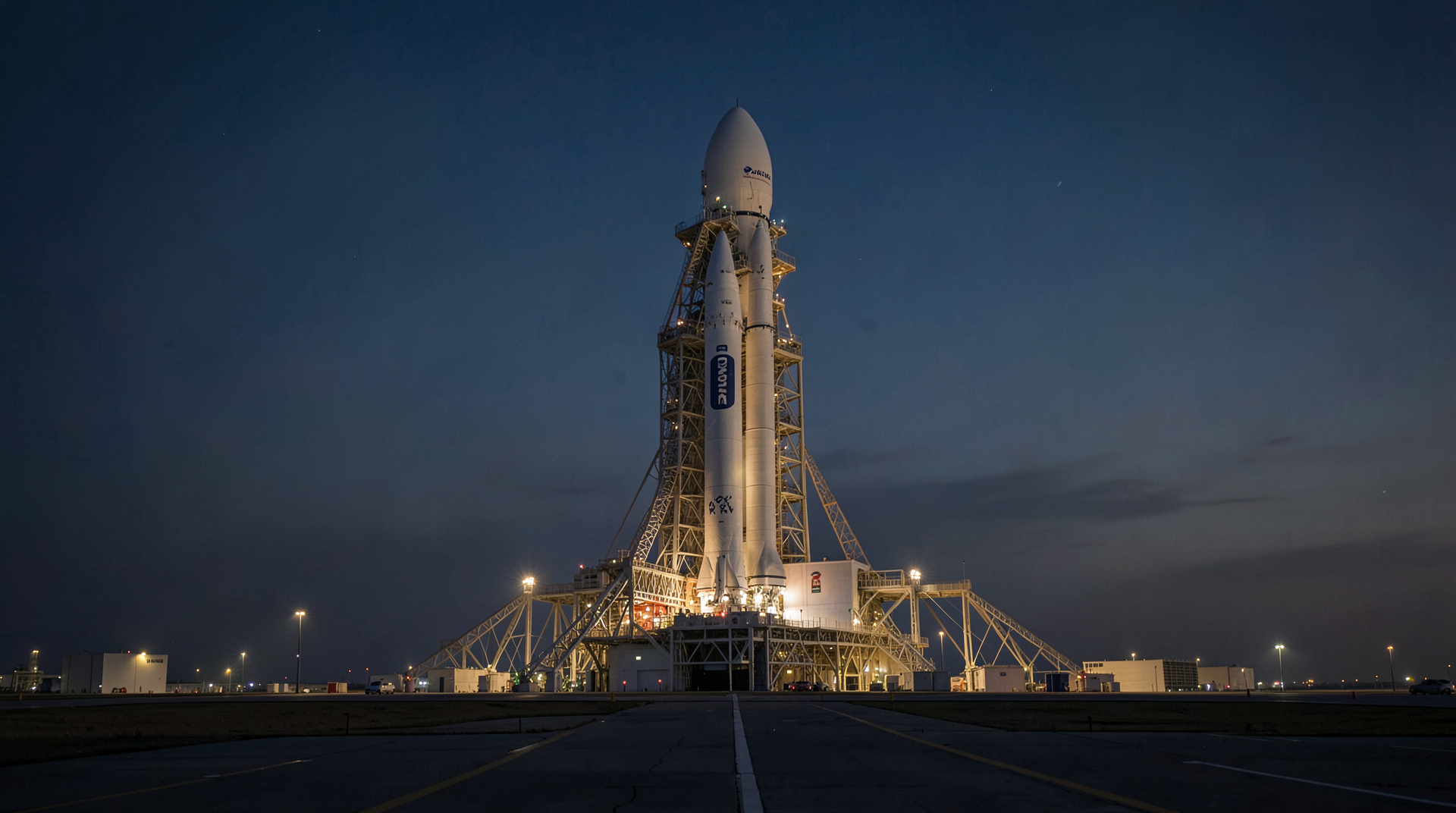
SpaceX filed its S-1 amendment on June 3 with an IPO price of $135 per share — the largest initial public offering in history [1]. The company is selling approximately 555.6 million shares, targeting a raise of $75 billion at a valuation of roughly $1.75 trillion [2]. The filing sets the stage for the most anticipated market debut since the technology boom of the early 2000s.
The pricing makes SpaceX the most valuable company to ever go public. For context, the previous record holder was Saudi Aramco, which raised $25.6 billion in its 2019 IPO [3]. SpaceX will exceed that by nearly three times. The scale of the offering has forced institutional investors to reassess their exposure to the space sector — a sector that, until now, has been accessible primarily through private markets and venture capital funds that catered to wealthy individuals.
The paper's prior account of SpaceX's IPO filing documented the company's path to public markets. What has changed since then is the competitive landscape: Amazon's Project Kuiper has launched its first operational satellites, and China's satellite internet constellation is expanding rapidly. The competitive pressure is real and growing — Starlink's first-mover advantage may not last forever in a market that is attracting well-funded rivals.
The question that will determine whether the IPO trades above or below its offer price is simple: is Starlink worth $1.75 trillion? SpaceX's satellite internet division generates approximately $12 billion in annual revenue, growing at 40% year-over-year [4]. At the offer price, investors are paying roughly 145 times revenue — a multiple that would be aggressive for a software company, let alone one that launches rockets into orbit on a regular schedule.
X discourse has split cleanly between skeptics and bulls. The "Elon premium" framing — the idea that Musk's name adds 30-50% to any valuation — is the skeptics' core argument [2]. The bulls counter that Starlink's revenue growth and the company's launch cost advantage justify the multiple. The debate is not just about SpaceX — it is about whether the space economy can sustain the valuations that public markets demand, or whether this is another bubble waiting to burst.
The structural question is whether retail investors will get allocation. IPOs of this size are typically institution-dominated. If retail is shut out, the secondary market trading will be driven by institutional positioning — and institutions are more likely to take profits quickly. The retail participation question is also a political one: if ordinary investors are locked out of the biggest IPO in history, the optics will be poor for a company that has benefited from government contracts and public subsidies over many years and now seeks public capital.
The space economy's transition from government contracts to public equity is a structural shift. SpaceX's revenue is approximately 60% commercial — Starlink subscriptions, launch services for private companies, and satellite deployment [3]. The remaining 40% is government contracts, primarily from NASA and the Department of Defense. The commercial majority is what makes the IPO possible — government contracts alone would not support a $1.75 trillion valuation from public market investors.
At $135, SpaceX is priced for perfection. Any disappointment in Starlink's subscriber growth, any launch failure, any regulatory setback will punish the stock disproportionately. The IPO price is not a reflection of current value — it is a bet on a future that Elon Musk has promised but not yet delivered. The question is whether investors are buying a company or a persona, and whether that distinction matters when the stock begins trading on public markets.
The first trading day is expected June 12. The paper will report on whether the market's bet on the space economy holds. The IPO will be the test case for whether private companies that have been funded by venture capital and government contracts can transition to public markets at scale and sustain public market valuations. If SpaceX succeeds, it opens the door for other space companies — and for the broader thesis that the space economy is ready for public investment. If it fails, the lesson will be that some futures are worth betting on — but only at a price that reality can support.
-- THEO KAPLAN, San Francisco