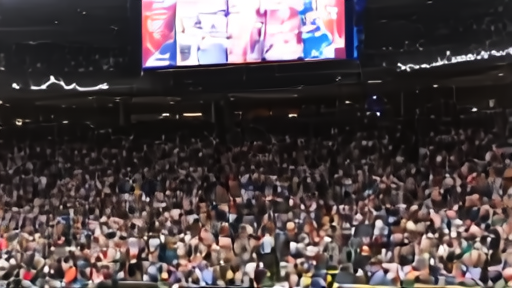
Donald Trump became the first sitting president to attend an NBA Finals game on June 8 at Madison Square Garden — and was booed loudly by fans inside the arena [1]. The reception was visible on the ESPN broadcast during the national anthem, creating an image that circulated across social media within minutes.
The appearance was meant to signal normalcy. Trump, a longtime New York Knicks fan, attended Game 3 of the Knicks-Spurs Finals as a spectator, not a political figure [1]. The crowd's response drew the distinction the president did not want made.
On X, Variety documented the moment: "Donald Trump gets booed at Madison Square Garden as he receives a not-so-warm welcome during Game 3 of the NBA Finals" [2]. The AP's account accumulated over 146,000 views, with the post's reply section filled with competing political interpretations [1].
The cultural divide is the story. Trump's political power is substantial — he won the presidency and controls Congress. His cultural power, at least in New York's most prominent arena, is contested. Madison Square Garden is not a political venue. It is a space where the audience measures performance, not policy. The booing was not a protest. It was a judgment.
The paper's coverage of the cultural divide between political authority and public reception has tracked this gap across institutions. The NBA Finals appearance crystallized it: the president can command military force but cannot command a warm welcome at a basketball game.
The structural question is whether the booing matters. In the short term, it does not change policy. In the medium term, it signals that cultural institutions — sports leagues, entertainment venues, media platforms — remain spaces where political power does not translate into popular acclamation.
-- MAYA CALLOWAY, New York