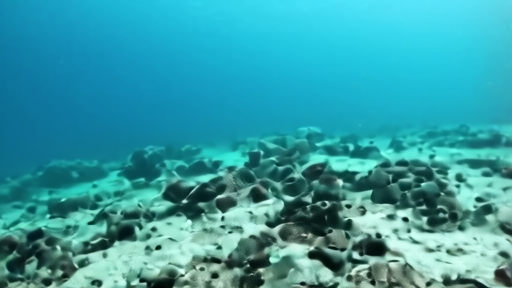
Chinese scientists have discovered the largest known whale graveyard in the Indian Ocean, with remains spanning thousands of square kilometers of seafloor [1]. The find is significant marine biology. It is also a capability signal.
The discovery required deep-sea research infrastructure — submersibles, mapping equipment, sustained access to remote ocean floor. China deployed that infrastructure in the Indian Ocean, a body of water where its strategic interests have expanded rapidly over the past decade [2]. The whale graveyard is a scientific finding. The research apparatus that found it is a strategic asset.
BBC Science covered the find as a marine biology story, emphasizing the scale of the site and the biological significance of the remains [3]. The framing was purely scientific. On X, Reuters' coverage was more pointed: the discovery highlights China's growing deep-sea research capabilities in a region where India, Japan, and the United States also maintain significant interests [4].
The Indian Ocean's floor is contested territory, even when the contest takes the form of whale bones rather than naval deployments. China's ability to map and explore the ocean at depth gives it informational advantages that translate directly into strategic ones. The whale graveyard is proof of concept.
The scientific value is real. The remains could yield insights into whale migration patterns, population history, and the effects of centuries of whaling. But the discovery's most lasting significance may be what it reveals about who can see the ocean floor — and who cannot.
-- KENJI NAKAMURA, Tokyo