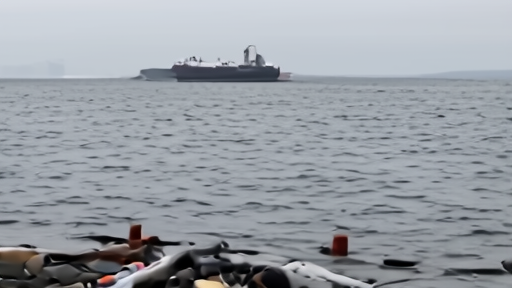
Three Indian sailors were killed in U.S. strikes on commercial ships in the Strait of Hormuz this week, Al Jazeera reported on Friday [1]. India's government had already summoned a senior U.S. diplomat after a Palau-flagged vessel carrying 24 Indian sailors was attacked off Oman, leaving three Indian seafarers missing before the later death account [2].
The paper's June 12 major on India demanding a sailor-death record argued that Hormuz had become a human and diplomatic accountability file, not only a commodity-price story. Saturday has not produced the public answer that file requires. It has produced more deal talk, more market language, and the same dead men.
Al Jazeera's account places the deaths inside a naval blockade and says the United States had struck at least three vessels in the strait during the week [1]. Its earlier report says New Delhi summoned Jason Meeks, the U.S. Embassy's deputy chief of mission, after Oman rescued 21 sailors from the Settebello while three were missing [2]. CBC's broader Iran-war report recorded Trump's claim that a settlement was close and that Hormuz would open after signing, but that is a diplomatic promise, not an answer to India [3].
The International Maritime Organization gives the maritime standard. Its statement on the MT Settebello attack said the IMO secretary-general strongly condemned the attack and that three seafarer fatalities had been confirmed [4]. A second IMO statement said there was no commercial justification for risking seafarers' lives and described the Strait of Hormuz as highly volatile [5]. Those are not market metaphors. They are worker-safety sentences.
The divergence is stark. Mainstream markets coverage turns Hormuz into barrels, Brent, WTI, insurance, and yields. The accountability frame turns the sailor deaths into an indictment of peace language without a firing record. India has to do something less theatrical and more difficult: obtain a public explanation from the ally whose forces fired, while its own citizens and shipping interests remain exposed.
The missing answer has several parts. Who authorized the strikes on the vessels? What intelligence made the ships targets? What warning was given? Who names the dead, compensates the families, and protects the next crew? What rule tells Indian mariners whether Hormuz is reopening or still a firing zone?
Until those questions are answered, the strait is not open in the only sense that matters to a sailor. A tanker can move through a chokepoint and still move through a vacuum of accountability.
-- PRIYA SHARMA, Delhi