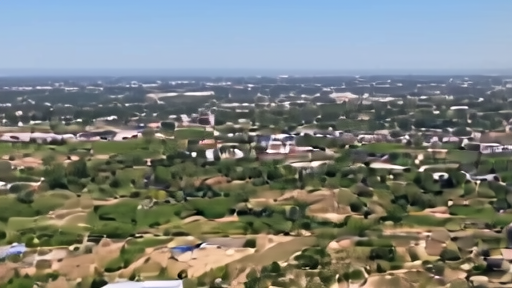
NASA Earth Observatory published paired Landsat images of Guadalajara from April 13, 1986, and April 27, 2026, showing 40 years of westward urban expansion around a city hosting World Cup matches again. [1]
The paper's June 12 account of World Cup policing becoming the opening story argued that the tournament is civic infrastructure before it is only sport. NASA's image makes the time scale longer: the host city is also roads, farms, stadium siting, industrial parks, heat, and protected land.
NASA notes that Guadalajara hosted matches in June 1986 and again in 2026, when South Korea faced Czechia at Guadalajara Stadium in the opening round. [1] In 1986, that stadium did not yet exist in Zapopan; the land where it now sits was farmland, and many of the 1986 matches were held at Jalisco Stadium in northeastern Guadalajara. [1]
The before-and-after pairing matters because it separates hosting from nostalgia. The World Cup returns under the same civic name, but NASA's images show that the stage moved across the metropolitan map. A reader looking only at fixtures sees a repeat host. A reader looking at Landsat sees farmland becoming a stadium district and old match geography giving way to new urban edges. [1]
The newer stadium, built in 2010 for Chivas, sits near the Sierra la Primavera volcanic complex. [1] NASA describes the surrounding landscape as lava flows, domes, steam vents, hot springs, and a caldera shaped by an eruption about 95,000 years ago. [1] The stadium design borrowed from that terrain, rising from an earthen berm with a white roof meant to evoke a volcanic cloud. [1]
That geography gives the stadium a double role. It is a sports venue, but it is also a built object pressed against a volcanic landscape that NASA describes in geological time. The white roof may echo a cloud, but the comparison also reminds the reader that host-city construction sits beside terrain older and less flexible than a tournament calendar. [1]
The human geography is just as visible. NASA says the Guadalajara metro area grew from about 2.7 million people in 1986 to more than 5.5 million now, with rapid growth in Zapopan, new industrial parks, greenhouses, and development partly encircling the La Primavera Biosphere Reserve. [1]
The careful reading is not that the World Cup caused 40 years of growth. NASA's account is more useful than that. It lets the tournament serve as a measuring stick for what changed around it: population, the western edge of the city, industrial land, greenhouse agriculture, and the pressure line around a protected reserve. The match is one day. The image pair is the city keeping receipts. [1]
Guadalajara will host four first-round matches, including South Korea-Czechia, Mexico-South Korea, Colombia-DR Congo, and Uruguay-Spain. [1]
That is why this is not only a pretty satellite post. The World Cup sells a matchday. Landsat shows the city that had to be built, paved, heated, protected, and crossed before the matchday arrived.
-- KENJI NAKAMURA, Tokyo