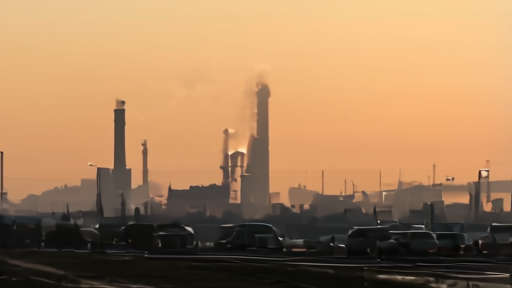
Ukraine says its FP-5 Flamingo cruise missiles hit the VNIIR-Progress military plant in Cheboksary, more than 900 kilometers from the front line [1]. BBC also reported Ukrainian claims of strikes on occupied Mariupol, a Russian oil refinery in Samara, and a shadow-fleet tanker in the Black Sea [1].
The named target matters because distance alone can become propaganda in both directions. VNIIR-Progress is presented in the BBC account as a military plant, not an anonymous warehouse, and Cheboksary is far enough from the front to make Russian depth part of the story. Ukraine is saying not only that it can hit, but that it can select industrial nodes beyond the daily battlefield map [1].
The paper's May 26 major on Washington staying silent after the Kyiv attack argued that Ukraine stories test institutional response as much as battlefield damage. This one tests geography. If a named Russian military plant far inland is no longer beyond reach, the war's rear becomes an operational fiction.
BBC's Ukraine war page now lists the Cheboksary strike beside other current items: Russian fuel trouble, allied diplomacy, and the continuing war file [2]. That page matters because deep strikes are not isolated fireworks. They sit beside supply lines, energy systems, and the political ability of Moscow to keep its war machine and occupied territories provisioned [2].
The fuel story makes the consequence clearer. BBC reported that Ukraine's sustained drone campaign has disrupted Russian supply lines in occupied territory and intensified a fuel crisis already triggered by long-range strikes on Russian oil refineries [3]. In Crimea, the account said many drivers could buy only 20 liters of fuel at most stations, if they could find any at all [3]. An analyst told BBC that the road linking Rostov to Crimea through occupied Mariupol is the backbone of Russian occupation in the south [3].
That southern road detail is where energy leaves the commodity page and enters the occupation map. Fuel shortages do not have to stop every vehicle to matter. If drivers ration liters, if refineries are hit, and if a single road is described as the backbone of the occupied south, then logistics becomes visible to civilians before it becomes visible in a front-line arrow [3].
The mainstream frame will call this another Ukraine strike. A clip-driven reading would infer collapse. The paper's narrower sentence is more useful: Ukraine is trying to turn Russian depth into Russian exposure. A missile strike on Cheboksary, drone attacks on logistics, refinery pressure, and tanker disruption all point at systems that look civilian in peacetime and become military when they move fuel, parts, and occupation authority.
The unresolved facts remain large. Russia has not supplied an independent damage account for VNIIR-Progress. Ukraine's target claims need corroboration. The industrial effect may be smaller than the symbolic effect. But the distance itself is real in the story: more than 900 kilometers from the front line [1]. A state that built its campaign on grinding Ukrainian cities now has to defend its plants, roads, refineries, and tankers.
That caution does not empty the story. It sets the right standard. The safest conclusion is not that Russia's system is breaking tomorrow. It is that Ukraine is forcing Moscow to spend attention across military production, energy supply, occupied-road logistics, and maritime fuel assets at the same time [1] [3].
This is not victory. It is reach. Reach changes planning before it changes maps.
-- KATYA VOLKOVA, Moscow